


Highlights
- Doxycycline, a popular antibiotic, might become the next big thing in sexual health prevention.
- New cases of bacterial sexually transmitted diseases/infections (STDs/STIs) have recently spiked in the United States.
- Doxycycline post-exposure prophylaxis (doxy-PEP) shows promise for its use as a “morning after pill” to prevent bacterial STIs after unprotected sex.
- Public health officials are hopeful that doxy-PEP may lower bacterial STI rates without contributing to antibiotic-resistant “superbugs.”
- Doxy-PEP doesn’t protect against viral STIs, so it should be used in combination with other methods to maintain sexual health.
Researchers have found a potential breakthrough in national efforts to curb the rising cases of bacterial sexually transmitted infections (STIs). Instead of relying solely on abstinence or condoms, people may soon have access to a “morning after pill” to prevent STIs. Doxy-PEP might be the greatest advancement for sexual health prevention in the past decade.
Spotlight on STI Prevention
In an era where health and well-being are promoted for all aspects of our lives, prevention is getting more attention. Researchers have found new ways to prevent the onset of many chronic and infectious diseases, including some STIs.
The recent surge of chlamydia, gonorrhea, and syphilis cases in the United States has put pressure on public health officials to take action. And now, researchers say they may have found the solution in the antibiotic doxycycline. When taken shortly after potential exposure to STIs, it’s referred to as doxycycline post-exposure prophylaxis, or “doxy-PEP.”
Researchers and public health officials alike are excited about the potential of doxy-PEP as a game-changer for STI prevention. Some view doxy-PEP as a new kind of morning-after pill — one that can prevent bacterial STIs. Others describe doxycycline as a tried-and-true medication that we’re simply using in a new way.
A Brief History of Preventive Measures: It Started with HIV
Civilizations have been interested in preventing pregnancy and STIs for centuries, but the HIV epidemic marked a period where sexual health truly took center stage.
Following the HIV epidemic, researchers and public health professionals ramped up the public promotion of safer sex practices to prevent the spread of HIV and other STIs. This includes practices like:
- Abstinence
- Limiting your number of sex partners
- Using condoms and other barrier methods
- Routine testing for STIs
The Advent of PrEP: Pre-exposure Prophylaxis for HIV Prevention
For decades, traditional safer sex practices and public education about the dangers of needle sharing were the cornerstones of HIV prevention. Post-exposure prophylaxis (PEP), a medication that reduces the risk of getting HIV when used immediately after exposure, was originally available for occupational exposures to HIV. It was later approved for use in emergency situations, but the public was still left without an option for ongoing protection against HIV.
This changed in 2012, when the Food and Drug Administration (FDA) approved pre-exposure prophylaxis (PrEP) to prevent HIV. PrEP is a daily medication that can reduce the risk of getting HIV by close to 99 percent, when it’s taken as prescribed. Researchers and public health officials hail PrEP as a true revolution in HIV prevention.
Watch the explainer video below to learn more about PrEP for HIV prevention from the Centers for Disease Control and Prevention (CDC).
Introduction to Doxy-PEP
Doxy-PEP has emerged as the next innovation in STI prevention. Similar to PEP for HIV, doxy-PEP offers protection against STIs, when taken shortly after exposure. But unlike PEP and PrEP, doxy-PEP offers protection against bacterial STIs.
Researchers have tested doxy-PEP as a type of morning-after pill to lower the risk of chlamydia, gonorrhea, and syphilis infections. Results have shown enough promise that CDC plans to release interim clinical guidance for the use of doxy-PEP in preventing bacterial STIs.
A recent study funded by the National Institutes of Health (NIH) spotlighted doxy-PEP’s potential for helping to slow the spread of bacterial STIs. Researchers tested the effectiveness of doxy-PEP among transgender women as well as men who have sex with men (MSM). This resulted in a striking two-thirds reduction in chlamydia, gonorrhea, and syphilis incidence when participants took doxycycline within 72 hours of condomless sexual encounters.
However, researchers also noted a mild increase in antibacterial resistance among participants. Researchers and public health officials are investigating this further.
Antibiotics as a Morning-After Pill
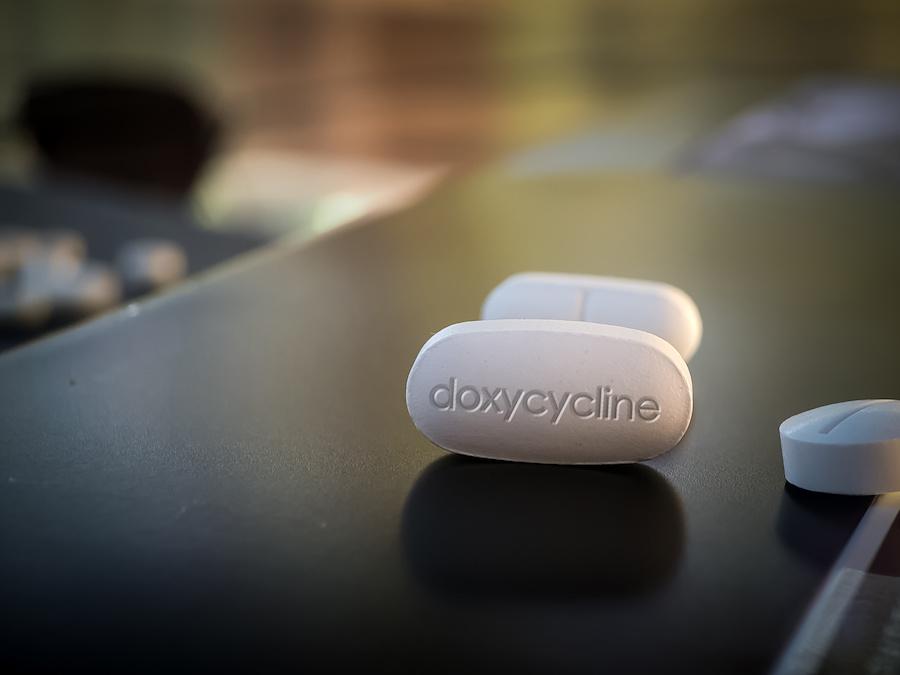
Doxycycline works as a post-exposure prophylaxis when it’s taken shortly after a potential exposure to STIs. This requires taking doxycycline as soon as possible after potential exposure. It shouldn’t be taken more than three days after an exposure.
Doxy-PEP is a proactive approach to eliminating bacteria before it has a chance to spread or cause symptoms. This is why it can be effective in combating chlamydia, gonorrhea, and syphilis.
Patients taking doxy-PEP will need to follow up with their provider for routine STI testing, blood work, and prescription refills.
https://www.youtube.com/embed/6s2XoR1jhkw
The potential benefits and risks of fighting STIs with doxycycline
Target Demographics for Doxy-PEP
The NIH-funded study specifically focused on MSM and transgender women. These groups have a higher risk of contracting certain STIs. They are also at greater risk for repeat infections.
Despite this increased risk, STI screening rates among MSM remain inadequate in the United States. By targeting groups who shoulder a greater burden of infection, doxy-PEP could help to slow the spread of STIs nationally.
Effectiveness and Limitations of Doxy-PEP
The NIH-funded study demonstrated doxy-PEP’s effectiveness in reducing risk for bacterial STIs in MSM and transgender women. The results showed a 65 percent decrease in new STIs for those who used it within 72 hours of condomless sex. However, that doesn’t mean all populations will experience the same results.
Research findings from a Kenyan study yielded unexpected outcomes for cisgender women. Researchers followed women taking PrEP to determine if using doxy-PEP could reduce their risk for new bacterial STIs. Unfortunately, they didn’t find a significant reduction in STIs among the participants.
Researchers suggest these results could be due to a variety of factors, such as differences in anatomy, adherence to the drug regimen, or different strains of bacteria.
But don’t count doxy-PEP out just yet. Research concerning the use of doxy-PEP for cisgender, heterosexual men and women is limited. One study suggests that doxycycline can become concentrated enough in vaginal fluid to offer protection, but we won’t know for certain until additional research is conducted.
Doxy-PEP’s Impact on Public Health and Individual Behavior
Doxycycline is a tried-and-true antibiotic. It’s commonly used to treat urinary tract infections and chlamydia. It can even be used to treat gonorrhea and syphilis.
The use of doxycycline for prevention, rather than treatment, is what makes doxy-PEP stand out. Critics have cautioned that using an antibiotic as a preventative may have unintended consequences. Meanwhile, proponents argue the benefits outweigh the potential risks.
Potential Benefits
Doxy-PEP has the potential to:
- Reduce risk for common bacterial STIs. Part of doxy-PEP’s allure is its ability to significantly reduce a person’s risk for not one, but three, common bacterial STIs.
- Slow the spread of bacterial STIs. The rise of STI cases across the country calls for a bold solution. Doxy-PEP could reduce new cases of STIs for high-risk groups, which can help to break the chain of infection nationally.
- Promote empowerment in sexual health. Advances in health bring about greater flexibility and variability in the methods we can use to keep ourselves healthy. This allows people to take control and to choose the methods that work best for their individual lifestyle.
Concerns and Risks
As with any medical innovation, excitement over doxy-PEP comes with a healthy dose of skepticism. Some researchers and public health officials have voiced concerns over the potential risks and unintended consequences of using doxy-PEP for preventing, rather than treating STIs.
Concerns and risks include:
- Antibiotic-resistance and superbugs. Some worry that doxy-PEP will lead to the evolution of superbugs like we’re already seeing with antibiotic-resistant gonorrhea. Experts recommend using doxy-PEP responsibly and only when needed.
- Other STIs. Antibiotics cannot prevent viral STIs like HPV and herpes. Doxy-PEP should only be used to prevent chlamydia, gonorrhea, and syphilis.
- Dosage. Doxy-PEP should only be taken as prescribed. Using different antibiotics or doses that haven’t been approved by a provider may provide someone with a false sense of protection.
- Need for preparation. Doxy-PEP should be taken as soon as possible after potential exposure. This requires pre-planning to obtain a prescription and to keep the medication on hand.
- Side effects. Some people experience side effects while taking antibiotics. Frequent use of antibiotics may pose risks to people with certain health conditions.
The CDC plans to address many of these concerns in their upcoming guidelines for clinical use.
Cultural and Social Considerations

Cultural and social considerations also play a role in the uptake of doxy-PEP. The stigma around condomless sex and biases within the medical community might affect its acceptance. Some researchers and public health officials worry that the pushback against doxy-PEP largely stems from the stigma surrounding MSM, transgender care, and STIs.
Marginalized communities have historically experienced great harm at the hands of medical and public health institutions. Public health officials, researchers, and providers must take this into consideration while working to simultaneously roll out health innovations and to repair trust in these communities.
Equity and Accessibility
Accessibility is an issue during the rollout of most health innovations, especially for marginalized communities. Marginalized communities face disparities in healthcare access and outcomes, and the story might be the same for doxy-PEP. Factors like socioeconomic status, cultural beliefs, and historical inequities can influence who gets to benefit from this advancement.
Providers, public health officials, policymakers, and advocates must collaborate to ensure that doxy-PEP reaches everyone who needs it, regardless of their background.
Section 4: The Future of Sexual Health Prevention
Doxy-PEP is a new tool we could use in the ongoing fight against surging STI rates. However, it’s not a one-size-fits all solution. Vaccines and other preventive measures are on the horizon, promising a more comprehensive approach to sexual health.
Other Potential Solutions
Vaccines have long been champions in the battle against diseases. Just as we’ve seen remarkable success with vaccines for other infections like HPV, there’s ongoing research into developing vaccines against certain STIs.
Maybe one day we will have a vaccine to prevent every STI. Until then, it’s all hands on deck. Combining the power of antibiotics like doxycycline with vaccines, preventive education, and accessible healthcare can create a comprehensive strategy for optimal sexual health.
Balancing Risks and Rewards
As with any innovation, there’s a delicate balance between risks and rewards. We will need to take the lessons learned from earlier advancements in sexual health and apply them to doxy-PEP.
This means:
- Continuing research. Ongoing research is essential to ensure that the benefits of doxy-PEP outweigh any potential drawbacks.
- Focusing on a comprehensive approach. Doxy-PEP should be used as a compliment to, and not a replacement for, existing prevention strategies.
- Promoting responsible use. Responsible use is key to preventing potential antibiotic resistance, ensuring that this weapon against STIs remains effective.
A Call for Innovation
While doxy-PEP holds exciting potential as a post-exposure prophylaxis against bacterial STIs, it’s important to remember that innovation doesn’t stop here. The landscape of sexual health prevention is evolving, and a collaborative approach is necessary if we wish to overcome rising STI rates.
Enjoy a Healthier and Happier Sex Life

Our sexual health deserves the same attention and care as any other aspect of our health and well-being. Doxy-PEP brings hope and promise, but it’s not a standalone solution.
Remember:
- Doxy-PEP treatment isn’t 100 percent protective, but research suggests it can decrease your likelihood of contracting syphilis, chlamydia, and gonorrhea.
- Doxy-PEP doesn’t protect against viral STIs.
- While taking doxy-PEP, you will need to follow up with your provider for routine STI testing, standard blood work, and prescription refills.
- There’s a growing body of research supporting the use of doxy-PEP, but more research is needed to confirm the effectiveness and safety of widespread use.
Preventing STIs is just one part of enjoying a happy and healthy sex life. Accessible healthcare solutions and open conversations with our providers can help us to make informed choices for our sexual health.
At eDrugstore, we strive to help you make the best choices for your sexual health. Take advantage of our free consultations with U.S.-licensed physicians to find the right sexual health solutions for your needs.

Shelby is a public health professional with research and field experience in sexual and reproductive health. She holds a Master of Public Health (MPH) and is a Certified Health Education Specialist (CHES).