

 Japanese shoppers say they are worried about buying fresh produce and milk after hearing radiation has seeped into farm land.
Authorities said trace amounts of radiation was found at several farms surrounding the crippled nuclear power plant in Japan’s northeast side. Authorities said crops of spinach, canola and chrysanthemum greens had trace levels of radiation on them. These farms sell their goods to grocery stores all over Japan, including the most populated city of Tokyo.
The tainted food was found up to 75 miles away from the power plant. The government has also found small amounts of radiation in milk and tap water, but authorities say the current levels aren’t enough to cause harm. They referred to the radiation levels as ‘miniscule’, but people closest to the power plant have been advised not to drink the water.
Workers are still trying to cool the nuclear reactors that were damaged in 8.9 earthquake, while health authorities try to figure out how far radiation is reaching.
The tainted food supply has Japanese residents concerned. According to reports, grocery stores were selling bottled water faster than they could put it on the shelves. Inside many grocery stores, the area of origin is listed near produce. Items that were grown in the Ibaraki prefecture, where the nuclear plant is located, was avoided by customers.
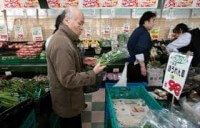 The radiation found on farm land is only adding to fears about the country’s food supply being tainted. The Health Ministry says they are still accessing the situation and will make a decision about continuing the distribution of food soon. Experts believe some food from the affected areas will banned from sale.
Japan’s food exports are worth about $3.3 billion a year, which is a small fraction of their total exports, just 0.5%. Most of the food exported from Japan is seafood.
