


Highlights
- The Cleveland Clinic MENtion It Survey addressed men’s health attitudes towards wellness and prevention.
- Men’s health is rarely a topic of conversation, and one-fifth of men don’t discuss it with anyone.
- Men are most concerned about heart attacks and cancer.
- Sexual health and erectile dysfunction prevention are still social taboos.
- Get serious about annual health checkups, as prevention and early detection are the keys to a long, healthy life.
Survey Reveals Men’s Health Attitudes
The MENtion It Survey was conducted by Cleveland Clinic on a sample of over 500 adult American men. It covered three generations — Baby Boomers, Gen X, and Millennials.
Researchers looked at men’s health attitudes and found many inconsistencies and worrying trends, including:
- Men are reluctant to discuss their health. The key takeaway from the survey confirms a popular assumption that men don’t discuss their health in casual conversation. Only seven percent said they were likely to talk about health. One-fifth of men revealed they were not discussing private matters, including health and relationships, with anyone.
- Women often push partners to deal with health issues. If a man decides to confide his health-related concerns to anyone, he chooses his partner, or someone from his immediate family. Women are often the ones who push their partners to visit a doctor.
- Men find it easier to mention “hero injuries.” Among the men who talk about health with others, there is a preference to brag about overcoming an injury, for example, something sports-induced. Forty-two percent wouldn’t talk about health unless it was a close call.
- Men are not too concerned about their health. For most men their number one priority is the well-being of their family (37 percent). Only 20% of respondents considered health an important topic.

Men Are Most Concerned About Heart Attack And Cancer
While men may not open up about their physical and mental ailments to anyone, they will still worry quietly. The top two fears are heart attack (mentioned by 44 percent of respondents) and cancer (42 percent).
And number three among men’s health frights? Weight gain — which makes a lot of sense if you think about it, as the extra pounds often lead to other physical problems, such as diabetes.
Outcomes of the men’s health survey have confirmed that the older we get, the more interested in our physical well-being we become. For example, 51 percent of Baby Boomers are serious about heart attack prevention. For Millennials, the problem is not so urgent, it seems — only 38 percent said they take it into account.
Men’s Sexual Health Is Still Taboo
Bedroom health concerns are still taboo subjects for most men. Only five percent say they discuss them with anyone. That number matches the percentage of men who talk about their sex lives in casual conversations.
This silence around sexual health makes it harder for men to access information and medical care. Ten percent of men don’t even know who a urologist is — and this is the doctor a man should go to if he suspects issues such as erectile dysfunction or prostate cancer.
It looks as if men don’t realize there are things they can do to reduce the risk of sexual dysfunction in the future. For example, only nine percent think about preventing erectile dysfunction.
Men’s Mental Health Is Rarely Discussed

Men’s silence around psychological problems is another worrying phenomenon. Compared to the ladies, men are less likely to receive a psychological diagnosis and treatment. And if left untreated, conditions such as depression can be life threatening.
Every year over six million American men suffer from depression. The results of the MENtion It Survey show, however, that men are reluctant to talk about depression or anxiety. Only 14 percent stated they felt comfortable having a conversation about those concerns.
Ignoring Preventative Care May Backfire
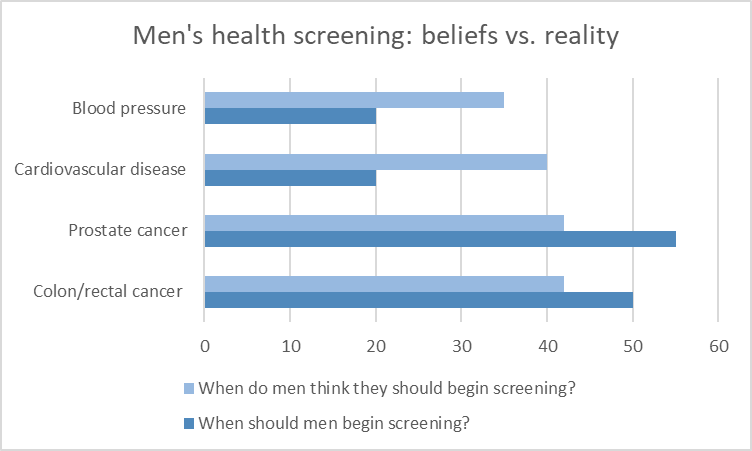
The MENtion It Survey revealed another worrying fact. Most men are misinformed about the age guidelines for preventative checkups.
It’s not so bad if a man wants to get his health checked earlier than recommended. But if he goes to the doctor much later than he should, he may discover that he’s at an advanced stage of a serious disease.
And we’re not talking about a preventative care mistake of one or two years. For instance, cardiovascular checkups should start at age 20, while most men believe they don’t need to worry about them until they have reached 40.
Take Charge Of Your Health Today
If there’s anything men can learn from the MENtion It Survey, it’s to not ignore health prevention. By taking simple steps early, you give yourself a chance to reach old age in good health.
Here’s where to start.
Know Your Family History

Has your family doctor ever asked if your dad had prostate cancer or someone in your family suffered from a heart attack, only to get “uhm, I don’t know” for an answer? Avoiding health conversations means you may miss out on crucial information.
If possible, call your parents, grandparents, and siblings and ask them if they have any major issues you should know about. Many conditions are genetic, and knowing a blood relative’s medical history could save your life.
Book That Annual Checkup
How long has it been since you’ve had your annual physical? Three years? Five? When we’re in good shape, we tend to underestimate the power of prevention.
A basic health overview, including blood pressure, blood glucose levels, and other routine labs, is in order even for men in their twenties. The older you get, the more disciplined you should be about regular visits to your health clinic. Talk to your doctor about when to start screening for common health concerns like colon and prostate cancer.
Change Your Habits

When it comes to health prevention, nothing beats positive lifestyle changes. Not only will you reduce the long-term risk of certain diseases, including cancer, but you’ll also feel better.
Improving your diet or quitting smoking are big projects, but they will pay off in many ways. You’ll enjoy your life more, including in the bedroom. Healthy mind and body lower your risk of erectile dysfunction. Is there a better motivation to change your habits than a promise of great sex for years to come?
Treat Your Health Concerns With eDrugstore
Health prevention is a must for every man who wants to live a full and happy life. But what if you’re already dealing with a problem that requires treatment? At eDrugstore, we’ve got you covered.
Our premier online pharmacy offers top-quality service, complimentary online consultations with U.S.-licensed physicians, and free delivery of sexual health treatments and erectile dysfunction medication.
Browse our comprehensive selection of FDA-approved medications and home test kits and get your health back on track today.

Anka Grzywacz is a sexologist, reproductive health expert and Certified Sex Coach™. In her online practice she helps busy women and couples solve their intimate problems.