


Reach Your Goal Weight. Prescribed. Proven. Private.
Doctor-prescribed GLP-1 weight loss treatments delivered discreetly to your door.
Physicians
Private
Delivery
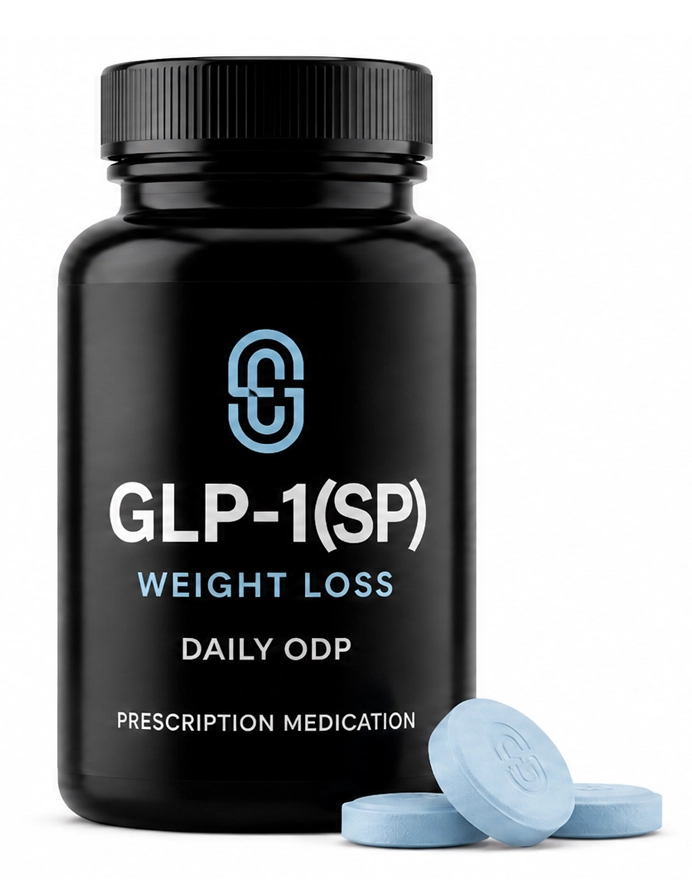
GLP SP 2mg
Daily dissolvable GLP-1 to curb appetite and drop weight.
- Curbs Appetite
- Daily Dissolvable Tablet
- Steady, Lasting Results

GLP T 3mg
Dual-action GLP-1 for stronger appetite control.
- Dual-Action Formula
- Daily Dissolvable Tablet
- Maximum Appetite Control

Berberine with Ceylon Cinnamon
Natural metabolic support for blood sugar and weight.
- Supports Healthy Metabolism
- Balances Blood Sugar
- Once-Daily Tablet
You were losing steadily. A pound here, two pounds there, clothes fitting differently, the number on the scale finally cooperating. Then, somewhere around month four or five, a semaglutide weight loss plateau showed up and parked itself in your kitchen.
This is the part nobody talks about in the marketing. The first 10% comes off relatively predictably for most patients. The next stretch is where things get complicated, and where a lot of people quietly assume the drug stopped working.
It usually hasn’t. What’s actually happening is more interesting, and in most cases, fixable. The five reasons below are the ones that come up over and over again when patients ask why the scale won’t budge, based on what the FDA labeling for semaglutide and the original STEP trial data published in NEJM actually show.
1. You Haven’t Reached Your Maintenance Dose Yet
Semaglutide is titrated slowly on purpose. The dose climbs from 0.25 mg weekly up to 2.4 mg weekly over about 16 to 20 weeks, and a lot of patients hit what feels like a semaglutide weight loss plateau simply because they’re still on a sub-therapeutic dose.
If you’re losing nicely at 1.0 mg and then stall, that doesn’t necessarily mean the drug failed. It often means your body adapted to that dose, which is exactly why the protocol pushes toward 2.4 mg for chronic weight management.
What I’d ask your prescriber: am I on the maintenance dose the STEP trials studied for sustained weight loss, or are we still climbing? If side effects forced you to stay at a lower dose, that’s a real conversation worth having.
2. Your Body Defended Its New Weight
This is the biology nobody warns you about. When you lose roughly 15 to 20% of your body weight, your resting metabolic rate drops more than the weight loss alone would predict. Leptin falls. Ghrelin rises. Your body interprets the loss as a famine and pushes back.
Semaglutide blunts a lot of that hormonal pushback, which is the whole point. But it doesn’t eliminate it. After significant loss, most patients land in a new equilibrium where calories in and calories out match again, just at a lower weight than before.
That’s not failure. That’s your body successfully defending a new, healthier set point. The plateau itself is evidence the drug is still working, because without it you’d likely be regaining.
3. Calorie Creep Snuck Back In
Appetite suppression on semaglutide is strongest in the first few months. By month six or eight, many patients tell me food is starting to sound interesting again, even if they’re not ravenous.
Portion sizes drift up. The handful of nuts becomes two handfuls. Liquid calories (lattes, juice, alcohol) sneak back. None of this is moral failure. It’s just that the chemical handbrake loosens slightly as your body adapts to the GLP-1 receptor agonism.
A few honest questions to ask yourself:
- Are you eating from hunger, or from habit and time of day?
- How many liquid calories are you drinking that you weren’t tracking before?
- Has alcohol crept back in on weekends?
- Are restaurant meals more frequent now that you feel better?
A two-week food log, brutally honest, usually answers the plateau question faster than any dose adjustment will.
4. Muscle Loss Slowed Your Metabolism
Roughly 25 to 40% of the weight lost on GLP-1 drugs can come from lean mass if protein intake and resistance training aren’t prioritized. That’s not unique to semaglutide. It happens with any rapid weight loss, including bariatric surgery, as documented in NIH-funded research on body composition during weight loss.
Less muscle means a slower metabolism, which means the same eating pattern that worked at month three doesn’t produce a deficit at month six.
The fix isn’t glamorous. It’s protein (most clinicians aim for around 1.2 to 1.6 g per kg of body weight for patients losing weight on GLP-1s, but your prescriber will tailor this) and resistance training two or three times a week. Walking is great. It won’t preserve muscle.
If you’re weighing the broader question of which GLP-1 fits your situation, our breakdown of semaglutide versus tirzepatide for weight loss covers how the two drugs compare on average loss and tolerability.
5. Something Else Is Working Against You
A genuine plateau that doesn’t budge with dose optimization, honest eating, and resistance training sometimes points to something medical. Things worth ruling out with your doctor:
- Untreated or undertreated hypothyroidism
- Sleep apnea (poor sleep wrecks weight regulation)
- Medications that promote weight gain (certain antidepressants, beta-blockers, steroids, some antipsychotics)
- PCOS or insulin resistance not fully addressed
- Cushing’s syndrome (rare, but real)
The Mayo Clinic’s overview of weight management is a reasonable starting point for understanding which of these your primary care doctor should screen for. A TSH and a basic metabolic panel cost very little and answer a lot.
Sleep is the one I’d flag specifically. Patients who sleep under six hours a night consistently lose less weight on GLP-1s than patients sleeping seven to eight, and many don’t realize they have undiagnosed apnea until they’ve already lost some weight. If snoring is part of the picture, a sleep study is worth asking about.
What To Do When the Scale Won’t Move
Before assuming the drug stopped working, walk through the list with your prescriber. Are you at the full maintenance dose. Have you been honest about portions and liquid calories. Are you protecting muscle. Is something else medically in the way.
If cost is part of why you’ve hesitated to push to the full dose, compare prices on semaglutide at edrugstore.com or talk to one of our pharmacists about what’s covered under your plan. If you’re still weighing options, our guide on the side effects to know with tirzepatide is a useful companion read.
A semaglutide weight loss plateau is almost never the end of the story. It’s a checkpoint. With the right adjustments, most patients can resume losing or, just as importantly, hold onto what they’ve already lost.
This article is for informational purposes only and is not medical advice. Always consult a licensed pharmacist or physician before starting, stopping, or changing any medication.
References
- FDA Prescribing Information for Semaglutide (Wegovy), official dosing, titration schedule, and approved use.
- STEP 1 Trial, NEJM 2021, pivotal trial data on semaglutide 2.4 mg weight loss outcomes.
- NIH-indexed review on body composition during weight loss, context on lean mass loss with caloric restriction and pharmacotherapy.
- Mayo Clinic: Obesity diagnosis and treatment, overview of medical workup for stalled weight loss.

Dr Steven Schlosser
Dr. Schlosser graduated from Lafayette College Phi Beta Kappa and attended Georgetown Medical School. He had 4 years of medical residency training at Tufts University in Boston in both Gynecology and Internal Medicine. He has had a spotless medical career for the past 40+ years and is Board Certified. Learn More