


Reach Your Goal Weight. Prescribed. Proven. Private.
Doctor-prescribed GLP-1 weight loss treatments delivered discreetly to your door.
Physicians
Private
Delivery
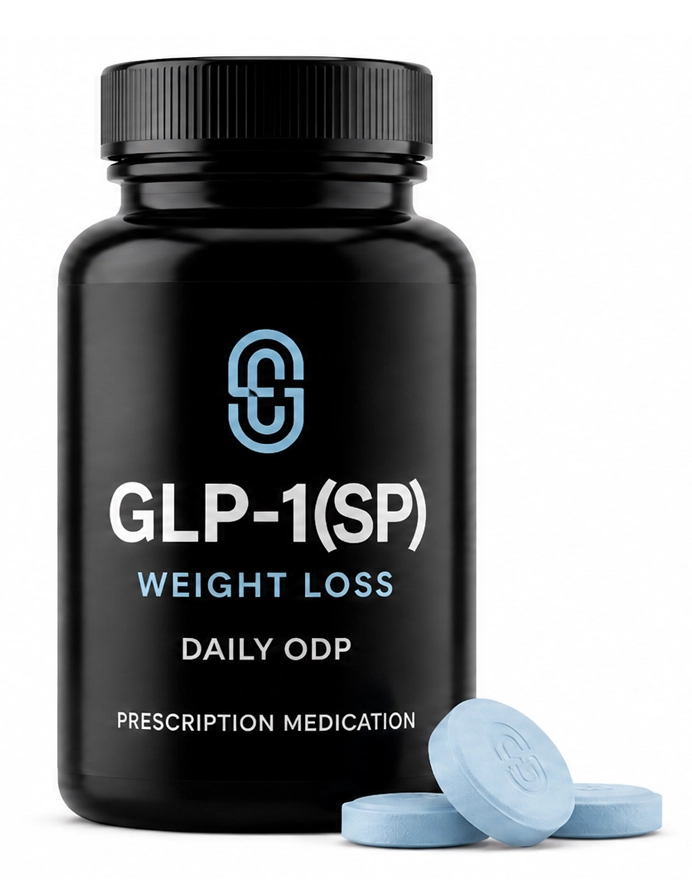
GLP SP 2mg
Daily dissolvable GLP-1 to curb appetite and drop weight.
- Curbs Appetite
- Daily Dissolvable Tablet
- Steady, Lasting Results

GLP T 3mg
Dual-action GLP-1 for stronger appetite control.
- Dual-Action Formula
- Daily Dissolvable Tablet
- Maximum Appetite Control

Berberine with Ceylon Cinnamon
Natural metabolic support for blood sugar and weight.
- Supports Healthy Metabolism
- Balances Blood Sugar
- Once-Daily Tablet
The semaglutide vs tirzepatide question is the one I hear most often right now, usually phrased some version of, "My friend lost 50 pounds on one of these. Which one should I ask my doctor about?" Fair question. The two drugs sit in the same neighborhood pharmacologically, but they aren’t twins, and the weight loss numbers in head-to-head data are not the same.
Semaglutide (sold as Wegovy for weight loss and Ozempic for type 2 diabetes) is a GLP-1 receptor agonist. Tirzepatide (Zepbound for weight loss, Mounjaro for diabetes) hits two gut hormone receptors, GLP-1 and GIP. That second receptor is the reason the conversation exists at all.
Before getting into who "wins," it’s worth saying upfront: both are FDA-approved for chronic weight management in adults with obesity or overweight plus a weight-related condition. Neither is a quick fix, and neither works well if you stop taking it.
How Semaglutide vs Tirzepatide Actually Work
Both drugs mimic gut hormones your body releases after a meal. They slow stomach emptying, reduce appetite, and dampen the food-noise that makes dieting miserable. Patients describe it as "I just forgot to be hungry."
The difference: semaglutide is a single agonist (GLP-1 only). Tirzepatide is a dual agonist (GLP-1 and GIP). In theory, hitting GIP too gives you a bigger metabolic effect on appetite and insulin sensitivity. In practice, the trial data backs that up.
If you want the deeper mechanism walkthrough, this patient-friendly explainer on how GLP-1 medications work covers the biology without making your eyes glaze over.
Weight Loss Results: What the Trials Show
This is where semaglutide vs tirzepatide stops being a toss-up.
The STEP 1 trial of semaglutide 2.4 mg weekly, published in the New England Journal of Medicine in 2021, showed average weight loss of about 14.9% over 68 weeks. Solid result. Genuinely changed the field.
Then came SURMOUNT-1 for tirzepatide, also in NEJM, in 2022. At the highest 15 mg dose, average weight loss hit about 20.9% over 72 weeks. The 10 mg dose still came in around 19.5%.
And in 2024, the SURMOUNT-5 trial directly compared the two drugs head to head. Tirzepatide produced about 20.2% weight loss versus 13.7% for semaglutide. Roughly a 6 to 7 percentage point edge, consistently.
So on raw weight loss, tirzepatide wins. That’s the honest answer.
But "better" isn’t the whole story
A few things to keep in mind before you decide tirzepatide is the obvious pick:
- Not every patient needs maximum weight loss. Someone targeting 10 to 15% may do beautifully on semaglutide.
- Tolerability differs person to person. Some patients get hammered with nausea on tirzepatide and breeze through semaglutide, or vice versa.
- Supply, cost, and insurance coverage often decide this for you whether you like it or not.
- Semaglutide has more years of real-world cardiovascular outcomes data, particularly from the SELECT trial.
Side Effects: Mostly the Same Family
Both drugs share the GLP-1 side effect profile. Nausea is the headliner, especially during dose escalation. Constipation, diarrhea, reflux, and the occasional bout of vomiting round out the usual complaints. Most resolve within a few weeks if you titrate slowly.
Rarer but more serious risks for both include pancreatitis, gallbladder problems, and a boxed warning about thyroid C-cell tumors based on rodent studies. Patients with a personal or family history of medullary thyroid carcinoma or MEN 2 shouldn’t use either drug.
For a fuller breakdown of what tirzepatide users tend to experience in the first three months, this rundown on tirzepatide side effects is worth a read before your first injection.
One clinical observation worth mentioning: in my experience talking with patients, tirzepatide seems to cause slightly more GI symptoms at equivalent stages of titration, but it’s not dramatic. Both require patience during the first eight weeks.
Cost and Access in the Semaglutide vs Tirzepatide Comparison
List prices are roughly comparable, both landing around $1,000 to $1,350 per month without insurance. Real out-of-pocket varies wildly depending on plan, manufacturer savings cards, and whether your prescription is for the weight loss brand or the diabetes brand.
Medicare currently doesn’t cover either drug strictly for weight loss, though that’s been under active policy debate. Commercial insurance coverage is patchy. Prior authorizations are the norm, not the exception.
If you’re weighing the brand choices specifically, the Wegovy vs Zepbound comparison goes deeper into the pricing and coverage angles. You can also compare current pricing on semaglutide and tirzepatide at edrugstore.com to see what your actual cost would look like.
Who Should Choose Which?
There’s no universal winner in semaglutide vs tirzepatide. There’s a best fit for you.
Tirzepatide tends to make sense if:
- Your weight loss target is more than 15% of starting body weight
- You also have type 2 diabetes or significant insulin resistance
- You’ve tried semaglutide and plateaued
Semaglutide tends to make sense if:
- You have established cardiovascular disease (it has FDA-approved cardiovascular risk reduction labeling)
- Cost or insurance coverage tips the scale
- You tolerated it well previously and don’t want to switch
Either way, this is a conversation with a prescriber who knows your full history, your other meds, and your goals.
The Bottom Line on Semaglutide vs Tirzepatide
If you’re asking purely "which produces more weight loss," tirzepatide wins by about 6 to 7 percentage points in head-to-head data. If you’re asking "which is right for me," the semaglutide vs tirzepatide answer depends on your cardiovascular history, your tolerance for GI side effects, your insurance, and your goals.
Talk to your prescriber about which drug fits your situation, and ask your pharmacist to walk you through the injection technique and titration schedule before your first dose. The drugs only work if you stick with them, and most of the people who quit do so because no one prepared them for the first six weeks.
This article is for informational purposes only and is not medical advice. Always consult a licensed pharmacist or physician before starting, stopping, or changing any medication.
References
- FDA approval of tirzepatide for chronic weight management, Confirms regulatory status and indication.
- STEP 1 trial of semaglutide, NEJM 2021, Source of the 14.9% average weight loss data for semaglutide.
- SURMOUNT-1 trial of tirzepatide, NEJM 2022, Source of the 20.9% average weight loss data for tirzepatide.
- FDA postmarket safety information on semaglutide, Boxed warnings and contraindications.

Dr Steven Schlosser
Dr. Schlosser graduated from Lafayette College Phi Beta Kappa and attended Georgetown Medical School. He had 4 years of medical residency training at Tufts University in Boston in both Gynecology and Internal Medicine. He has had a spotless medical career for the past 40+ years and is Board Certified. Learn More