
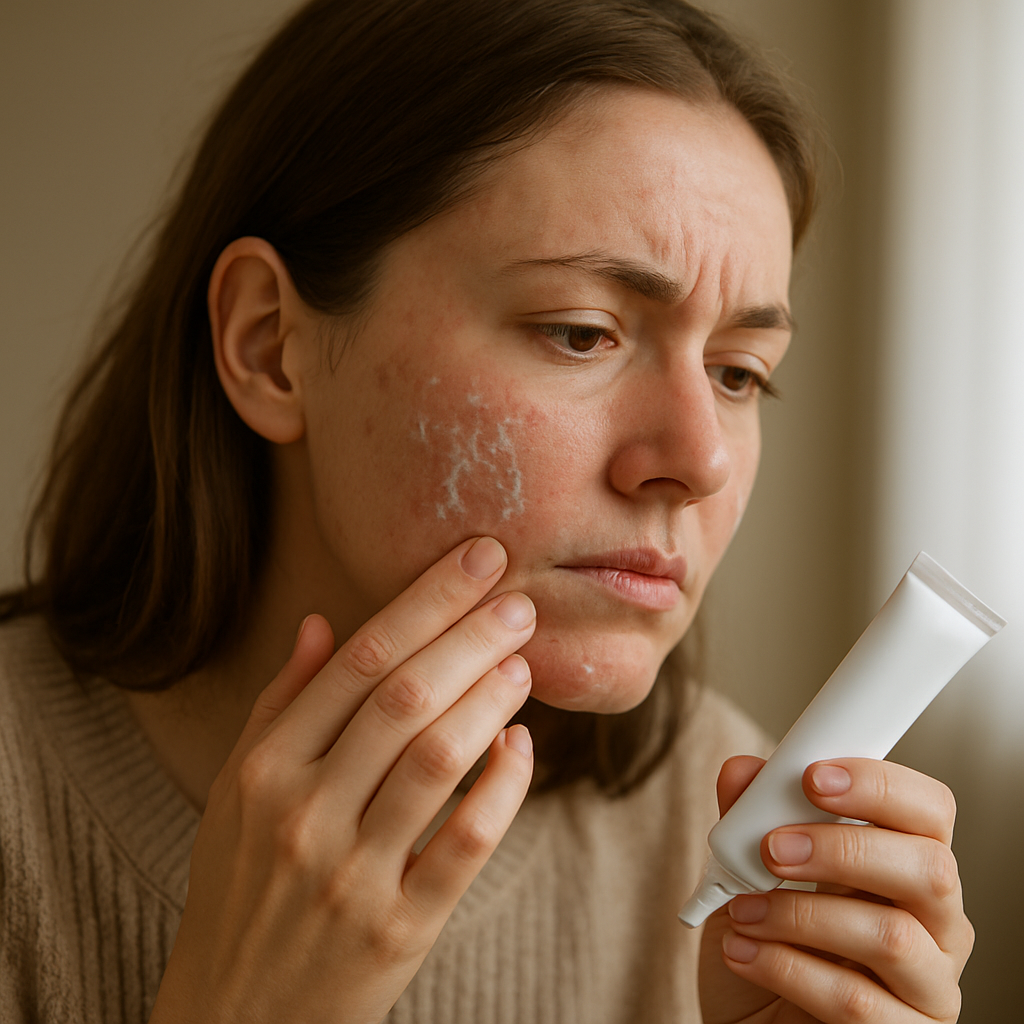

If you’ve been using a retinoid for more than a few weeks, you’ve probably wondered where the line sits between "this is just my skin adjusting" and "something is actually wrong." Tretinoin side effects are notoriously hard to read because the drug is designed to disrupt your skin’s normal cycle. A little irritation is expected. A lot is a problem.
Tretinoin is FDA-approved for acne and is widely used off-label for photoaging and fine lines. It works by speeding up cell turnover and remodeling collagen, which is exactly why it’s effective and exactly why it can leave your face looking like sandpaper in week three. The FDA prescribing information for tretinoin lists redness, peeling, burning, and dryness as expected effects, especially in the first weeks of use.
The trick is knowing which reactions mean "push through" and which mean "stop, your barrier is wrecked." Here are five signs your skin is actually waving a white flag.
1. Peeling That Won’t Quit After 6 Weeks
Some flaking in the first month is normal. Most patients see it taper by week four to six as the skin acclimates. That’s the retinization phase, and dermatologists at Cleveland Clinic describe it as a typical adjustment window.
What’s not normal: thick sheets of peeling that keep coming back month after month, or peeling so severe that makeup won’t sit on your face. That’s a sign your skin barrier hasn’t recovered, and continuing to apply tretinoin on top of it just deepens the damage.
What I tell patients in this situation is to drop the frequency. If you’re using it nightly, go to every third night. If you’re already on a low-frequency schedule, take a full week off and rebuild with a bland moisturizer (something with ceramides or petrolatum) before reintroducing.
2. A Stinging, Burning Sensation That Lingers
A mild tingle for a few minutes after application is common, particularly with 0.05% or 0.1% strengths. Tretinoin side effects of this kind usually fade within 20 to 30 minutes.
But if your skin burns for hours, or if applying moisturizer on top feels like rubbing alcohol on a scrape, your barrier is compromised. That’s not the drug working harder. That’s inflammation, and inflammation on the face leads to post-inflammatory hyperpigmentation, especially in medium and darker skin tones.
Signs the burning has crossed the line:
- It wakes you up at night or makes it hard to sleep on that side of your face
- Water alone stings
- The burning lasts more than an hour after application
- Even gentle products you’ve used for years now feel harsh
3. Persistent Redness That Looks Like Rosacea
Light pinkness, especially around the nose and chin, is part of the early tretinoin experience. But sustained redness that lasts all day, every day, sometimes with visible broken capillaries, can mean you’ve pushed your skin into a sensitized state.
The American Academy of Dermatology notes that retinoid-induced irritation can mimic or unmask rosacea in susceptible patients. If you’re flushing easily, feeling heat across your cheeks after coffee or wine, or noticing your skin reacting to products it never reacted to before, your face needs rest.
This is one of those tretinoin side effects that doesn’t get better by powering through. It usually requires a full pause of one to two weeks and a return at a lower strength or less frequent application.
4. Cracking Around the Mouth, Eyes, or Nostrils
The corners of your mouth and the creases beside your nose are the thinnest skin on your face. They’re also where tretinoin tends to migrate when you apply too close. Cracks that bleed or sting when you smile or yawn are a serious warning sign.
Persistent cracking can lead to perleche (angular cheilitis) and small fissures that take weeks to heal. If you’re seeing this, it’s time to back off. Use a barrier ointment (plain petrolatum works) on those zones and skip tretinoin in that area entirely for at least a week.
If you’re weighing whether to switch to a gentler retinoid altogether, our breakdown of tretinoin vs adapalene for wrinkles covers when adapalene is the smarter call for sensitive skin.
5. New Breakouts That Look Different From Your Usual Acne
Tretinoin causes a "purge" in the first 2 to 8 weeks where deep clogs surface as visible pimples. That’s expected and well documented in MedlinePlus drug information.
What’s not a purge:
- Tiny, itchy bumps clustered on the cheeks or jawline (often perioral dermatitis)
- Pustules that appear in areas you don’t normally break out
- Bumps that show up after month three, long past the purge window
These can signal contact dermatitis or a disrupted skin microbiome, both of which call for stopping the retinoid and letting your skin reset. Just like the conversation around loratadine side effects your pharmacist wants you to know, some reactions look like the original condition but are actually drug-driven.
How to Take a Tretinoin Break the Right Way
Stopping cold turkey is fine. You won’t lose all your progress in a week. Most dermatologists recommend 7 to 14 days off, during which you focus on:
- A gentle, fragrance-free cleanser (no acids, no scrubs)
- A heavy moisturizer with ceramides, glycerin, or hyaluronic acid
- Strict daily SPF 30 or higher
- Skipping all other actives (vitamin C, AHAs, BHAs, benzoyl peroxide)
When your skin feels normal again, restart at a lower frequency. Twice a week is a reasonable reentry point. Many readers find that switching to a more affordable generic tretinoin through edrugstore.com makes it easier to stick with a sustainable, lower-frequency routine long-term.
When to Call Your Dermatologist
Most tretinoin side effects can be managed at home. But contact your prescriber if you experience:
- Blistering or oozing
- Severe swelling
- Signs of infection (yellow crusting, spreading redness, fever)
- Persistent burning that doesn’t ease after stopping
The Bottom Line
Tretinoin works because it pushes your skin. The job of a good routine is to push hard enough to see results without pushing into damage. If you’re seeing any of these five warning signs, take the break. Your skin will recover faster than you think, and the long-term results are better when you respect the limits. Talk to your pharmacist or dermatologist about adjusting your strength, frequency, or formulation before quitting entirely.
This article is for informational purposes only and is not medical advice. Always consult a licensed pharmacist or physician before starting, stopping, or changing any medication.
References
- FDA Prescribing Information for Tretinoin, official labeling for expected adverse reactions.
- Cleveland Clinic: Tretinoin Skin Cream, patient-facing overview of side effects and retinization.
- American Academy of Dermatology: Acne Treatment in Adults, clinical guidance on retinoid use and irritation.
- MedlinePlus: Tretinoin Topical, NIH consumer drug information including purge and side effect timeline.

Dr Steven Schlosser
Dr. Schlosser graduated from Lafayette College Phi Beta Kappa and attended Georgetown Medical School. He had 4 years of medical residency training at Tufts University in Boston in both Gynecology and Internal Medicine. He has had a spotless medical career for the past 40+ years and is Board Certified. Learn More