
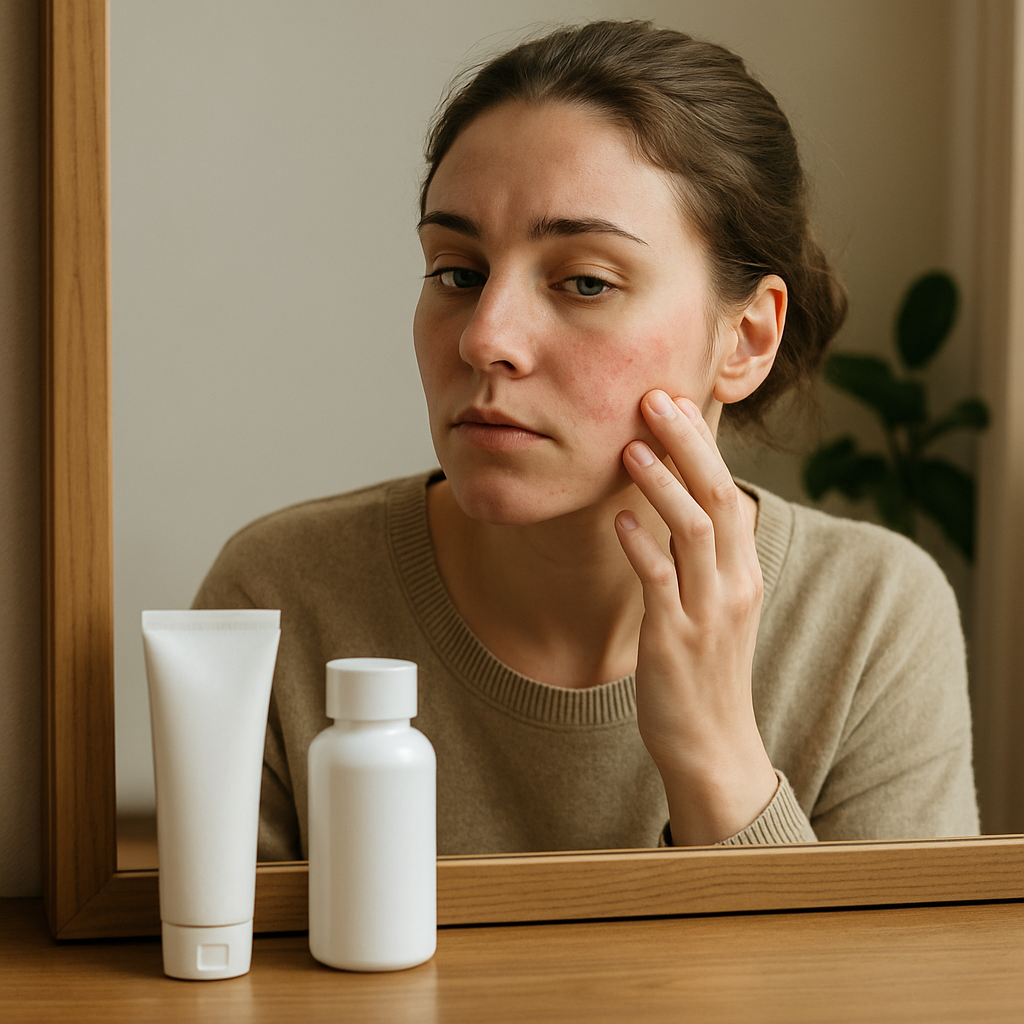

If you’ve been weighing adapalene vs tazarotene for stubborn acne, you’re already asking the right question. Both are prescription-strength retinoids. Both can clear breakouts that benzoyl peroxide and salicylic acid couldn’t touch. But they don’t feel the same on your face, and that difference matters more than most people realize.
The honest answer most dermatologists give patients at the counter is this: one of these is famously gentle, the other is famously powerful, and the trade-off is exactly what you’d guess. The question isn’t which is "better" in some abstract sense. It’s which one your skin will actually tolerate long enough to see results.
Here’s what the data and day-to-day clinical experience suggest, including what irritation really looks like with each.
How Adapalene and Tazarotene Actually Work
Both drugs are topical retinoids, meaning they bind to retinoic acid receptors in skin cells and tell those cells to turn over faster, unclog pores, and calm inflammation. That’s the textbook version.
In practice, they hit those receptors a little differently. Adapalene (sold as Differin, now available over the counter at 0.1% strength and by prescription at 0.3%) is selective for certain retinoid receptors, which is part of why it tends to irritate less. Tazarotene (Tazorac, Arazlo, Fabior) is a more potent prodrug that converts to tazarotenic acid in the skin and binds more broadly. The FDA-approved labeling for adapalene describes it as a well-tolerated first-line acne treatment, and the American Academy of Dermatology acne guidelines list both as effective options, with tazarotene generally reserved for more resistant cases.
Translation: tazarotene usually works faster and harder. It also stings more.
Adapalene vs Tazarotene: Head-to-Head on Irritation
This is where most patients want a straight answer, so here it is.
In the head-to-head trials that exist, including a frequently cited split-face study published in the Journal of the American Academy of Dermatology, adapalene 0.3% gel and tazarotene 0.1% cream produced similar acne clearance over 12 weeks. But tazarotene consistently caused more burning, peeling, redness, and dryness, particularly in the first two to four weeks.
What that looks like in real life:
- Adapalene: mild dryness and some flaking for the first 2 to 3 weeks, usually settles down
- Tazarotene: noticeable stinging on application, visible peeling, sometimes a rashy redness that can last 4 to 6 weeks before skin acclimates
- Both: temporary worsening of acne ("purging") in weeks 2 to 4 as deeper clogs surface
Roughly one in three patients on tazarotene reports irritation significant enough that they consider stopping. With adapalene, that number is closer to one in ten. That’s not a small gap.
So in the adapalene vs tazarotene irritation question, adapalene wins clearly. Whether it wins overall depends on what you need it to do.
When Tazarotene Is Worth the Irritation
There are patients for whom tazarotene is genuinely the better choice, even knowing it’ll burn.
If you’ve already tried adapalene at 0.3% for a solid 12 weeks without meaningful improvement, stepping up to tazarotene is reasonable. Same goes for people whose acne is mixed with significant post-inflammatory hyperpigmentation, scarring, or early photoaging. Tazarotene has stronger data for fading dark spots and smoothing texture, which is why some dermatologists reach for it in patients in their late 20s and 30s dealing with both acne and early lines.
Tazarotene is also FDA-approved for psoriasis, which adapalene is not. If you have both conditions, that may settle the question.
The trade-off looks similar to other clinical decisions where potency comes with side effects. We see the same pattern in the tretinoin side effects discussion, where the stronger retinoid delivers faster results but demands more from your skin barrier.
When Adapalene Is the Smarter Starting Point
For most people just starting prescription retinoid therapy, adapalene is what I’d suggest looking at first. The reasons are practical.
It’s available without a prescription at 0.1%, which means you can try it cheaply before committing to a dermatology visit. It plays nicely with benzoyl peroxide (tazarotene can be inactivated by some BPO formulations, though newer combinations have solved this). It’s also approved for use in patients as young as 9 years old, which makes it the go-to for teen acne.
Sensitive skin types, rosacea-prone patients, and anyone with a compromised barrier from over-exfoliating should almost always start with adapalene. If you’ve had bad experiences with active ingredients before, the same logic that applies in the cetirizine vs levocetirizine comparison holds here: the gentler option you’ll actually stick with beats the stronger one you’ll quit.
You can compare prices on adapalene and other prescription acne treatments at edrugstore.com if cost is part of your decision.
Tips to Minimize Irritation With Either Retinoid
Whichever you land on in the adapalene vs tazarotene debate, technique matters as much as the molecule.
- Apply a pea-sized amount to dry skin, never damp skin, which increases absorption and irritation
- Wait 20 to 30 minutes after washing your face before applying
- Use it 2 to 3 nights per week for the first month, then increase as tolerated
- Layer a plain ceramide moisturizer on top or underneath ("sandwich method")
- Daily SPF 30 or higher is non-negotiable, retinoids increase UV sensitivity
- Skip other actives (glycolic acid, salicylic acid, vitamin C) on retinoid nights at first
If you’re managing multiple prescriptions and want to think about what should be in your medicine cabinet generally, our piece on essential medications to keep on hand covers the basics worth stocking.
The Bottom Line on Adapalene vs Tazarotene
For the irritation question specifically, adapalene vs tazarotene isn’t close. Adapalene causes meaningfully less burning, peeling, and redness, and most patients tolerate it well enough to stay consistent. Tazarotene is stronger, faster on resistant acne, and better for combined acne plus pigmentation or psoriasis, but you’ll pay for that potency with a tougher adjustment period.
If you’re new to retinoids, start with adapalene 0.1% and give it 12 full weeks. If your acne hasn’t budged and your barrier is intact, that’s the time to ask your dermatologist or pharmacist whether stepping up to tazarotene makes sense. Either way, talk to a prescriber about what fits your skin type, your other medications, and your tolerance for a few weeks of flaking.
This article is for informational purposes only and is not medical advice. Always consult a licensed pharmacist or physician before starting, stopping, or changing any medication.
References
- FDA announcement on over-the-counter adapalene, confirms adapalene’s safety profile sufficient for OTC use.
- American Academy of Dermatology acne guidelines, clinical positioning of adapalene and tazarotene in acne treatment.
- Journal of the American Academy of Dermatology, PubMed-indexed retinoid trials, head-to-head efficacy and tolerability data for topical retinoids.

Dr Steven Schlosser
Dr. Schlosser graduated from Lafayette College Phi Beta Kappa and attended Georgetown Medical School. He had 4 years of medical residency training at Tufts University in Boston in both Gynecology and Internal Medicine. He has had a spotless medical career for the past 40+ years and is Board Certified. Learn More