
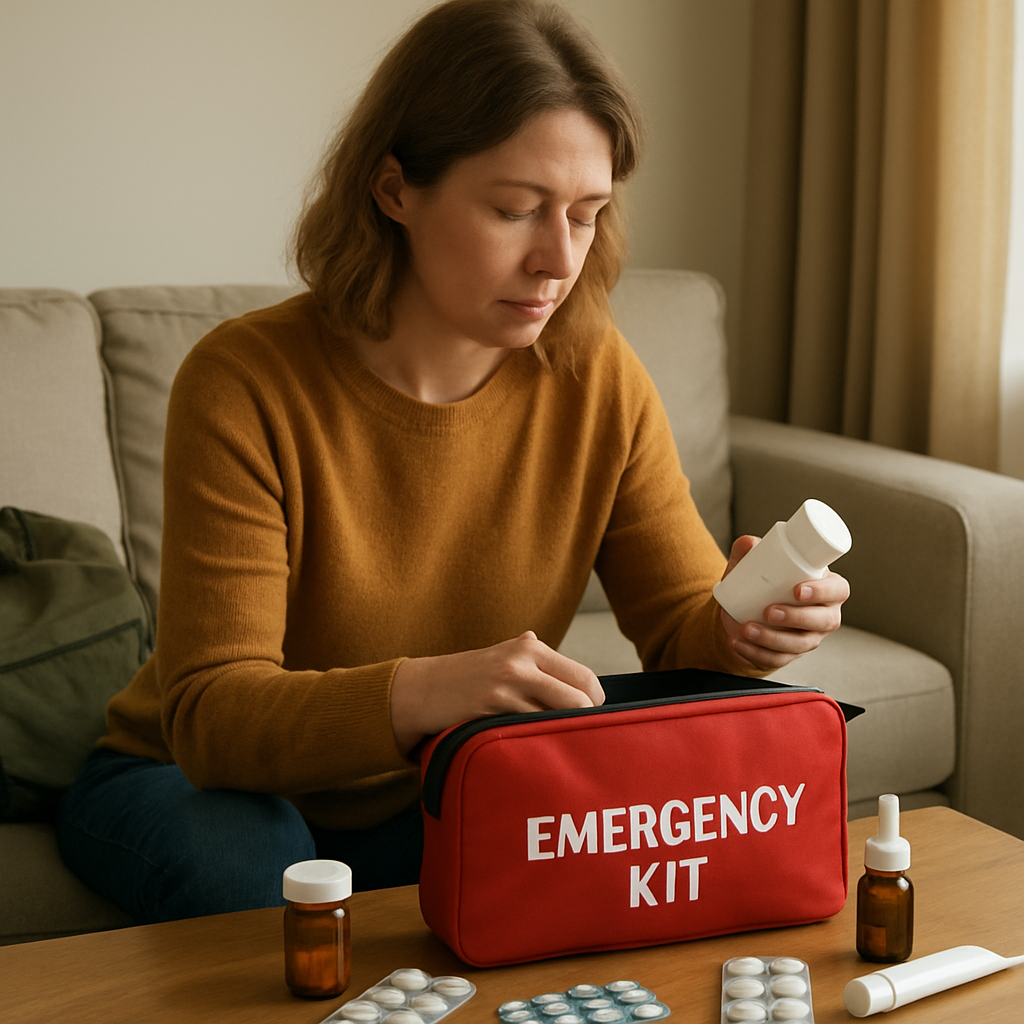

When the power goes out, a family member spikes a fever at 2 a.m., or a hurricane keeps you indoors for three days, the right emergency kit medications can turn a crisis into an inconvenience. Most people remember the flashlight and bottled water. They forget the medicine cabinet entirely.
That gap is where preventable suffering happens. A child’s allergic reaction, a partner’s chest pain, a grandparent’s blood sugar crash, none of these wait for the roads to clear.
What follows is a practical list of seven medications worth stocking before you need them, based on what emergency physicians and the FDA’s emergency preparedness guidance actually recommend for households. None of this replaces a conversation with your own prescriber, but it’s a strong starting point.
1. Aspirin (325 mg, Non-Coated)
If someone in your home has a suspected heart attack, chewable aspirin is one of the few interventions a bystander can deliver that genuinely changes outcomes. The American Heart Association recommends 325 mg chewed (not swallowed whole) at the first sign of a suspected cardiac event, after calling 911.
Keep non-coated tablets specifically. The enteric coating slows absorption, which is the opposite of what you want in an emergency. If you want to go deeper on cardiac preparedness, our guide on building a heart attack emergency kit at home walks through the full setup.
2. Acetaminophen and Ibuprofen
Two different pain relievers, two different jobs. Acetaminophen (Tylenol) handles fever and mild pain and is safer for people with kidney disease or stomach ulcers. Ibuprofen (Advil, Motrin) tackles inflammation, sprains, and toothaches more effectively.
Why pack both? Because some patients can’t take one or the other. Pregnant women generally avoid ibuprofen. People on blood thinners often avoid it too. Having both options in your emergency kit medications lets you match the drug to the person.
A practical note. Read labels carefully if you’re combining with cold medicines. Acetaminophen is the most common hidden ingredient in combination products and the leading cause of accidental overdose in the US, per MedlinePlus.
3. Diphenhydramine (Benadryl)
For allergic reactions, including hives, swelling, or insect stings, an oral antihistamine bought time before professional care. Diphenhydramine works fast, usually within 30 minutes, and it’s available without a prescription.
It’s also sedating, which is sometimes useful (a panicked child after a bee sting) and sometimes not. For daily allergy use, a less drowsy option makes more sense, and we’ve compared two of them in our breakdown of cetirizine vs levocetirizine and which causes less drowsiness.
Important. Diphenhydramine is not a substitute for epinephrine in true anaphylaxis. If someone has trouble breathing, throat tightness, or loses consciousness, that’s an EpiPen and 911 situation, not a Benadryl situation.
4. Loperamide (Imodium) and Oral Rehydration Salts
Acute diarrhea during an emergency is more than uncomfortable. It’s a dehydration risk, especially for kids and older adults. Loperamide slows things down enough to keep fluids in. Pair it with oral rehydration salts (or Pedialyte packets) and you’ve covered one of the most common post-disaster medical complaints.
Skip the loperamide if there’s bloody stool or high fever. That’s a sign of something that needs a clinician, not a household remedy.
5. An Antibiotic Ointment
Bacitracin or a triple-antibiotic ointment like Neosporin belongs in every emergency kit. Scrapes, cuts, and burns are far more common during power outages and weather events than people expect, and a contaminated wound that turns into cellulitis is exactly the kind of avoidable problem that lands people in urgent care.
Clean the wound first with bottled water or saline, then apply the ointment, then cover. The CDC’s wound care guidance is worth reviewing once a year.
6. Your Own Prescriptions, At Least a 7-Day Supply
This is the one most people skip. Blood pressure medications, insulin, thyroid replacement, inhalers, anticonvulsants, anticoagulants. If you take it daily, you need a backup supply you can grab in a go-bag.
Diabetics in particular need a carefully thought-through stash, and our guide to stocking a diabetes emergency kit for travel covers insulin storage, glucose tabs, and ketone strips in detail. Many pharmacies, including edrugstore.com, can help you set up a 90-day supply that makes maintaining an emergency reserve easier and cheaper than monthly refills.
Rotate the stash every few months so nothing expires. Set a calendar reminder.
7. Electrolyte Tablets or Powder
Not technically a medication, but functionally one in a heat wave or extended outage. Plain water alone can actually worsen electrolyte imbalances if someone has been sweating heavily or vomiting. A few electrolyte packets weigh almost nothing and take up no space.
Storage and Rotation: The Part Everyone Skips
Heat and humidity degrade medications faster than expiration dates suggest. Store your emergency kit medications in a cool, dry place, not the bathroom and not the car trunk in July. Check expiration dates twice a year (the daylight savings time switches are a useful prompt).
Keep everything in original packaging when possible. Dosing instructions and lot numbers matter if there’s ever a recall. The NIH’s MedlinePlus drug storage guidance has more on this.
If you want a complementary deeper dive on household preparation, our piece on 7 essential medications every home emergency kit should have covers a few additional considerations for families with kids or elderly members.
The Bottom Line
A well-stocked supply of emergency kit medications won’t replace a hospital, but it will get you through the gap between when something goes wrong and when professional help arrives. That gap is where outcomes are decided.
Build your kit before the next storm warning, not during it. Talk to your pharmacist about which emergency kit medications make sense given your family’s specific health conditions, age range, and medication list. And rotate your supply on a schedule you’ll actually remember.
This article is for informational purposes only and is not medical advice. Always consult a licensed pharmacist or physician before starting, stopping, or changing any medication.
References
- FDA Emergency Preparedness and Response, federal guidance on drug supplies during disasters.
- American Heart Association: Aspirin and Heart Disease, clinical recommendation on aspirin use during suspected heart attack.
- MedlinePlus: Acetaminophen, safety information and overdose risk on the most common OTC analgesic.
- CDC Emergency Wound Care, wound cleaning and infection prevention guidance after disasters.
- MedlinePlus: Storing Your Medicines, NIH guidance on medication storage and rotation.

Dr Steven Schlosser
Dr. Schlosser graduated from Lafayette College Phi Beta Kappa and attended Georgetown Medical School. He had 4 years of medical residency training at Tufts University in Boston in both Gynecology and Internal Medicine. He has had a spotless medical career for the past 40+ years and is Board Certified. Learn More