
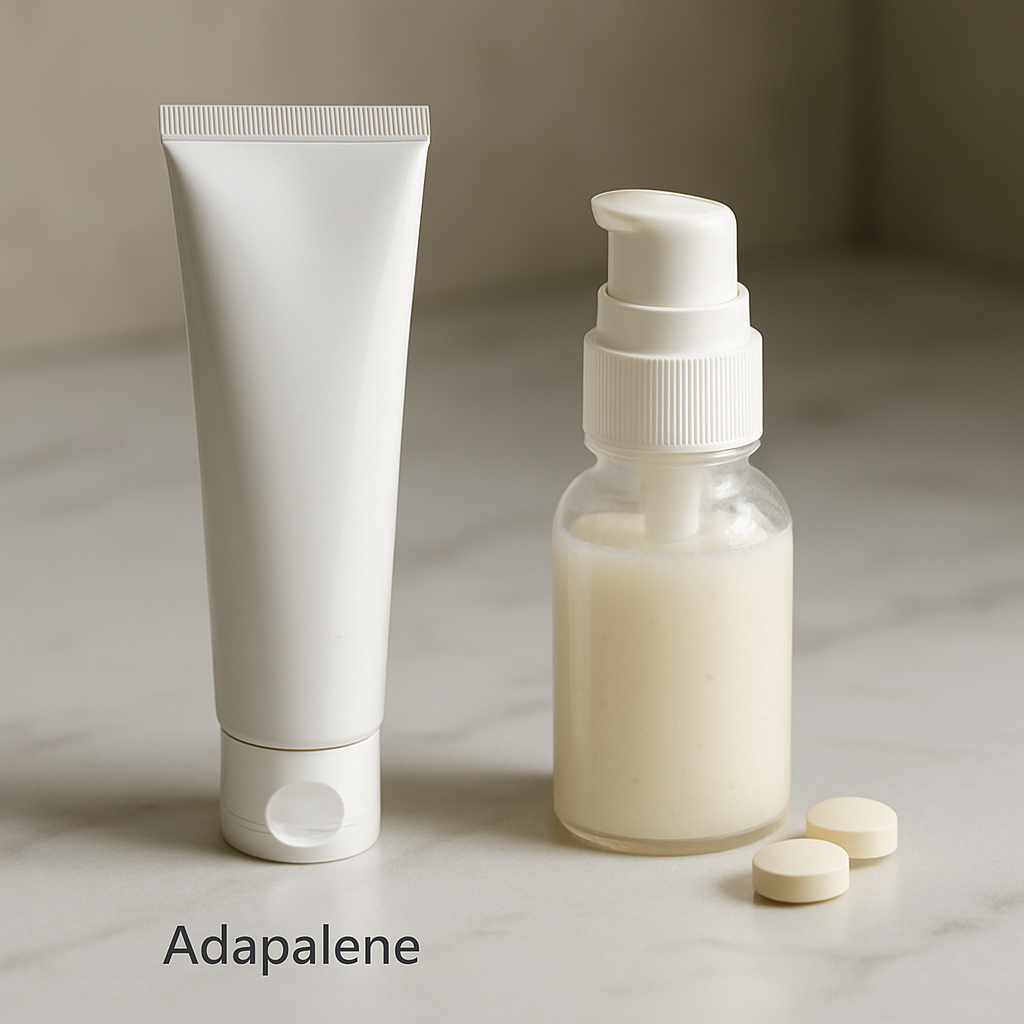

If you’ve stood in the skincare aisle trying to decide adapalene vs benzoyl peroxide, you’re asking the right question. Both are sitting right there on the shelf, both promise clearer skin, and both are backed by decades of clinical data. But they don’t work the same way, and they definitely don’t work on the same timeline.
The short answer? Benzoyl peroxide tends to show visible results faster, sometimes within a week or two. Adapalene plays the long game and usually pays off bigger by month three.
The longer answer matters more, because picking the wrong one for your skin type is how people end up frustrated, peeling, and convinced "nothing works." It’s also how they quit a perfectly good regimen two weeks before it would have started working.
How Each One Actually Works
Benzoyl peroxide is an antibacterial. It releases oxygen into the pore, which kills Cutibacterium acnes, the bacteria that drives inflammatory acne. It also helps clear out dead skin and excess oil. The FDA classifies benzoyl peroxide as a safe and effective OTC acne treatment at concentrations from 2.5% to 10%.
Adapalene is a third-generation retinoid. It binds to retinoic acid receptors in your skin and changes how skin cells turn over, which prevents the microcomedones (the tiny clogs you can’t see yet) that eventually become pimples. Adapalene 0.1% became available over the counter in 2016, making it the first OTC retinoid in the US, per the American Academy of Dermatology.
So one kills bacteria. The other prevents clogs. Different jobs, different speeds.
Adapalene vs Benzoyl Peroxide: Which Works Faster?
Here’s where the timelines diverge, and it’s worth setting expectations honestly.
Benzoyl peroxide timeline:
- Week 1 to 2: less redness in existing inflamed pimples
- Week 4: noticeable drop in active breakouts
- Week 8 to 12: peak benefit for inflammatory acne
Adapalene timeline:
- Week 1 to 4: skin often looks worse (the "purge")
- Week 8: starting to see real improvement
- Week 12 to 16: significant clearing, especially of comedones
- Month 6+: continued improvement, smoother texture
A 2016 meta-analysis in the British Journal of Dermatology found benzoyl peroxide produced faster reductions in inflammatory lesions at four weeks, while adapalene caught up and pulled ahead for comedonal acne by week twelve. The National Library of Medicine summarizes similar findings in its overview of topical acne therapies.
What I tell patients: if you have a wedding in three weeks and an angry red breakout, benzoyl peroxide. If you have ongoing acne and want long-term control, adapalene. If you can tolerate both, the combination beats either alone.
What They Feel Like on Your Skin
This is the part that gets undersold in the studies.
Benzoyl peroxide can dry your skin out quickly. It also bleaches fabric, which is not a joke. White pillowcases, white towels, and dark t-shirts have all been victims. About one in five people get noticeable irritation in the first two weeks, especially at the 10% strength. Most do fine with 2.5% or 5%.
Adapalene is famous for the "retinoid uglies." Flaking, redness, a tight feeling, sometimes a breakout flare around weeks two to four. This is normal and usually temporary, but it’s why people quit. The honest fix is to apply it every other night for the first two weeks, use a bland moisturizer on top, and ride it out.
Neither should be used with harsh scrubs, and both increase sun sensitivity. Sunscreen isn’t optional. The Cleveland Clinic recommends a broad-spectrum SPF 30 or higher every morning when you’re on any acne regimen.
Can You Use Them Together?
Yes, and for moderate acne it’s often the strongest move. Older formulations of adapalene could be inactivated by benzoyl peroxide, but the modern micronized version is stable. There’s even a prescription combo product (Epiduo) that pairs them in a single tube.
The practical approach most dermatologists suggest:
- Benzoyl peroxide wash or cream in the morning
- Adapalene gel at night
- Moisturizer over both
- Sunscreen during the day
If your skin is already dry or sensitive, start with just one. Add the second after four to six weeks if you’re tolerating the first.
This same "combination beats single agent" pattern shows up across dermatology. If you’re also dealing with stronger prescription options, our comparison of tazarotene vs tretinoin for acne walks through where the prescription retinoids fit in.
When to See a Dermatologist Instead
OTC adapalene and benzoyl peroxide handle a lot of mild to moderate acne. They don’t handle everything. See a clinician if:
- You have deep, painful cysts or nodules
- Acne is leaving scars or dark marks
- You’ve used both consistently for 12 weeks with no improvement
- Breakouts are concentrated along the jawline in an adult woman (often hormonal)
- You’re considering isotretinoin, spironolactone, or oral antibiotics
Hormonal acne in particular often needs a different approach. For women weighing birth control as part of acne management, our piece comparing norethindrone vs drospirenone mini-pills covers how the progestin choice affects skin.
And if cost is the issue more than effectiveness, generic adapalene 0.1% gel is widely available. You can compare prices on adapalene and benzoyl peroxide products at edrugstore.com if you want to see what your out-of-pocket would be without insurance.
The Bottom Line
In the adapalene vs benzoyl peroxide question, speed favors benzoyl peroxide and durability favors adapalene. Most patients do best using both, with realistic expectations about the first month being rough. Track your skin with weekly photos. Give whichever you pick a full 12 weeks before deciding it isn’t working. And if you’re managing other prescription regimens at the same time, our guide on building a travel medication kit covers how to keep skin treatments stable when you’re on the road.
Talk to your pharmacist about which strength of benzoyl peroxide fits your skin type, and ask whether adapalene makes sense as a long-term addition.
This article is for informational purposes only and is not medical advice. Always consult a licensed pharmacist or physician before starting, stopping, or changing any medication.
References
- FDA, Understanding OTC Acne Medicines, regulatory status and approved concentrations of benzoyl peroxide.
- American Academy of Dermatology, Acne Treatment, clinical guidance on topical retinoids including adapalene.
- National Library of Medicine, Acne Vulgaris, peer-reviewed overview of topical acne therapy efficacy and timelines.
- Cleveland Clinic, Acne, patient-facing guidance on combining treatments and sun protection.

Dr Steven Schlosser
Dr. Schlosser graduated from Lafayette College Phi Beta Kappa and attended Georgetown Medical School. He had 4 years of medical residency training at Tufts University in Boston in both Gynecology and Internal Medicine. He has had a spotless medical career for the past 40+ years and is Board Certified. Learn More