
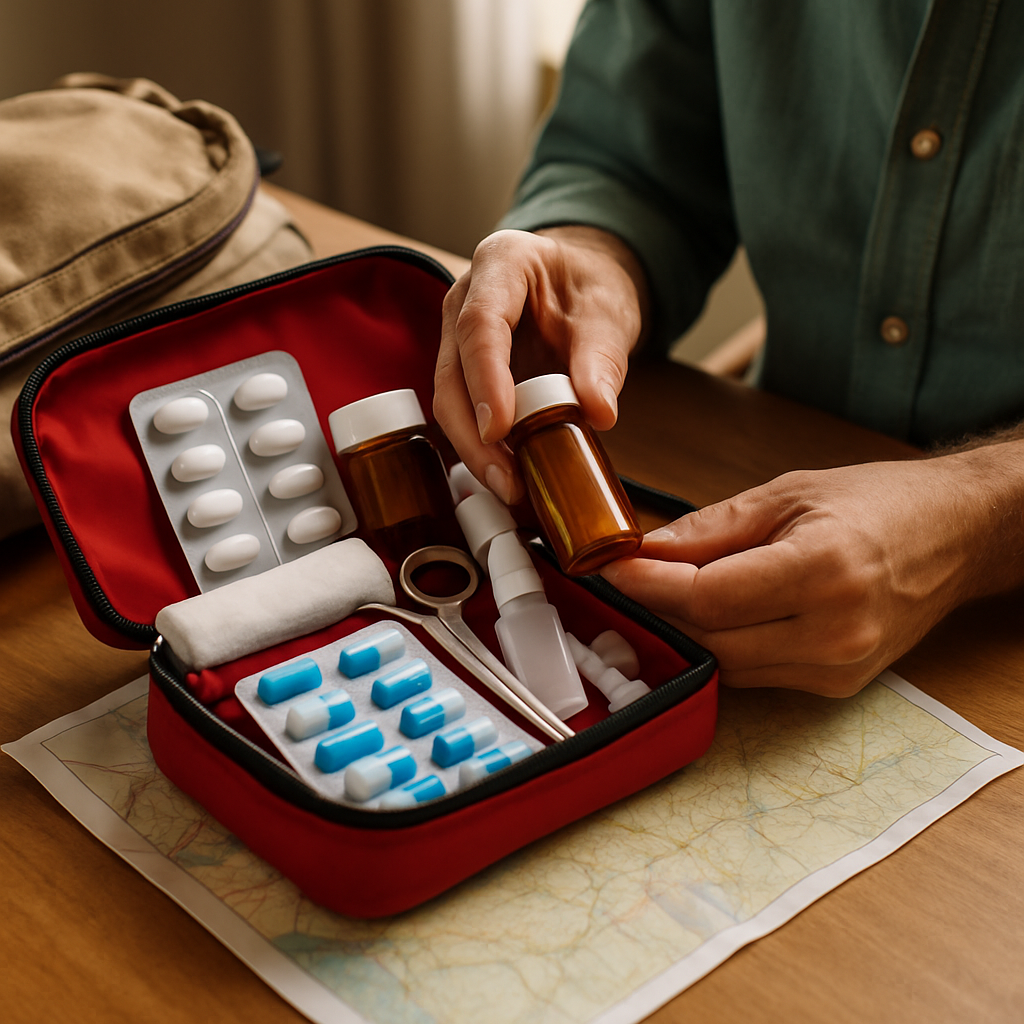

A good travel emergency medication kit isn’t the one with the most stuff in it. It’s the one that covers the problems you’re actually likely to run into, fits in your carry-on, and survives a TSA inspection without anyone raising an eyebrow.
Most travelers either overpack (a full pharmacy aisle stuffed into a quart bag) or underpack (two Advil and a Band-Aid). Both fail you at the same moment, which is usually around 11 p.m. in a hotel room far from any pharmacy that speaks your language.
What follows is how a pharmacist would build it. Not exciting. Just useful.
Start With What You Actually Take Daily
Before you think about emergencies, handle the boring part: your regular prescriptions. The CDC’s traveler health guidance is blunt about this. Pack enough medication for the full trip, plus an extra week. Keep everything in original labeled bottles. Carry it in your carry-on, not checked luggage, because lost bags happen and so do delayed connections.
A few practical notes most people miss:
- Bring a printed list of every medication you take, with generic names and doses. Brand names vary by country. Generic names don’t.
- If you take controlled substances (ADHD meds, certain anxiety meds, some pain meds), carry a copy of the prescription and check the destination country’s rules. Some places will confiscate medications that are routine in the US.
- Insulin, GLP-1 pens, biologics, and anything else that needs refrigeration deserves a small insulated pouch with a gel pack.
That covers the prescription layer of your travel emergency medication kit. Now we add the emergency layer.
The Core Emergency Layer
This is the part that handles the common problems travelers actually face. Stomach trouble, allergies, pain, fevers, minor wounds, and the occasional unexpected reaction.
A solid travel emergency medication kit should include:
- Pain and fever: acetaminophen and an NSAID like ibuprofen or naproxen. If you’re not sure which NSAID makes more sense for you long-term, this breakdown of naproxen versus ibuprofen for safety is worth a read before you pack.
- Antihistamine: a non-drowsy oral antihistamine (loratadine, cetirizine, or fexofenadine) plus a sedating one (diphenhydramine) for severe reactions or sleep. Travelers who get seasonal flare-ups often ask which non-drowsy option holds up better, and the comparison of fexofenadine versus loratadine gives a fair answer.
- GI rescue: loperamide for diarrhea, bismuth subsalicylate tablets, an oral rehydration salt packet or two, and an antacid or famotidine for reflux.
- Anti-nausea: meclizine for motion sickness, plus ondansetron if your prescriber will give you a small supply for food poisoning episodes abroad.
- Topical care: hydrocortisone 1% cream, antibiotic ointment, alcohol wipes, blister bandages, a small roll of gauze and tape, tweezers.
- Sleep aid: melatonin for jet lag. Use sparingly.
That’s the working core. Most people don’t need more.
The Allergy and Anaphylaxis Question
If anyone in your party has a known severe allergy (food, insect sting, latex, medication), the rules change. Two epinephrine auto-injectors come with you. Not one. Two. The FDA-approved labeling for these devices is clear that a second dose is sometimes needed before emergency help arrives.
Which device matters less than having one that’s not expired and that everyone traveling with the patient knows how to use. If you’re choosing between options, the comparison between EpiPen and Auvi-Q lays out the speed and design differences in plain terms.
And while we’re on allergy kits, there’s a separate piece on the items most emergency allergy kits are missing that’s worth reading before any international trip.
Building Your Travel Emergency Medication Kit by Destination
A travel emergency medication kit for a weekend in Chicago looks different from one for two weeks in rural Peru. Adjust for:
High-altitude trips
Acetazolamide for altitude sickness prevention, if your prescriber agrees. Start dosing before you ascend.
Tropical or developing-country travel
Add an antibiotic for traveler’s diarrhea (azithromycin is commonly prescribed for this purpose, dose determined by your prescriber), DEET-based insect repellent, and any antimalarials your travel clinic recommends. The CDC’s destination-specific advice is the right starting point.
Long-haul flights
Compression socks, a small supply of any rescue inhaler you use, and consider talking to your doctor about DVT risk if you’ve had clots before.
Cruises
Extra anti-nausea meds. Norovirus protection (hand sanitizer, hand sanitizer, hand sanitizer).
Packing, Labeling, and Surviving Customs
A few things that make a real difference:
- Use a clear zippered pouch so security can see what’s inside without unpacking everything.
- Keep prescriptions in their original labeled containers. A pill organizer is fine for the trip itself, but originals travel through customs.
- Carry a one-page medication summary with generic names, doses, your allergies, your conditions, and an emergency contact. Some travelers find it useful to compare prices and refills before leaving, and you can often source generics through edrugstore.com to keep travel supplies affordable.
- Liquids over 3.4 oz that are medically necessary are allowed through TSA, but declare them at screening.
- Check the State Department’s country information pages for medication restrictions at your destination. Pseudoephedrine, certain ADHD stimulants, and some opioids are banned or tightly controlled in countries you wouldn’t expect.
When to Skip the Kit and Find Real Help
A travel emergency medication kit handles minor problems. It doesn’t replace care. Get to a clinic or hospital if you see chest pain, trouble breathing, signs of a severe allergic reaction (swelling of the face or throat, widespread hives, dizziness), persistent high fever, bloody diarrhea, signs of dehydration that oral fluids aren’t fixing, or any head injury with confusion.
Travel insurance with medical evacuation coverage is worth it for international trips. Cheaper than the alternative.
Final Thoughts
A travel emergency medication kit isn’t supposed to be impressive. It’s supposed to be ready. Build it once, refresh it before each trip (check expirations, replace what you used last time), and keep it small enough that you’ll actually bring it. Talk to your pharmacist about your specific destination, your existing medications, and whether anything in your kit could interact with prescriptions you already take.
This article is for informational purposes only and is not medical advice. Always consult a licensed pharmacist or physician before starting, stopping, or changing any medication.
References
- CDC Travelers’ Health: Pack Smart, official US guidance on what to bring and how to carry medications abroad.
- CDC Destination-Specific Travel Advice, country-by-country health and vaccination recommendations.
- FDA Drug Safety Communication on Epinephrine Auto-Injectors, labeling and safety information for anaphylaxis devices.
- US State Department Country Information, destination rules on controlled and restricted medications.

Dr Steven Schlosser
Dr. Schlosser graduated from Lafayette College Phi Beta Kappa and attended Georgetown Medical School. He had 4 years of medical residency training at Tufts University in Boston in both Gynecology and Internal Medicine. He has had a spotless medical career for the past 40+ years and is Board Certified. Learn More