
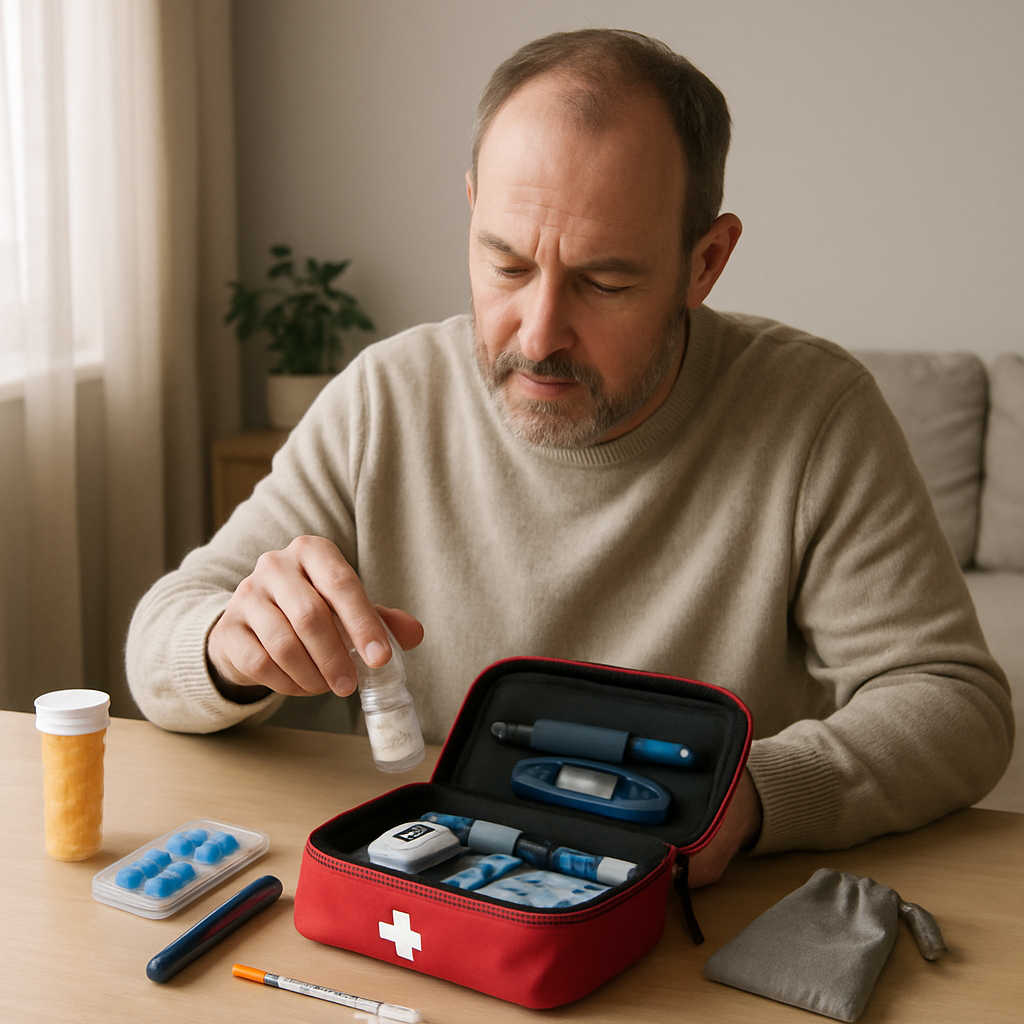

A diabetic emergency kit isn’t something you build once you need it. By then it’s too late. A hypoglycemic episode in a parking lot, a hurricane that knocks out power to your fridge for three days, a car breakdown two hours from home with your insulin sitting on the kitchen counter, these are the moments a well-stocked kit earns its keep.
If you or someone you love takes insulin or other glucose-lowering medications, you already know how fast things can go sideways. The CDC estimates that more than 38 million Americans have diabetes, and severe hypoglycemia sends roughly 200,000 of them to the emergency department each year.
Most of those ER visits could have been managed at home or on the road, if the right supplies were within arm’s reach. Here’s what belongs in your diabetic emergency kit, and why each item matters.
Why a Diabetic Emergency Kit Matters
Diabetes emergencies fall into two buckets: blood sugar going too low (hypoglycemia) or climbing dangerously high (hyperglycemia, and its ugly cousin diabetic ketoacidosis). Both can turn serious within hours. A diabetic emergency kit gives you the tools to catch problems early and treat them before they escalate.
The American Diabetes Association also recommends keeping a diabetes-specific "go bag" ready for natural disasters, power outages, and evacuations. Insulin needs refrigeration. Test strips expire. Batteries die. Planning ahead is the whole game.
The 7 Must-Have Supplies
1. Fast-Acting Glucose (Tablets, Gel, or Juice Boxes)
This is the single most important item in any diabetic emergency kit. When blood sugar drops below 70 mg/dL, you need 15 grams of fast-acting carbs, quickly.
Glucose tablets are the gold standard because they’re pre-measured, shelf-stable, and don’t melt in a hot car. Keep a tube in your kit, your glove box, your purse, your desk drawer. Backup options include:
- Glucose gel packets
- Small juice boxes (4 oz)
- Regular (not diet) soda
- Hard candy like Skittles or Life Savers
Skip chocolate. The fat slows absorption right when you need speed.
2. A Working Glucose Meter and Extra Test Strips
Continuous glucose monitors are great, but sensors fall off, adhesive fails, and transmitters lose signal at the worst times. A traditional finger-stick meter is your backup. Include lancets, alcohol swabs, and at least two months of strips rotated for freshness. Strips are sensitive to heat and humidity, so store them in a cool, dry place inside the kit.
3. Insulin and Syringes or Pen Needles
If you take insulin, your kit needs a backup supply. The FDA’s guidance on insulin storage allows unopened insulin to sit at room temperature (up to 86°F) for 28 days if refrigeration isn’t available, which matters during a power outage.
Include:
- A backup vial or pen of your basal insulin
- A backup vial or pen of your mealtime insulin
- Syringes or pen needles (a week’s supply minimum)
- A small insulated pouch or frio wallet for travel
Rotate your backup supply every few months so you’re not caught with expired medication.
4. Glucagon Emergency Kit
If someone with diabetes passes out from severe hypoglycemia, they can’t swallow glucose tablets safely. That’s where glucagon comes in. It’s a hormone that tells the liver to dump stored sugar into the bloodstream, usually raising blood glucose within 10 to 15 minutes.
Older glucagon kits required mixing a powder with liquid, which was a mess to use under pressure. Newer options like nasal glucagon (Baqsimi) and pre-filled auto-injectors (Gvoke) are far easier. Ask your prescriber which one fits your situation, and make sure a family member or coworker knows where it is and how to use it.
5. Ketone Test Strips
For anyone with type 1 diabetes, ketone strips are non-negotiable. When blood sugar runs high and insulin is inadequate, the body starts burning fat for fuel and produces ketones. Left unchecked, this becomes diabetic ketoacidosis, which is a medical emergency.
Urine ketone strips are cheap and shelf-stable. Blood ketone meters are more accurate but pricier. Either way, keep them in your kit and check ketones anytime blood sugar climbs above 240 mg/dL or you’re sick with vomiting.
6. Medical ID and a Written Medication List
If you’re unconscious or confused, a medical ID bracelet or wallet card tells first responders what they’re working with. Include a printed list of:
- All medications and doses (insulin type, oral diabetes meds, blood pressure, cholesterol)
- Allergies
- Emergency contacts
- Your prescriber’s phone number
- Insurance information
This same preparedness mindset applies to other conditions too. If you or a family member deals with severe allergies, our guide on how to stock an allergic reaction kit walks through a parallel approach for anaphylaxis preparedness.
7. Water, Snacks, and Basic First Aid
Dehydration makes hyperglycemia worse. Keep at least two bottles of water in your diabetic emergency kit and rotate them every six months. Add a few non-perishable protein snacks like peanut butter crackers or beef jerky for situations where you need slower-releasing calories after treating a low.
Round it out with bandages, antibiotic ointment, and blister care. People with diabetes heal more slowly, and a small foot wound can turn into a serious problem quickly.
What About People on GLP-1 Medications?
If you take a GLP-1 like semaglutide or liraglutide, your hypoglycemia risk is lower than with insulin or sulfonylureas, but it’s not zero, especially if you’re on combination therapy. Our comparison of semaglutide versus liraglutide for weight loss covers this in more depth, and the warning signs to call your doctor about with semaglutide are worth reviewing if you’re new to the class.
You can refill many of these supplies affordably at edrugstore.com, including glucose meters, strips, and pen needles.
Storing and Maintaining Your Kit
Check your diabetic emergency kit every three months. Rotate insulin, water, and snacks. Verify strip and glucagon expiration dates. Replace batteries in your meter. Mayo Clinic recommends storing insulin between 36°F and 46°F when refrigerated, and never freezing it.
Keep one full kit at home and a smaller travel version in your car or bag.
The Bottom Line
A diabetic emergency kit is one of the highest-return investments a person with diabetes can make. It costs under $100 to build a complete one, and it can prevent an ambulance ride, a hospital admission, or worse. Sit down this weekend, gather these seven supplies, and put them somewhere everyone in your household knows about. Then talk to your pharmacist about which glucagon product fits your situation, and ask your prescriber to review your kit at your next visit.
This article is for informational purposes only and is not medical advice. Always consult a licensed pharmacist or physician before starting, stopping, or changing any medication.
References
- CDC National Diabetes Statistics Report, prevalence and hypoglycemia hospitalization data.
- American Diabetes Association Emergency Preparedness, official recommendations for diabetes go-bags.
- FDA Insulin Storage Guidance, safe storage temperatures and duration during emergencies.
- Mayo Clinic Diabetes Management, insulin handling and daily management guidance.

Dr Steven Schlosser
Dr. Schlosser graduated from Lafayette College Phi Beta Kappa and attended Georgetown Medical School. He had 4 years of medical residency training at Tufts University in Boston in both Gynecology and Internal Medicine. He has had a spotless medical career for the past 40+ years and is Board Certified. Learn More