
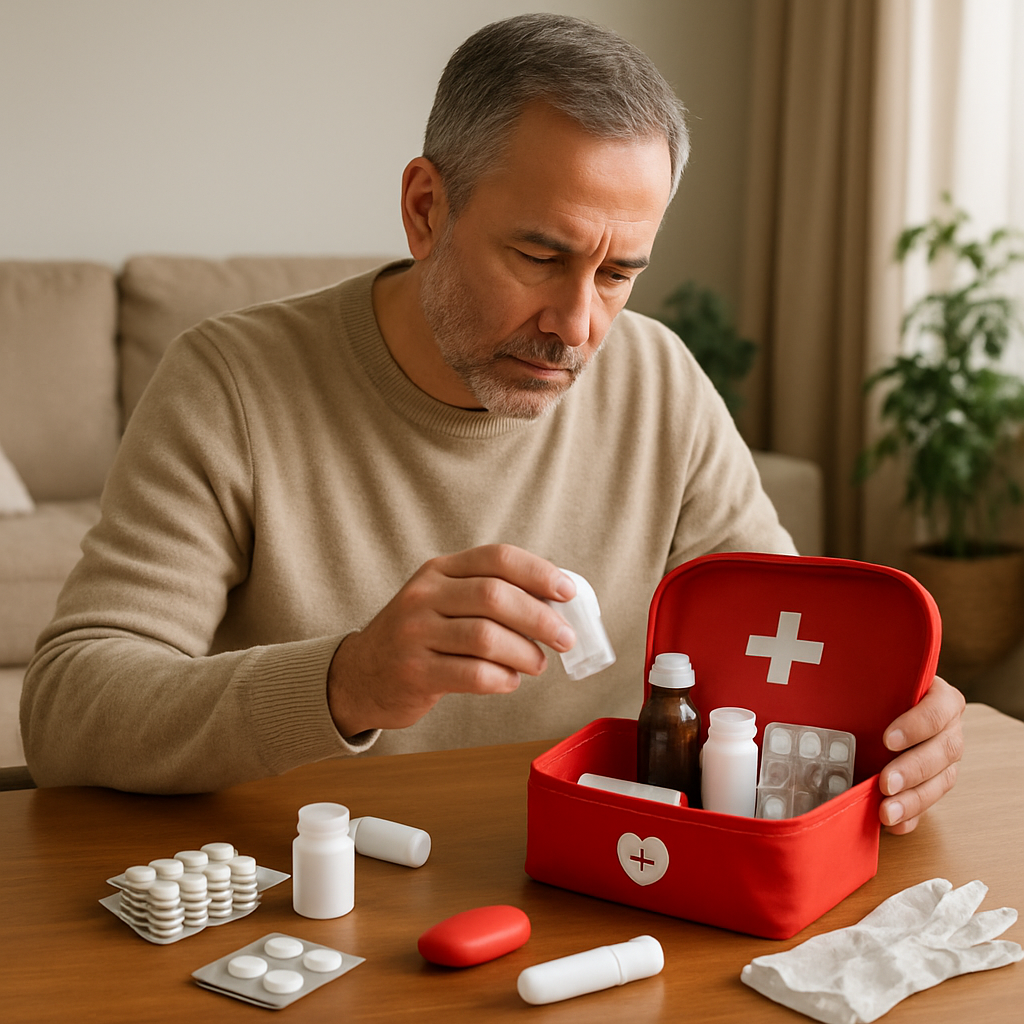

A heart attack emergency kit isn’t something most people think about until they’re standing in an ER hallway, wishing they’d had one. By then, the small details (which medications you take, your cardiologist’s number, whether anyone chewed an aspirin) suddenly matter enormously.
The first hour after cardiac symptoms start is sometimes called the "golden hour." What happens in that window often shapes recovery. Having the right supplies, information, and plan already sitting in one place can shave off precious minutes.
This isn’t about paranoia. It’s about being ready the way you’d be ready for a fire or a power outage. Below, the seven items that belong in every heart attack emergency kit, and why each one earns its spot.
Why a Heart Attack Emergency Kit Matters
Every year, about 805,000 Americans have a heart attack, according to the CDC. Roughly one in five is silent, meaning the damage is done before the person realizes what happened. For the other four out of five, symptoms come on fast and the response has to be faster.
What I tell patients is this: the goal of a heart attack emergency kit isn’t to treat the heart attack yourself. It’s to buy time, give first responders the information they need immediately, and prevent the small logistical failures that delay care. A missing insurance card. A locked phone. A spouse who doesn’t remember the name of your blood thinner. Those things cost minutes.
The American Heart Association is clear that calling 911 is always the first move. Everything in your kit supports what happens after that call.
The 7 Essentials for Your Heart Attack Emergency Kit
1. Chewable Aspirin (325 mg)
Aspirin is the single most useful medication a bystander can give during a suspected heart attack, assuming the person isn’t allergic and hasn’t been told to avoid it. Chewing (not swallowing whole) a 325 mg non-enteric-coated aspirin gets it into the bloodstream faster, where it helps prevent the clot from growing.
The FDA notes aspirin can reduce heart attack damage when taken early. Keep a fresh bottle in your kit and replace it yearly. Aspirin degrades and loses potency past its expiration date.
2. A Current Medication List
Not a vague memory. An actual printed list. Include every prescription, dose, frequency, and the reason you take it. Add over-the-counter drugs and supplements too, because things like fish oil and ginkgo affect bleeding.
If you or a family member takes medications that interact with cardiac drugs (some antidepressants, certain blood pressure combinations, even some allergy pills as covered in our piece on loratadine vs fexofenadine), the ER team needs to know before they start treatment.
3. Emergency Contact Card
One laminated card. Front side: your name, date of birth, blood type if known, allergies, primary care doctor, cardiologist, and pharmacy. Back side: two emergency contacts with phone numbers and their relationship to you.
Paramedics look for this. Put a copy in your wallet and one in the kit.
4. Insurance and Identification Copies
Photocopies of your driver’s license, Medicare or insurance card, and any advance directive or DNR paperwork. Hospitals need this at admission, and if you can’t communicate, having it in one grabbed-and-go folder speeds everything up.
If you’ve had prior cardiac procedures, add a one-page summary. Stents, bypass, pacemaker model and date, ejection fraction from your last echo. Your cardiologist can help you draft this.
5. Nitroglycerin (If Prescribed)
If your doctor has prescribed nitroglycerin tablets or spray for angina, a fresh supply belongs in your kit. Nitroglycerin loses potency quickly, especially once the bottle is opened. Most pharmacists recommend replacing sublingual tablets every 6 months even if unused.
Do not add nitroglycerin to your kit unless it was prescribed for you. It can cause dangerous blood pressure drops, particularly in people who’ve taken ED medications like sildenafil or tadalafil within 24 to 48 hours. If that combination applies to you, our overview of Cialis and tadalafil pricing and safety touches on interaction cautions worth knowing.
6. A Charged Backup Phone or Power Bank
Sounds obvious. Gets missed constantly. A dead phone during a cardiac event is a real problem, because you can’t call 911, can’t unlock your medical ID, and can’t reach family.
A cheap prepaid phone or a fully charged power bank kept in the kit solves this. Test it every few months.
7. A Printed Action Plan
One page. Large font. Bullet points. Something like:
- Call 911 immediately. Do not drive yourself.
- Chew one 325 mg aspirin unless allergic.
- Unlock the front door if safe to do so.
- Sit or lie down. Stay calm.
- Give responders this folder.
This is for the person having the event and, more importantly, for anyone nearby who’s panicking. In a crisis, people forget things they’ve known for years. A checklist prevents that.
Where to Keep Your Heart Attack Emergency Kit
Somewhere obvious. A kitchen drawer, a bedside table, or by the front door. Not in a basement closet, not in a locked filing cabinet. Everyone in the household should know where it is.
If you travel, make a smaller version for your suitcase. And if you’re building preparedness kits for other conditions too, our guide on how to build a diabetic emergency kit uses the same logic for blood sugar emergencies.
You can also compare prices on aspirin, nitroglycerin refills, and other cardiac medications at edrugstore.com to keep your kit affordable to maintain.
When to Use It, and When Not To
Chest pressure, shortness of breath, pain radiating to the arm or jaw, nausea, cold sweat. These are classic symptoms, but women, older adults, and people with diabetes often present differently. Fatigue, indigestion, and back pain can all be cardiac in origin. The NIH has a solid symptom overview worth reading with your family.
If you’re unsure, call 911. A false alarm is not embarrassing. Waiting is what kills people.
Final Thoughts
A well-built heart attack emergency kit won’t prevent cardiac events, but it changes what happens in the minutes that matter most. The seven essentials above are cheap, accessible, and take one afternoon to assemble. Ask your pharmacist about aspirin selection and nitroglycerin storage, and talk to your cardiologist about what belongs in your personal heart attack emergency kit given your medications and history. Then put it somewhere your family can find it without thinking.
This article is for informational purposes only and is not medical advice. Always consult a licensed pharmacist or physician before starting, stopping, or changing any medication.
References
- CDC, Heart Attack Facts, US incidence and silent heart attack statistics.
- American Heart Association, Warning Signs of a Heart Attack, symptom recognition and the 911-first rule.
- FDA, Aspirin for Reducing Risk of Heart Attack and Stroke, guidance on aspirin use during suspected cardiac events.
- NIH / NHLBI, Heart Attack Symptoms, atypical presentations in women, diabetics, and older adults.

Dr Steven Schlosser
Dr. Schlosser graduated from Lafayette College Phi Beta Kappa and attended Georgetown Medical School. He had 4 years of medical residency training at Tufts University in Boston in both Gynecology and Internal Medicine. He has had a spotless medical career for the past 40+ years and is Board Certified. Learn More