

The high incidence of high blood pressure among American adults casts “a foreboding shadow over the prospects for normal sexual function among America’s adult males, because high blood pressure very often leads to erectile dysfunction.”
[divider]
TABLE OF CONTENTS
[divider]
Introduction
The U.S. Centers for Disease Control and Prevention estimates that 75 million American adults suffer from high blood pressure, also known as hypertension. That’s roughly one-third of all adults in the country. Studies have determined that men under 65 are more likely to suffer from hypertension than their female counterparts, although females over the age of 65 seem to have a slight edge over males.
Those figures cast a foreboding shadow over the prospects for normal sexual function among America’s adult males because high blood pressure very often leads to erectile dysfunction. And, in one of life’s many cruel ironies, some of the medications prescribed to treat high blood pressure can also make it more difficult to get and keep an erection.
What Is Hypertension?
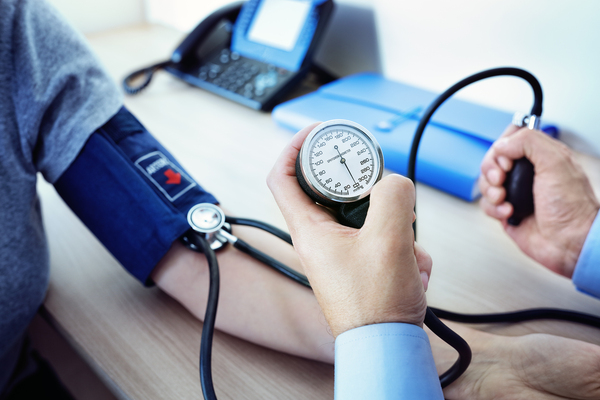
Hypertension is a medical condition that exists when “the force of your blood pushing against the walls of your blood vessels is consistently too high,” according to the American Heart Association. The blood pressure reading taken in your doctor’s office reflects both your systolic blood pressure — the first number in the reading — and your diastolic blood pressure — the second number.
Systolic pressure shows the level of force the heart needs to pump blood out and into the arteries that are part of the body’s circulatory system, which also includes veins and capillaries. The diastolic number is a measure of the heart’s pressure as it rests between heart beats. Under the latest AHA guidelines, normal blood pressure combines systolic pressure that is 120 or lower with diastolic pressure that is 80 or lower.
As with most health conditions, there are degrees of the condition ranging from mild to critical. Under current guidelines, a systolic number between 121 and 129 combined with a diastolic pressure under 80 is considered elevated blood pressure. Stage 1 hypertension is diagnosed as systolic pressure between 130 and 139 or diastolic pressure from 80 to 89. Stage 2 hypertension exists when systolic pressure exceeds 140 or diastolic pressure is 90 or higher. Systolic pressure of more than 180 and/or diastolic pressure greater than 120 constitutes hypertensive crisis and requires immediate medical attention.
Hypertension and ED
The negative effects of high blood pressure on erectile function is not immediate but rather builds up over time. Hypertension’s unrelenting pressure on the lining of arteries causes damage that eventually leads to atherosclerosis, a buildup of fatty plaques on artery walls that hardens over time, according to MayoClinic.org. As these plaques build up, blood flow through arteries is impeded.
The vast majority of erectile dysfunction is caused by insufficient blood flow to the penis, such as that brought on by chronic high blood pressure that is left untreated. However, as already noted, certain high blood pressure medications can themselves cause erection problems. You will need to work with your doctor to find the right treatment program for you, ideally one that depends to a greater degree on lifestyle modification than on antihypertensive medications.
WebMD.com cites a study published in the “Journal of the American Geriatrics Society” that found that 49 percent of hypertensive men between the ages of 40 and 79 also suffered from erectile dysfunction. Yet another study, this one published in the “Journal of Urology,” found that 68 percent of men diagnosed with high blood pressure reported some degree of erectile dysfunction. In 45 percent of those men, the ED symptoms were severe.
What Pill Can I Take?
Having grown up in an overmedicated era in which the answers to most problems seem to lie in yet another drug to ease the pain, most men’s first reaction to hypertension-related impotence is to seek out a pill to solve the problem. But there’s the rub. Many medications prescribed to bring down elevated levels of blood pressure are incompatible with optimal erectile function. So the cure for the high blood pressure can actually make it more difficult for you to get and keep an erection.

Not all antihypertensive medications cause erection problems. Some are fairly compatible with normal erectile function and will do little to interfere. But your doctor is the best judge of which blood pressure medication is best suited to treat your problem, so you must work with him to see if together you can find a treatment plan that brings down your blood pressure with minimal negative effects on erectile function.
Beta-Blockers and Diuretics
Beta-blockers and diuretics are among the antihypertensive medications most likely to interfere with normal erectile function. Some patients may take these drugs and experience little if any, erection problems, but for most men, these drugs can be problematic.
Atenolol, a popular beta-blocker, is very effective in lowering blood pressure, which it does by blocking certain receptors in your heart. With these receptors blocked, the rate and force of your heartbeat is reduced, and blood pressure drops. However, atenolol can also decrease sexual desire, make it more difficult to achieve orgasm, and make it harder to get and keep an erection.
Erection-Friendly BP Drugs
Some antihypertensive medications have a much more erection-friendly reputation, causing few disruptions in erectile function and in some cases even promoting stronger blood flow, a boon to the erection process. Drugs in these categories include ACE (angiotensin-converting enzyme) inhibitors, alpha-blockers, calcium channel blockers, and angiotensin II receptor blockers, also known as ARBs.
Widely prescribed ACE inhibitors include the brand-name drugs Capoten, Lotensin, Prinivil, and Zestril. According to WebMD, they dilate blood vessels and thus increase blood flow, causing erection problems in less than 1 percent of the men who take them.
Alpha-blockers, such as the brand-name drug Cardura, generally cause few, if any, erection problems. In fact, men using Cardura over a two-year period reported improved erectile function, according to WebMD.
Calcium channel blockers include such brand-name medications as Amlodipine, Diltiazem, and Verapamil. These drugs are rarely associated with erection problems, although some may be a bit more problematic than others.
ARBs, which include such brand-name medications as Cozaar and Losartan, have a very erection-friendly reputation, according to WebMD. Studies have shown that these drugs, taken over time, can improve sexual function and satisfaction in the men taking them.

Consider Lifestyle Changes
Unhealthy lifestyle choices can lead to high blood pressure, which in turn may cause ED. Even in the absence of hypertension, some of these lifestyle choices can cause subtle — and not so subtle — changes in the body that may lead to ED. Trade those unhealthy behaviors for ones that improve your overall health, and you may be able to head off a host of other health problems before they even occur.
From MayoClinic.org comes this helpful list of lifestyle recommendations that can help to lower your blood pressure and keep it down. And with that drop in blood pressure, you will be less likely to encounter the erection problems that so often accompany hypertension.
- Lose those extra pounds and keep your waist measurement below 40 inches.
- Adopt a regular program of physical activity as an integral part of your daily schedule.
- Eat a heart-healthy diet. A diet that’s good for the heart is good for the penis as well, according to both cardiologists and urologists.
- Reduce your daily sodium consumption.
- Quit smoking.
- Moderate your consumption of alcohol.
- Don’t overdo it on caffeine.
- Monitor your blood pressure as often as possible and see the doctor if it begins to climb into the danger zone.
- Minimize your exposure to stress. We know it’s hard to avoid, but you can try to stay clear of unnecessary stress.
Could Viagra Help?
If high blood pressure is interfering with your erectile function, Viagra and the other oral ED drugs known as PDE5 inhibitors, may be able to help. This is particularly true if you are taking an antihypertensive medication that is known to cause added erection problems. With the exception of nitrate-based drugs prescribed to treat only the most intractable high blood pressure, Viagra and the other ED drugs can be used with most other antihypertensives. To be sure, however, check with your doctor.
To purchase Viagra or one of the other ED drugs available on the U.S. market, you will need a prescription. You can get one from your doctor, which then can be used to buy the drug at your local pharmacy or to purchase the medication from a reliable online supplier such as eDrugstore.com. If you opt to go the latter route, you can fax the prescription or scan and email it along with your order.
Alternatively, if you’d like to avoid the added cost of a visit to the doctor’s office, eDrugstore can set up a complimentary online consultation with one of its team of licensed U.S. physicians. If eDrugstore’s doctor determines that you are an appropriate candidate for Viagra or one of the other ED drugs, a prescription will be authorized. To learn more about ED, its causes, and the medications available to treat it, click below to access eDrugstore’s Male Impotence page.

We specialize in providing our over 1,000,000 customers with relevant product and condition information created by our professional editorial staff which includes our team of medical writers, medical practitioners, and health educators. eDrugStore.com Staff on Facebook