
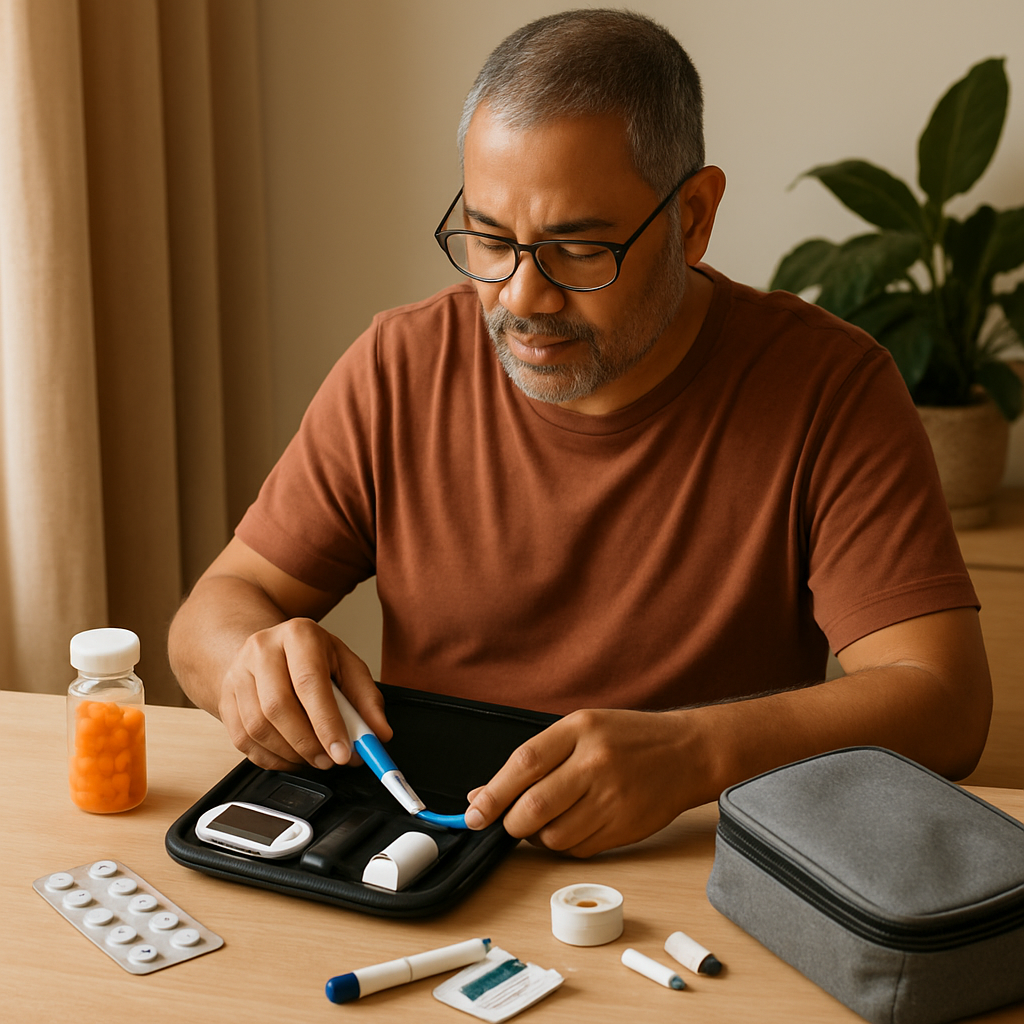

A well-built diabetes emergency kit is the difference between a great trip and a medical scramble in a hotel bathroom at 2 a.m. If you live with type 1 or type 2 diabetes, travel adds variables your body wasn’t expecting: delayed meals, time zone shifts, more walking, less sleep, weird food, and the occasional lost suitcase. Your kit has to absorb all of that.
Most people pack their usual meds and call it done. That’s not enough. The CDC’s travel guidance for people with diabetes is blunt about it: bring roughly twice the supplies you think you’ll need, and split them between bags. Lost luggage doesn’t care about your A1C.
What follows is the practical version of how to build that kit, what to put in it, and the small details most travelers miss until they’re stuck somewhere without them.
Why a Diabetes Emergency Kit Matters More on the Road
At home, you have routines. A pharmacy two miles away. A fridge with backup insulin. A glucometer on the nightstand. Travel strips all of that out.
What I see most often with patients who run into trouble on trips isn’t bad luck. It’s the assumption that one set of supplies, packed neatly in a checked bag, will be enough. Then the flight gets delayed eight hours, the meal cart never comes, blood sugar tanks, and the glucose tabs are in the cargo hold.
A proper diabetes emergency kit assumes things will go wrong. Insulin will get warm. A pump site will fail. You’ll skip a meal. Someone will steal your bag in Barcelona. The kit’s job is to keep one bad event from becoming a medical emergency.
What to Put in Your Diabetes Emergency Kit
Here’s the core list. Adjust based on whether you use insulin, oral medications, a pump, a CGM, or some combination.
Medications and insulin
- At least double your expected supply of insulin (rapid-acting and long-acting if you use both)
- Backup oral diabetes medications in original labeled bottles
- A glucagon emergency kit (Baqsimi nasal spray or Gvoke prefilled pen are easier to use than older injection kits)
- Ketone strips if you have type 1
Testing and monitoring
- A glucometer, plus a backup meter
- Test strips (double what you think you need)
- Lancets and a lancing device
- Extra CGM sensors and transmitter, if applicable
- Spare batteries or charging cables for your pump or CGM receiver
Pump and injection supplies
- Extra infusion sets and reservoirs (pack at least 50% more than the trip length)
- Backup insulin pens or syringes in case your pump fails completely
- Alcohol swabs
- Skin adhesive wipes and adhesive remover
Fast-acting carbs for lows
- Glucose tablets (the 15 gram tubes travel well)
- Juice boxes or glucose gel packets
- Hard candy as a backup (Smarties, Skittles)
Documentation
- A current prescription list with generic names
- A letter from your prescriber confirming you need to carry needles and liquid medications
- Insurance cards and a copy of your most recent labs
- Emergency contacts and your endocrinologist’s number
The American Diabetes Association recommends carrying all of this in your carry-on, not checked luggage. TSA allows insulin, syringes, pumps, and liquid carbs through security as long as you declare them.
How to Pack Insulin So It Actually Survives the Trip
Insulin is fussier than people realize. Above 86°F it starts losing potency. Freezing destroys it outright. Both ruin a trip fast.
Use an insulated travel case rated for medication, not a generic lunch bag. Frio cooling wallets work without ice and are TSA-friendly. If you’re flying, keep insulin in your carry-on, never checked, because cargo holds can drop below freezing.
According to the FDA’s insulin storage guidance, unopened insulin should stay refrigerated at 36 to 46°F. Once in use, most insulins are stable at room temperature for 28 days, but check your specific product’s label because some, like Levemir, last longer and some are shorter.
If your trip crosses time zones, ask your prescriber before you go how to adjust long-acting insulin timing. Don’t guess on a 14 hour flight to Tokyo.
Building Around Your Specific Diabetes Type
A type 1 traveler’s kit looks different from a type 2 traveler’s kit.
If you use insulin, your diabetes emergency kit needs redundancy on the delivery side: pens as a backup to a pump, syringes as a backup to pens. If you wear a CGM, bring at least one extra sensor more than you’d planned. Sensors fail. Adhesive peels off in humid weather or after a beach day.
If you manage diabetes with oral medications like metformin or a GLP-1, your kit is simpler, but you still want extras. If you’re on a GLP-1 like semaglutide, pack it in its original pen and keep it cool. Worth knowing: many travelers also use these medications for weight management, and we cover that in our piece on semaglutide vs tirzepatide for weight loss if you’re curious about the differences.
For broader trip planning beyond diabetes specifically, our guide on how to build a travel emergency medication kit that works covers the general principles, and the family travel medical kit guide is useful if you’re traveling with kids or older relatives.
Signs You Need to Stop and Get Help
Even with a great kit, know when to call for help. Get to medical care if you have:
- Blood sugar over 300 mg/dL that doesn’t come down with correction
- Moderate to large ketones in your urine
- Vomiting that prevents you from keeping fluids or medications down
- Symptoms of severe hypoglycemia: confusion, slurred speech, loss of consciousness
- A pump or CGM failure you can’t troubleshoot within a few hours
Save the local emergency number for your destination in your phone before you leave. In most of Europe it’s 112. In Mexico, 911. Don’t assume.
Final Checks Before You Leave
Refill prescriptions early enough that you’re not waiting on insurance approvals the day before your flight. Many travelers find it easier to order ahead through edrugstore.com so refills arrive in time to pack with the rest of the kit.
Lay everything out on a table the day before you leave. Count test strips. Count infusion sets. Check expiration dates. Confirm your glucagon hasn’t expired (it’s the item people forget for years).
A complete diabetes emergency kit isn’t about packing for disaster. It’s about packing so disaster doesn’t happen in the first place. Talk to your pharmacist or endocrinologist a few weeks before any major trip to review your kit, your time zone strategy, and any refills you’ll need on the road.
This article is for informational purposes only and is not medical advice. Always consult a licensed pharmacist or physician before starting, stopping, or changing any medication.
References
- CDC Travelers’ Health: Diabetes, official guidance on traveling safely with diabetes.
- American Diabetes Association: Travel and Diabetes, packing and TSA recommendations for people with diabetes.
- FDA: Information Regarding Insulin Storage, temperature and storage guidance for insulin products.

Dr Steven Schlosser
Dr. Schlosser graduated from Lafayette College Phi Beta Kappa and attended Georgetown Medical School. He had 4 years of medical residency training at Tufts University in Boston in both Gynecology and Internal Medicine. He has had a spotless medical career for the past 40+ years and is Board Certified. Learn More