


Highlights
- Does birth control affect libido in women? Yes, especially hormonal methods.
- A sudden change in sex drive may be a sign of health problems.
- Hormonal contraception may increase or reduce female desire levels.
- Learn how family planning methods work and their possible side effects.
It can happen in an instant — one day your girlfriend or wife loses interest in sex. What’s going on? Can you get her (and the great sex) back? The mystery may be solved by looking into her contraceptive method. Birth control can affect a woman’s libido, so the key is finding the right method to help her stay in the mood.
Libido Explained: The Role of Desire in Sexual Health
Libido, also known as sex drive, is a person’s interest in sex, both partnered and solo. It can take many forms, such as:
- Sexual thoughts and fantasies
- Feeling of sexual tension in the body
- Masturbation
- Initiating sex with a partner
Science currently has no method of measuring libido. We also don’t know if there is a level of sex drive that can be regarded as a sign of health. You can be healthy and still show little or no interest in sex, for example, if you’re a person on the asexuality spectrum).
Sex therapists and doctors are most interested in sudden changes in sexual interest. These can be a sign of sexual health problems or psychological issues.
For an average person, sex drive will change over time. It’s usually very high in teenage years and in the 20s. Adults see peaks of desire when they have a new partner. Drops in libido can be linked to important life changes, such as childbirth or loss of a loved one.

Understanding Female Birth Control Methods: From Barrier Methods to “The Pill”
Medicine has come a long way in giving women options to control their fertility. If used correctly, some female contraceptives are nearly 100 percent effective in preventing pregnancy. Let’s look at the birth control methods designed for women and people with ovaries:
Fertility Awareness Methods
This is an all-natural approach to family planning. Although it’s about the woman’s menstrual cycle, partners can work together to make sense of her biology.
The idea behind these methods is simple: Observe your body’s signals, such as temperature, to know when you’re fertile.
Some couples choose to abstain from intercourse during fertile days. Others use barrier methods, such as condoms, during those days to minimize the possibility of getting pregnant.
Barrier Contraceptives
Barrier methods of birth control are contraceptive methods that physically block or prevent sperm from reaching the egg. Here are some examples of barrier methods:
- Male condom
- Female condom
- Diaphragm
- Cervical cap
- Contraceptive sponge
- Spermicides
Intrauterine Devices
Intrauterine devices (IUDs) are mechanical methods of birth control. They are inserted into the uterus to create an unfriendly environment for the sperm so it can’t reach the egg.
There are non-hormonal IUDs containing copper and hormonal IUDs that release the hormone called progestin. The ones with hormones can sometimes block ovulation.
Chemical Contraceptives
Many women use spermicides as extra protection together with other methods of birth control. These gels or suppositories are inserted into the vagina and block the sperm’s journey towards the egg. They also reduce the sperm’s ability to reach the egg.
Hormonal Contraceptives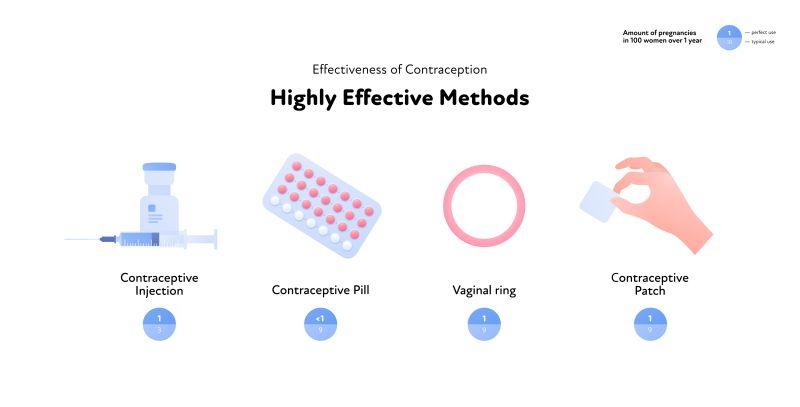
When the first Pill came out in the 1960s, it began a true sexual revolution. Hormonal contraception gave women the freedom to decide whether or when they wanted to become mothers.
Today’s hormonal birth control covers a range of options, such as:
- Pills
- Implants
- Vaginal rings
- Some IUDs
- Injections
- Patches
These methods work by changing women’s hormones to prevent ovulation. Some methods affect the woman’s cervix (the canal that leads to the womb) and uterus, preventing implantation.
The Connection Between Hormonal Birth Control and Libido in Women
All contraceptive methods can affect the woman’s sex drive in one way or another. But the link between birth control pills and sex drive has been most widely discussed and studied.
Women in their reproductive years show more interest in sex when they are most fertile. That’s nature’s way of keeping our species alive. In the peak fertile period of each month, the woman’s body has the highest levels of estrogen, the hormone that makes her feel sexy (and horny).
Taking the Pill or another form of hormonal contraception means interfering with those natural cycles. Sometimes the side effects are low libido and bad mood. Some women may also experience vaginal dryness — which can also lead them to avoid intercourse.
The good news is that taking the Pill can improve sex drive for some women. Part of this effect may be hormonal, and part may be the peace of mind that comes from using a reliable method of family planning. The hormonal composition seems to play a role, too. Low-dose pills can lead to more drops in sex drive compared to higher-dose formulations.
The Importance for Men to Understand Birth Control Effects on Women’s Libido
As a man, you may not be aware of how birth control affects her sex drive. If you’re in a relationship, don’t assume she’ll take care of pregnancy prevention. Show interest in her contraceptive choices and ask how they make her feel.
And if you notice birth control’s side effects on sex drive, don’t get upset. Flag it as a possible issue and look for solutions together. Accompany her to see the OB-GYN to find options that are more libido-friendly.
If her contraceptive method has boosted her desire, good for you! It still doesn’t mean, however, that she’s going to be available whenever you’re in the mood. Always make sure she’s interested in lovemaking. If she’s not up for it, you can still have a nice kiss and cuddle.
Managing Changes in Your Partner’s Libido Post Birth Control
If your partner decides to go off birth control, especially a long-term method, her body will need time to adjust. Check in with her regularly as she may have mood changes or more painful periods.
For some women, dropping hormonal contraception could mean the loss of sex drive. Give her at least a few weeks to get back to her natural rhythm. Chances are good that she will feel desire again. If she doesn’t, talk about it and suggest seeking professional help, preferably together.
Contraceptive methods are a convenient explanation for sexual problems, but sometimes, the issue lies elsewhere. Think of your own desire levels. Aren’t you less interested when you’re stressed at work or have persistent back pain?
Your partner may be going through a difficult time or have other health issues that influence her sexuality. Important life events, such as pregnancy or menopause, are also known causes of low libido in women.

Managing Negative Effects of Birth Control on Libido
Lack of sex drive, particularly if it lasts for months, can take a toll on a relationship. Intimacy helps love thrive and keeps you connected to your significant other.
If your partner always says no when you make a bedroom invitation, you have a right to feel disappointed. Don’t give her the silent treatment or try to pressure her into sex.
It’s not easy, but try to tell her — calmly — how you feel. She may not realize how important the erotic aspects of your relationship are for you. Ask questions and try to understand where she’s at. And look for ways to keep the flame going.
If she’s not ready for intercourse, get professional advice from a doctor or sex therapist. In the meantime, work on bringing the physical closeness back. Revive the art of the French kiss, give each other massages, dance, and hug. Sexuality is so much more than penetration.
Key Takeaways on Female Contraceptives and Libido
Contraceptives have changed the world and our intimate lives. Women can now enjoy sex without the constant fear of unplanned pregnancy. But birth control and sexual desire don’t always go well together.
If her family planning choices are causing the loss of sexual interest, don’t wait too long to find help. Nowadays, there are lots of contraceptive options, so you can opt for what works for you and your partner.
eDrugstore Is Your Source of Information and Treatments
A great sex life starts with knowledge and understanding of sexuality and relationships. eDrugstore.com is your trusted source of information and medication for intimate problems, such as erectile dysfunction and sexual health concerns.

Anka Grzywacz is a sexologist, reproductive health expert and Certified Sex Coach™. In her online practice she helps busy women and couples solve their intimate problems.