


Most women experience drops in sexual desire from time to time. But did you know that millions experience a drop in libido that lasts months or years? If you’re one of them, and the loss of interest is causing real distress in your life or your relationship, help is available.
Two FDA-approved medications, Addyi and Vyleesi, were built specifically to treat this condition, and knowing how they’re different can turn a vague, frustrating search for answers into a focused conversation with your provider.
| Aspect | Vyleesi | Addyi |
|---|---|---|
| Generic Name | Bremelanotide injection | Flibanserin |
| Drug Class | Melanocortin receptor agonist | Multifunctional serotonin agonist and antagonist (MSAA) |
| Indication | Treatment of premenopausal women with acquired, generalized hypoactive sexual desire disorder (HSDD) | Treatment of premenopausal women with acquired, generalized hypoactive sexual desire disorder (HSDD) |
| Administration | Injection, self-administered as required | Oral tablet, taken once daily, every day at bedtime |
| Common Side Effects | Nausea, flushing, injection site reactions (redness, bruising, itching, bleeding, and numbness), headache, vomiting | Dizziness, sleepiness, nausea, fatigue, insomnia, dry mouth |
| Unique Side Effects | N/A | Anxiety, constipation, abdominal pain, menstrual spotting, rash, sedation, spinning sensation (vertigo) |
| Drug Interactions | May interact with naltrexone and other drugs taken orally at the same time | May interact with alcohol, CNS depressants, antifungals, antiviral drugs, grapefruit juice, oral contraceptives, cimetidine, fluoxetine, ginkgo, ranitidine, proton pump inhibitors, selective serotonin reuptake inhibitors (SSRIs), some antibiotics, nefazodone, carbamazepine, phenobarbital, phenytoin, St. John's Wort, digoxin, sirolimus, and some medicines used to treat high blood pressure, chest pain (angina), or other heart problems |
| Pregnancy | Not recommended for use during pregnancy | Not recommended for use during pregnancy |
| Breastfeeding | Consult your doctor before breastfeeding | Breastfeeding is not recommended during treatment |
| User Satisfaction | Average rating of 7.1 out of 10. 59% of reviewers reported a positive experience, while 18% reported a negative experience | Average rating of 3.4 out of 10. 20% of reviewers reported a positive experience, while 68% reported a negative experience |
Is There Really a “Female Viagra”?
The term “female Viagra” gets attached to both Addyi and Vyleesi in search results and casual conversation, but the label is misleading. Viagra (sildenafil) works by improving blood flow, which helps with physical arousal in men.
Addyi and Vyleesi don’t affect blood flow at all. Both act on the brain and nervous system to influence desire itself, which is a fundamentally different mechanism and a different medical problem.
The condition both drugs treat is called hypoactive sexual desire disorder, or HSDD. HSDD is defined as persistently low sexual desire that causes real distress, and it’s more common than most people realize.
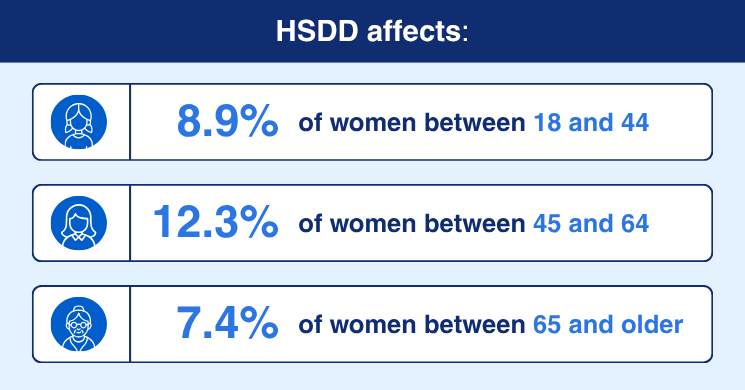
HSDD affects roughly 8.9% of women between 18 and 44, 12.3% of women between 45 and 64, and 7.4% of women 65 and older.
For a condition this widespread, having two distinct treatment options matters.
What Is Addyi and How Does It Work?
Addyi (flibanserin) is a daily oral tablet. The recommended dosage is 100 milligrams taken by mouth once a day at bedtime.
Consistency matters here; Addyi isn’t an as-needed medication. It works over time by acting on serotonin pathways in the brain rather than producing an immediate effect before sexual activity.
Addyi’s approved use recently changed in a meaningful way. As of December 2025, Addyi is now indicated for women younger than 65 with acquired, generalized HSDD, regardless of menopausal status.
Previously, it was approved for premenopausal women only. That expansion makes it the first and only FDA-approved pharmacologic HSDD treatment covering both premenopausal and postmenopausal women under 65.
What Else Do I Need to Know About Addyi?
Addyi carries a few restrictions you need to know about.
Alcohol Interaction
Combining Addyi with alcohol raises the risk of severe low blood pressure and fainting. The FDA prescribing information advises waiting at least two hours after one or two drinks, or skipping the dose entirely after three or more.
Drug Interactions
Addyi can’t be combined with moderate or strong CYP3A4 inhibitors. This category includes some common antifungal and antibiotic medications, such as:
- Antifungals: ketoconazole, itraconazole, and fluconazole
- Antibiotics: clarithromycin, erythromycin, and ciprofloxacin
Some antidepressants also affect how the body clears Addyi. Fluoxetine and fluvoxamine, in particular, can raise flibanserin levels through the same metabolic pathways, so use with these or other CYP3A4 or CYP2C19 inhibitors should be discussed with a provider.
Addyi can also raise digoxin concentrations to potentially toxic levels, so providers monitor digoxin levels more closely in patients taking both.
Central Nervous System Depression and Driving
Addyi can cause sedation and drowsiness on its own, and the risk increases with alcohol, other central nervous system (CNS) depressants, or medications that raise flibanserin levels. In trials, somnolence, sedation, or fatigue occurred in 21% of premenopausal women on Addyi versus 8% on placebo.
For postmenopausal women under 65, the rate was lower: 10% on Addyi versus 6% on placebo.
Avoid driving or operating machinery for at least six hours after each dose, and until you know how it affects you.
Liver Impact
Women with liver problems shouldn’t take Addyi. The liver breaks the drug down, and any degree of impairment lets it build up to unsafe levels, which raises the same fainting and blood pressure risks as the alcohol interaction.
Hypersensitivity
Addyi shouldn’t be used by women with a known hypersensitivity to flibanserin, its active ingredient, or any of its other ingredients. Reactions including anaphylaxis and angioedema have been reported.
Nursing Mothers
Addyi isn’t recommended while breastfeeding.
It Can Take Time To Work
Most people need roughly eight weeks of consistent use before knowing whether it’s helping.
What Is Vyleesi and How Does It Work?
Vyleesi (bremelanotide) is a different type of medication entirely. It’s a melanocortin receptor agonist, delivered as a self-administered injection rather than a daily pill.
The recommended dosage is 1.75 mg injected subcutaneously in the abdomen or thigh, taken as needed at least 45 minutes before anticipated sexual activity, with no more than one dose in 24 hours and no more than eight doses per month.
There’s no daily commitment. You use it only when you plan to need it.
Unlike Addyi, Vyleesi’s indication hasn’t expanded. It remains approved specifically for premenopausal women with acquired, generalized HSDD, and it’s not indicated for postmenopausal women or for men.
The on-demand format appeals to many women, but it comes with tradeoffs. In clinical trials, 18% of women taking Vyleesi discontinued treatment due to side effects, compared with 2% of those on placebo. Nausea was the most common reason patients stopped, with 8% of participants experiencing it.

What Else Should I Know About Vyleesi?
Vyleesi doesn’t carry a boxed warning, unlike Addyi, which is required to carry one for its hypotension and syncope risk. Still, Vyleesi has its own set of safety considerations to understand before you start.
Blood Pressure Impact
Women with uncontrolled high blood pressure or known cardiovascular disease should not take Vyleesi. Each dose causes a temporary rise of about 4 mmHg in systolic blood pressure, peaking around 12 minutes after injection and resolving within about 12 hours. Because of this, providers assess cardiovascular risk before starting treatment and periodically afterward, not just at the outset.
Skin Changes
Some patients develop focal hyperpigmentation, or skin darkening, on the face, gums, or breasts, particularly with more frequent dosing. This is more common in patients with darker skin tones, and it doesn’t always resolve after stopping the medication. Providers may recommend discontinuing Vyleesi if it develops.
Drug Interaction with Naltrexone and Indomethacin
Vyleesi can meaningfully reduce how much naltrexone and indomethacin the body absorbs. Naltrexone, used to treat alcohol or opioid addiction, shouldn’t be combined with Vyleesi at all. Indomethacin, a common pain reliever, may work more slowly or less predictably if timed too close to a dose.
Effects on Other Oral Medications
Vyleesi slows gastric emptying, which can delay how quickly other oral medications are absorbed, though most tested medications weren’t meaningfully affected. Mention any oral medications you take on a tight timing schedule to your provider.
Pregnancy
Vyleesi is contraindicated during pregnancy, based on animal reproductive toxicity data. Use effective contraception while on treatment, and stop immediately if pregnancy is suspected or confirmed.
Neither medication is a guaranteed fix. Both work through the central nervous system rather than through blood flow, which means results vary from person to person and neither should be expected to work the way sildenafil works for erectile dysfunction. Now that Addyi covers a wider age and menopausal range than Vyleesi, that difference alone may steer which option your provider raises first.

Where Vyleesi (PT-141) Fits In
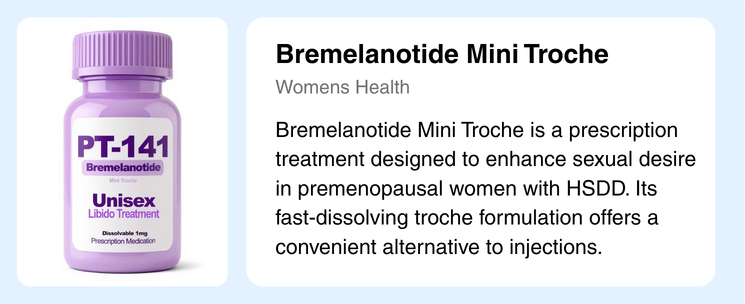
Bremelanotide, the active compound in Vyleesi, is also known by its research name, PT-141. This is the same molecule, but it shows up in a different form as a compounded troche, a small lozenge dissolved under the tongue rather than injected.
Compounded formulations like sublingual troches use a different route of administration than the FDA-approved Vyleesi injection, which is why the FDA doesn’t treat them as an exact copy of the branded product, according to clinical guidance on PT-141 formulations.
PT-141 is a needle-free stand-in for Vyleesi, but discuss it directly with a provider rather than assuming the two are interchangeable. If you want to understand how a bremelanotide troche is formulated and who it may be appropriate for, our PT-141 troche page walks through the details.
Questions to Ask a Provider
A short list to bring into your appointment:
Is my low desire acquired or lifelong? Both medications are approved specifically for acquired HSDD, meaning desire that changed after previously being normal, so this distinction affects which treatment fits.
What else could be contributing? Relationship strain, depression, medication side effects, and hormonal shifts can all lower desire, and a good provider will rule these out or address them alongside medication.
Am I premenopausal or postmenopausal, and does that change my options? If you’re not sure, ask. Vyleesi is still limited to premenopausal women. Addyi’s newer approval covers both groups under 65, so your menopausal status may narrow the choice before anything else does.
How does my current health profile affect eligibility? Liver function, blood pressure, alcohol habits, and other medications you take will influence which option is safer for you.
What does realistic improvement look like? Ask about the actual data behind each medication rather than relying on marketing language, and set expectations accordingly.
Is a non-injectable option available if needles are a barrier? This is where compounded troches sometimes enter the conversation, and it’s worth asking specifically.
Buying Women’s Sexual Health Products Online
Choosing between Addyi and Vyleesi, or exploring a compounded bremelanotide troche, is a decision best made with a healthcare provider who understands your full medical history. Neither drug promises to restore desire on its own, but both offer a legitimate, FDA-studied starting point for a conversation that many women put off far too long.
eDrugstore’s licensed physicians can help you sort through these options and determine the right medication for you. Start by learning more about our PT-141 or the other women’s sexual health options we offer.
Frequently Asked Questions About Vyleesi and Addyi
Can you use Vyleesi and Addyi together?
No. There’s no clinical data supporting combined use, and doing so isn’t recommended. Each targets HSDD through a different mechanism, so providers typically have patients choose one rather than layering both treatments.
Does insurance cover Vyleesi or Addyi?
Coverage varies widely by plan. Around 70% of commercial plans cover Vyleesi, though over half require prior authorization, while Addyi coverage is inconsistent and Medicare typically doesn’t cover either medication.
How much does Vyleesi cost without insurance?
Vyleesi has no generic alternative, and cash prices can run over $1,000 per month for the maximum recommended eight doses, though manufacturer savings programs and pharmacy discount cards can lower that significantly.
Is there a generic version of Addyi or Vyleesi?
No. Neither medication has an FDA-approved generic as of 2026. Addyi’s earliest projected generic entry is around 2028, and no generic timeline has been announced for Vyleesi.
Can you drink alcohol while using Vyleesi?
Vyleesi doesn’t carry the same alcohol restriction Addyi does, since it isn’t dosed daily and works differently in the body. Still, discuss any alcohol use with your provider before starting treatment.
How long does Vyleesi take to start working after an injection?
Vyleesi is dosed at least 45 minutes before anticipated activity. The FDA hasn’t established an exact window of peak effectiveness, so timing may vary somewhat from person to person.
Can compounded PT-141 be prescribed to men off-label?
Bremelanotide isn’t FDA-approved for any indication in men. Some compounded formulations, including troches, are prescribed off-label for male sexual dysfunction, but this falls outside what’s studied or approved.
What happens if Addyi doesn’t work after eight weeks?
The FDA label recommends discontinuing Addyi if a patient reports no improvement in sexual desire after eight weeks of consistent nightly use, since continued use offers little added benefit.
Does Vyleesi cause weight changes or appetite effects?
Vyleesi activates melanocortin receptors also involved in appetite regulation, though weight change isn’t a commonly reported side effect in trials. Nausea, especially with the first dose, is far more common.
Is HSDD the same thing as low libido?
Not exactly. Low libido on its own isn’t a diagnosis. HSDD specifically requires that the low desire causes personal distress or relationship difficulty, which is what separates it clinically from normal variation.

Paula Clark worked in the healthcare industry for 17 years before becoming a full-time freelance health and medical writer. Her clients appreciate her ability to convey complex information in terms laypeople can understand. Paula prides herself on the depth and accuracy of her research. Her goal is to add authority to your site in words that will delight both Google and your readers.