


Having reached a point in life where “sexual desire had become elusive — less a basic instinct than a distant place on a map that had been rolled up and locked away,” writer Amy Gamerman decided to find out for herself if a pill could fire up her lackluster libido.
In an article posted recently at Vogue.com, Gamerman chronicles her experience with Addyi, the first drug approved by the FDA for the treatment of hypoactive sexual desire disorder, the most common form of female sexual dysfunction. While her experiences may not necessarily be replicated in other women who try the drug, her story does offer an interesting personal perspective on the medication and how it works, at least for her.
Addyi Wasn’t Easy to Get
Gamerman recounts the difficulties she encountered in getting the drug in the first weeks after it hit the market. Because the medication caused low blood pressure, dizziness, and even fainting in some test subjects during clinical trials, the FDA approved the drug under its REMS (Risk Evaluation and Management Strategies) program. Under that program, physicians and pharmacists must take a brief online course and pass a test to be certified to prescribe and dispense REMS medications.
Gamerman was fortunate enough to connect with family nurse practitioner Melissa Ferrara, associate medical director of Maze Women’s Sexual Health in New York, one of the first medical professionals certified to prescribe Addyi. However, actually getting the drug in her possession took a bit more doing. She had to turn to a Pennsylvania-based specialty pharmacy — more than 200 miles from her home — to get the prescription filled. And before the pharmacy could send the drug to Gamerman, one of its REMS-certified pharmacists had to phone her and go over a list of warnings and possible side effects.
Don’t Mix with Alcohol
Among other cautionary advice, Gamerman was asked to pledge that she would not drink alcohol while on Addyi. In clinical tests, the combination of Addyi and alcohol appeared to significantly increase the risk of severe low blood pressure and possible loss of consciousness.
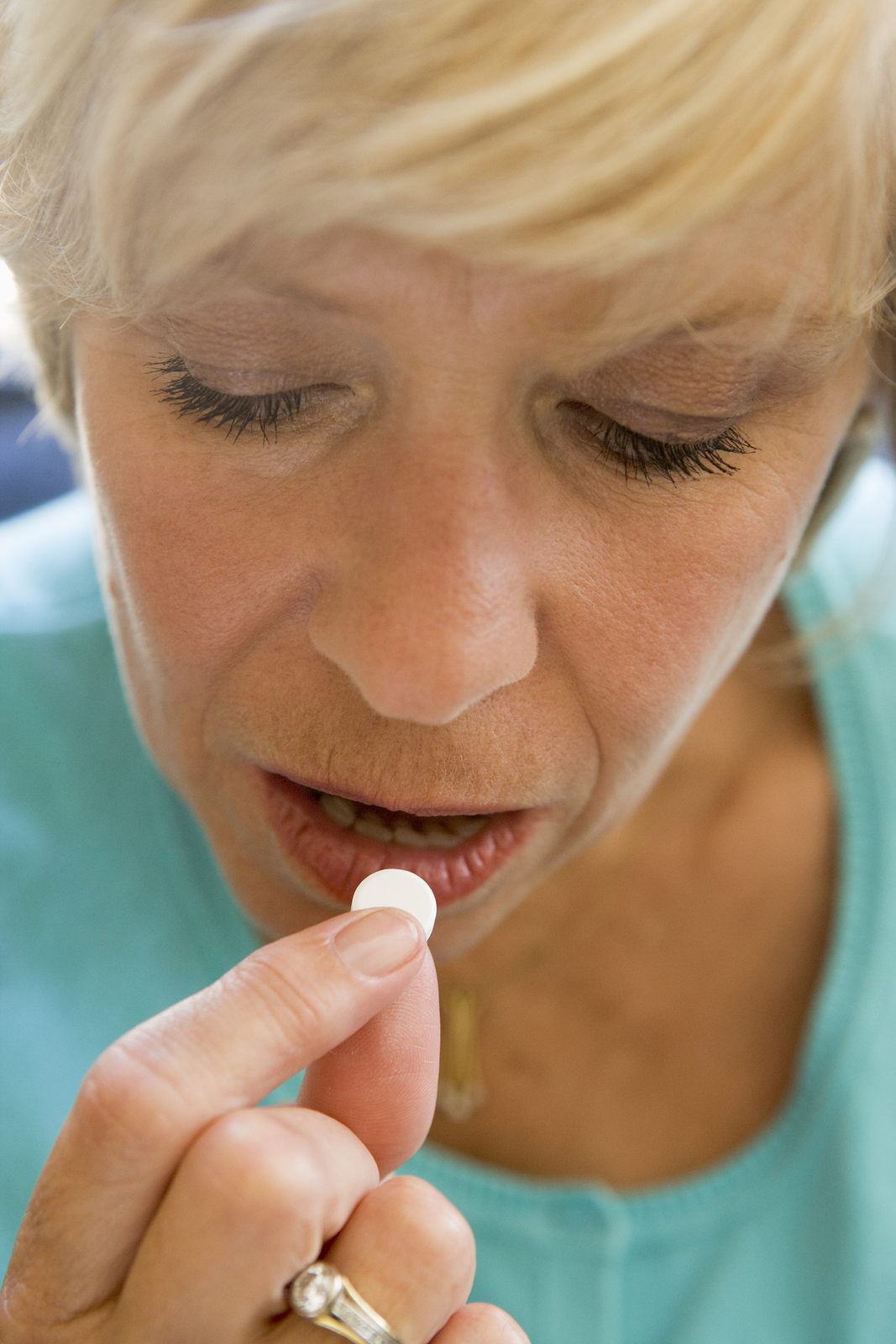
Once she had her Addyi in hand, Gamerman writes, she reveled in the knowledge that this possession she had coveted for months was “tucked away in my purse, close enough for my fingertips to graze its contours throughout the day.” Periodically she would twist the cap off the pill bottle and admire its contents.
Gamerman continues, “Such is the mystique of Addyi, a peach-colored pill that offers women the possibility of eros regained. Its arrival marks the culmination of years of trial, development, and controversy.” However, about one thing, Gamerman is clear. Despite media characterizations of Addyi as “pink Viagra” or “female Viagra,” the comparison between the two drugs is way off the mark. While Viagra helps to overcome “faulty hydraulics” in men, Addyi “aspires to the metaphysical, targeting a woman’s brain chemistry in order to boost her desire,” according to Gamerman.
Of her own “elusive” sex drive, Gamerman explains that while she was still having sex with her husband of several years and enjoying it, at least to some degree, she no longer craved it. She longed to recapture “even a fraction of the headlong lust of the days when my future husband and I could spend the entire day in bed, the same CD playing over and over on repeat.”
The Experiment Begins
With this goal of recaptured lust firmly implanted in her mind, Gamerman begins taking Addyi. The directions call for her to take a single Addyi pill every night for a month, and she is advised not to expect immediate effects, if any effects at all. During clinical trials, fully half of the women who took the pill reported no increase in sexual desire at all.
In the first couple of days that she takes Addyi, Gamerman reports that she feels a bit queasy. On the evening of the third day, she experiences a brief episode of dizziness that quickly passes. For the rest of her first week on the drug, she has no untoward effects to report. At the end of the week, she has sex with her husband “because he asks and it seems unkind to refuse. It is a friendly commingling.”
Attitude Toward Sex Changes
At about this point in her experiment with Addyi, Gamerman reports, a subtle change develops in her attitude toward sex. She finds that she is thinking about it more, not obsessing, mind you, but “newly alert to erotic possibility,” as she describes it. She studies her husband’s physique, as though with a new set of eyes, liking what she sees and wondering if perhaps he’s been working out lately.

Her second week on Addyi brings no dramatic changes, at least not at first. Later in the week, she experiences what she describes as “a legitimate stirring,” marking what seems to be the re-emergence of her more sensual side, which for some time has been missing in action.
The following weekend, Gamerman is very much in the mood for romance. She and her husband set off for a date night, during which she makes the mistake of drinking half a bottle of fine red wine, which combined with the Addyi, induces extreme sleepiness, postponing any intimacy at least for the moment. However, when she awakens the following morning, she feels like having sex with her husband, “not overwhelmed by passion . . . just up for it.”
Calls Husband Back to Bed
She finds her husband making coffee in the kitchen and gently persuades him to return to bed. One night the following week, her husband nudges her in bed, an advance she initially turns away, saying that she’s tired and not in the mood. Seconds later, she reconsiders, and the game is on.
Gamerman reports a gradual increase in her desire for sex, along with a concomitant improvement in the quality of the sex she’s having. When it comes to intimacy, she now finds that she is “more enthusiastic, less distracted.” Four weeks into her bold experiment, Gamerman reports, it’s apparent that a “distinct shift” has occurred. “Sex seems less dutiful, more fun, and a virtuous circle has begun to take hold: I want it more often because I’m enjoying it more, which makes me want it more. I’ve already called in my refill.”
Apart from the improvement Addyi has brought to Gamerman’s sex life, she feels its biggest contribution has been to open the door to more extensive research into “better sex through neurochemistry.” In the wake of Addyi’s hard-won approval, she writes, other drugs are in development that may turn out to be even more effective. One such drug in the works is Lybrido, a testosterone-coated pill that contains sildenafil, the active ingredient in Viagra. Lybrido is said to trigger arousal in both the brain and the body. Yet another drug in development is bremelanotide, which uses a synthetic hormone to fire up neurological receptors linked to sexual response.
If you’d like to learn more about Addyi and other health issues, check out our blog.
Don Amerman is a freelance author who writes extensively about a wide array of nutrition and health-related topics.

We specialize in providing our over 1,000,000 customers with relevant product and condition information created by our professional editorial staff which includes our team of medical writers, medical practitioners, and health educators. eDrugStore.com Staff on Facebook