

Reach Your Goal Weight. Prescribed. Proven. Private.
Doctor-prescribed GLP-1 weight loss treatments delivered discreetly to your door.
Physicians
Private
Delivery
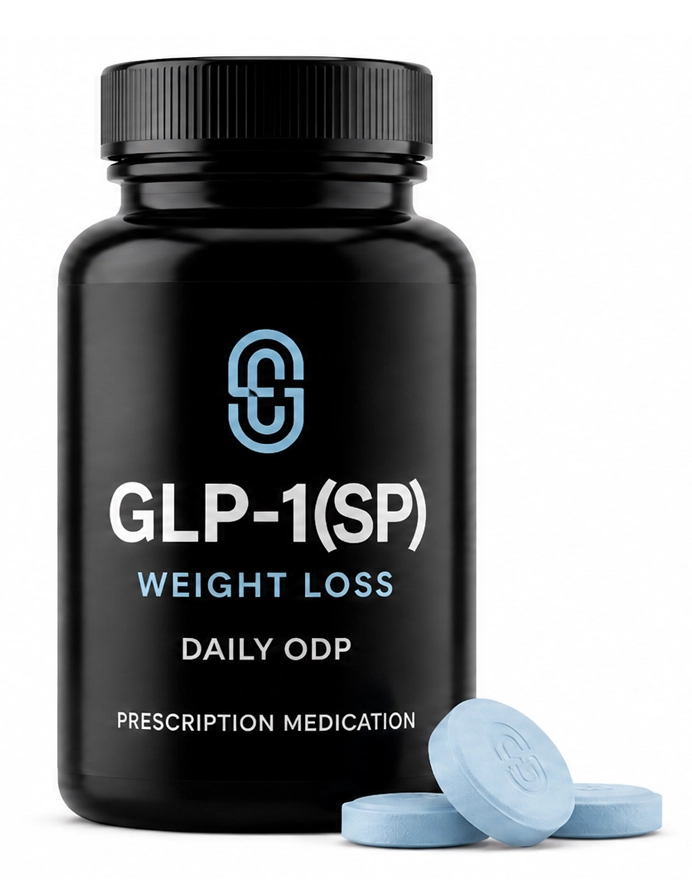
GLP SP 2mg
Daily dissolvable GLP-1 to curb appetite and drop weight.
- Curbs Appetite
- Daily Dissolvable Tablet
- Steady, Lasting Results

GLP T 3mg
Dual-action GLP-1 for stronger appetite control.
- Dual-Action Formula
- Daily Dissolvable Tablet
- Maximum Appetite Control

Berberine with Ceylon Cinnamon
Natural metabolic support for blood sugar and weight.
- Supports Healthy Metabolism
- Balances Blood Sugar
- Once-Daily Tablet

Obesity increases the risk of death from high blood pressure, type 2 diabetes, coronary artery disease, stroke, gallbladder disease, sleep apnea, respiratory problems, and certain types of cancer, according to a report by the American College of Cardiology (ACC) and the American Heart Association (AHA). Furthermore, contends the report, the psychological, social, and economic consequences of obesity are serious enough to significantly impact the overall health and well-being of the American population.
Facts and Statistics About Obesity
The term “overweight” is defined as someone who has a body mass index (BMI) of 25 to 29.9, and the term “obesity” refers to those with a BMI of greater than 30. An estimated 69% of American adults are overweight, and around 35% of American adults are obese. Rates of obesity are more prevalent in certain racial and ethnic groups, and are more prevalent in poorer socioeconomic groups and among those with less education. According to the ACC / AHA report, obese medical patients have 46% higher inpatient treatment costs, 27% more outpatient costs, and 80% higher prescription drug expenses. In 2008, the cost for caring for obese people in the US reached approximately $147 billion.
The American Medical Association’s Classification of Obesity as a Disease
Last summer, the American Medical Association (AMA) made the decision to label obesity as a disease, and their reasoning was straightforward: by classifying obesity as a disease, they hope to improve health insurance reimbursement for treatment of obesity. Timothy Church, director of preventive medicine research at Pennington Biomedical Research Center, applauded the decision, saying, “I’m okay with it if that’s what it’s going to take to get reimbursement for treatments.” Physicians who treat a lot of obese patients think the new AMA designation will improve insurance reimbursement for lifestyle counseling, bariatric surgery, and obesity drugs.
Screening Guidelines from the ACC / AHA Report
Insurance companies have also been under pressure from the results of a federal task force of preventive health experts, which included the recommendation that physicians screen for obesity and provide lifestyle counseling or referrals to weight loss programs. Said Church, “Until insurance companies move towards reimbursement, I don’t think we’ll make much headway” with management of obesity.

The General Process for Medical Weight Management
According to the ACC / AHA report, the process for treating obesity should be done in a step-by-step manner:
- Measure weight, height, and calculate BMI
- Classify overweight patients as follows: BMI of 25-30 is overweight; BMI 30-35 is class I obese; BMI 35-40 is class II obese; BMI over 40 is class II or extremely obese.
- Assess and treat cardiovascular disease risk factors and other co-morbidities
- Assess patient’s weight and lifestyle history and the need to lose weight
- Assess patient readiness to make lifestyle changes that promote weight loss and identify factors that may prevent weight loss
- Determine weight loss and health goals, and intervention steps for achieving them
- The preferred weight loss option is comprehensive lifestyle intervention, with the option for adding prescription weight loss drugs or referral to a bariatric surgeon
- Help the patient maintain weight loss
Under the ACC / AHA guidelines, doctors should only offer prescription weight loss drugs or a referral to a bariatric surgeon only if the patient is unable to lose and maintain the loss of 5 to 10% of his or her body weight using lifestyle intervention.
Weight Loss Drugs
Currently the only prescription weight loss drug approved for long term use is Xenical, which works by reducing the amount of fat that is absorbed from food. Newer weight loss drugs Qsymia and Belviq work on a different physiological principle that involves adjusting neurotransmitter levels in the brain for appetite control. These two drugs have not been in use long enough for researchers to be able to evaluate their usefulness and safety with long term use. One possible improvement that could come about because of the AMA classification of obesity as a disease is better insurance reimbursement for prescription weight loss drugs.
Millions of people around the world have successfully lost weight by modifying their diet and taking Xenical, and eDrugstore.com sells Xenical at competitive prices with unparalleled convenience and customer service. eDrugstore.com is compliant with HIPAA, and is committed to the best online security and customer privacy practices.
Photo Credits: Ambro / freedigitalphotos.net, David Castillo Dominici / freedigitalphotos.net

We specialize in providing our over 1,000,000 customers with relevant product and condition information created by our professional editorial staff which includes our team of medical writers, medical practitioners, and health educators. eDrugStore.com Staff on Facebook