


Reach Your Goal Weight. Prescribed. Proven. Private.
Doctor-prescribed GLP-1 weight loss treatments delivered discreetly to your door.
Physicians
Private
Delivery
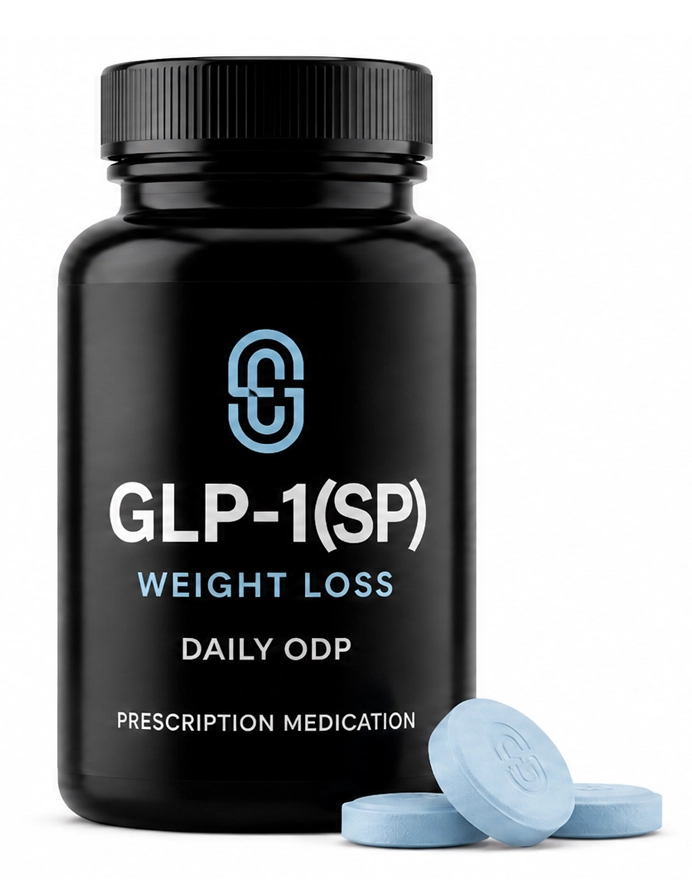
GLP SP 2mg
Daily dissolvable GLP-1 to curb appetite and drop weight.
- Curbs Appetite
- Daily Dissolvable Tablet
- Steady, Lasting Results

GLP T 3mg
Dual-action GLP-1 for stronger appetite control.
- Dual-Action Formula
- Daily Dissolvable Tablet
- Maximum Appetite Control

Berberine with Ceylon Cinnamon
Natural metabolic support for blood sugar and weight.
- Supports Healthy Metabolism
- Balances Blood Sugar
- Once-Daily Tablet
If you’ve been researching GLP-1 medications, the semaglutide vs liraglutide question probably came up fast. They’re cousins in the same drug family, both FDA-approved for chronic weight management, and both work by mimicking a gut hormone that tells your brain you’re full. But they’re not interchangeable, and the differences matter more than most patients realize when they walk into the pharmacy.
The short version: semaglutide (Wegovy, Ozempic) generally produces more weight loss than liraglutide (Saxenda, Victoza) in head-to-head data. That doesn’t automatically make it the right choice for every patient. Injection frequency, side effect tolerance, insurance coverage, and how your body responds all play into the decision.
Here’s what the evidence actually shows, and what tends to happen in real-world use.
How Semaglutide vs Liraglutide Actually Work
Both drugs are GLP-1 receptor agonists. They mimic glucagon-like peptide-1, a hormone your intestines release after you eat. The result is slower stomach emptying, reduced appetite, and better blood sugar control. The FDA has approved both for chronic weight management in adults with obesity or overweight plus a weight-related condition.
The key structural difference is duration. Liraglutide has a half-life of about 13 hours, which is why it requires daily injection. Semaglutide’s half-life is roughly 165 hours, allowing once-weekly dosing. That single fact drives a lot of the practical differences patients experience.
If you’re new to this drug class, the patient guide on how GLP-1 medications work walks through the mechanism in more detail.
Head-to-Head Weight Loss Results
The STEP 8 trial published in JAMA in 2022 compared the two directly. Over 68 weeks, patients on semaglutide 2.4 mg weekly lost an average of 15.8% of body weight, while those on liraglutide 3.0 mg daily lost 6.4%. That’s a meaningful gap, not a rounding difference.
For context, a NEJM analysis of the STEP 1 trial found nearly 70% of semaglutide patients lost at least 10% of their body weight. Liraglutide trials typically show that threshold hit by around 33% of patients.
So on raw efficacy, semaglutide wins. But averages hide individual variation. What I see in practice: some patients respond beautifully to liraglutide and plateau on semaglutide, or vice versa. Receptor sensitivity isn’t identical from person to person.
Side Effects: More Alike Than Different
Both drugs share the same side effect profile, mostly GI-related:
- Nausea (the most common, especially in the first 4 to 8 weeks)
- Vomiting or diarrhea
- Constipation
- Reflux or burping
- Fatigue during dose escalation
- Rare but serious: pancreatitis, gallbladder disease, and a boxed warning for medullary thyroid carcinoma risk in animal studies
One nuance worth noting. Because liraglutide is dosed daily, side effects tend to be steadier day to day. Semaglutide’s weekly dose can produce a "peak nausea" window 24 to 72 hours after injection for some patients, then relative calm. Neither pattern is objectively better. It depends on which rhythm your life tolerates.
Both drugs require slow dose escalation to reduce GI side effects. Rushing the titration is the single most common reason patients quit. The Mayo Clinic’s overview of GLP-1 therapy reinforces this point.
Cost, Convenience, and Insurance Reality
Here’s where the decision gets muddier. List prices for both drugs run over $1,000 per month without coverage. Insurance coverage for weight-loss indications, as opposed to type 2 diabetes, is still inconsistent in 2026, though it’s improved.
A few practical points:
- Wegovy (semaglutide) and Saxenda (liraglutide) are the branded weight-loss formulations. Ozempic and Victoza are approved for type 2 diabetes and prescribed off-label for weight loss in some cases.
- Liraglutide’s patent has begun opening the door to generic versions, which may lower cost over time.
- Compounded semaglutide is available in some settings, though the FDA has flagged concerns about unregulated sources.
If you’re weighing the specific branded options, the Saxenda vs Wegovy comparison breaks down the branded head-to-head in more detail. And for patients curious how newer options stack up, the tirzepatide vs semaglutide comparison covers what’s next in the GLP-1 space.
Compare pricing options for both medications at edrugstore.com to see what actually fits your budget before you commit to a prescription.
Who Tends to Do Better on Each
There’s no perfect algorithm, but some patterns show up repeatedly in clinical practice:
Semaglutide often fits better if:
- You want the largest possible weight loss effect
- Weekly injection is more sustainable than daily for your routine
- You’ve already tolerated GLP-1 therapy without severe GI issues
Liraglutide often fits better if:
- You’ve had trouble tolerating semaglutide’s nausea pattern
- Daily injection routines actually suit you (some patients prefer the ritual)
- Cost or generic availability tips the scale
- You need more granular control over dose adjustments
Neither drug is a substitute for dietary changes and physical activity. The CDC’s guidance on adult obesity treatment is clear that medication works best alongside behavioral change, not instead of it.
The Bottom Line on Semaglutide vs Liraglutide
For most patients looking purely at weight loss numbers, semaglutide vs liraglutide comes out in semaglutide’s favor by a meaningful margin. But "better on average" isn’t the same as "better for you." Tolerance, injection preference, cost, and how your body actually responds all shift the answer.
If you’re starting from scratch, most prescribers will lean toward semaglutide first, then consider liraglutide if side effects or access become obstacles. Ask your doctor whether either drug fits your medical history, especially if you have a personal or family history of thyroid cancer or pancreatitis. And talk to your pharmacist about titration schedules before you inject the first dose. That single conversation prevents most of the early problems patients run into.
This article is for informational purposes only and is not medical advice. Always consult a licensed pharmacist or physician before starting, stopping, or changing any medication.
References
- FDA approval of semaglutide for chronic weight management, regulatory basis for weight-loss indication.
- NEJM STEP 1 trial results for semaglutide, pivotal efficacy data on percent body weight lost.
- Mayo Clinic overview of GLP-1 receptor agonists, clinical use, side effects, and titration guidance.
- CDC adult obesity resources, public health framework for combining medication with behavioral change.

Dr Steven Schlosser
Dr. Schlosser graduated from Lafayette College Phi Beta Kappa and attended Georgetown Medical School. He had 4 years of medical residency training at Tufts University in Boston in both Gynecology and Internal Medicine. He has had a spotless medical career for the past 40+ years and is Board Certified. Learn More