

Reach Your Goal Weight. Prescribed. Proven. Private.
Doctor-prescribed GLP-1 weight loss treatments delivered discreetly to your door.
Physicians
Private
Delivery
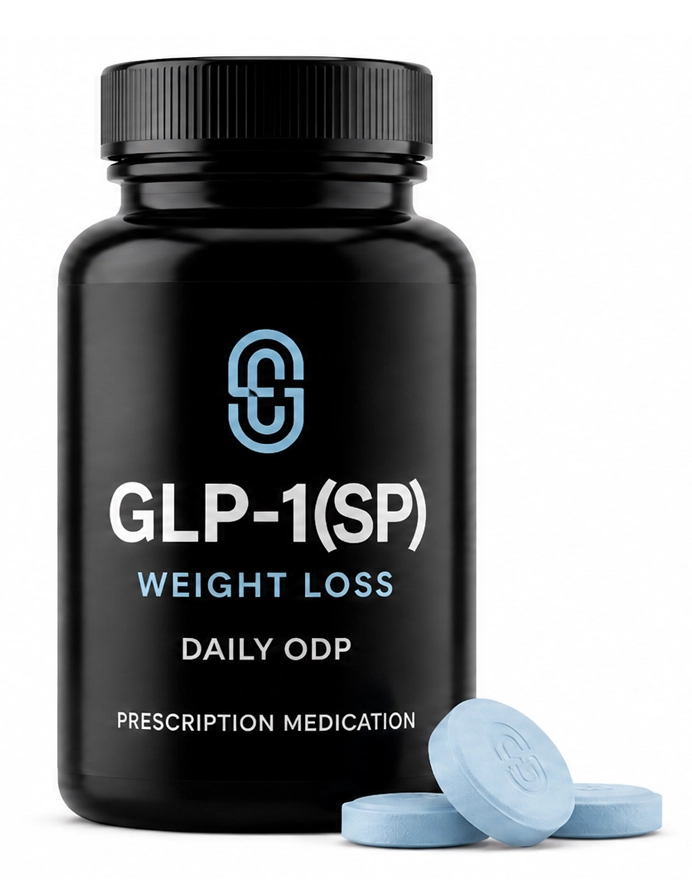
GLP SP 2mg
Daily dissolvable GLP-1 to curb appetite and drop weight.
- Curbs Appetite
- Daily Dissolvable Tablet
- Steady, Lasting Results

GLP T 3mg
Dual-action GLP-1 for stronger appetite control.
- Dual-Action Formula
- Daily Dissolvable Tablet
- Maximum Appetite Control

Berberine with Ceylon Cinnamon
Natural metabolic support for blood sugar and weight.
- Supports Healthy Metabolism
- Balances Blood Sugar
- Once-Daily Tablet
 One 2005 study that offered a glimmer of hope for overweight (but not obese) people has been shot down and destroyed. The controversial study was performed by the Centers for Disease Control and Prevention, and it concluded that being overweight didn’t raise the risk of death.
The above report included smokers and those with pre-existing illnesses. However, a similar study was released this week that compiled data from 19 existing studies, and it did not include smokers or patients with pre-existing illnesses.
The new study showed that even the slightest gains in weight, as measured by body mass index (BMI), increase the chances of an earlier death. This means that people who are a little, or a lot, overweight (but not obese) die quicker on average.
 The new study followed 1.46 million non-Hispanic white adults for five to 28 years. White adults were studied because they were the largest race in the study sample. The complete findings of the study appear in today’s issue of the New England Journal of Medicine.
BMI is defined as the individual’s body weight divided by the square of his or her height. So if you were 5’11 (71 inches) and weighed 180 pounds, your BMI would be 28. A normal BMI is considered to be between 22.5 and 24.9. The study found that “all-cause” mortality was generally lowest within the 20.0 to 24.9 BMI range.
WebMD did a great job of easily breaking down the study’s findings in terms of increased risk of death, as it relates to the amount of weight gain/BMI (the percentages indicate how many people died while participating in one of the 19 studies that were compiled as part of this week’s report) :
- A BMI of 25.0 to 29.9 increased death risk by 13%
- A BMI of 30.0 to 34.9 increased death risk by 44%
- A BMI of 35.0 to 39.9 increased death risk by 88%
- A BMI of 40.0 to 49.9 increased death risk by 251%
 Because these findings are similar to those reported by three smaller studies, the researchers are confident they have dispelled the myth that “having a little extra meat on your bones” is a good idea – unless the meat is actual muscle.
There was one noted objection to the study results. University of South Carolina obesity researcher Steven Blair said more research needs to be done into the physical activity of overweight and obese people in order for the results to be more accurate. He believes overweight and obese people who are “fit” are at a lower risk for death/disease.
Two-thirds of Americans are either overweight or obese, and the line is split pretty evenly down the middle between the two. In other words, one third of America is officially overweight, and one third of America is obese.
The new study was funded by the National Institutes of Health, and the lead author was Amy Berrington with the National Cancer Institute.

We specialize in providing our over 1,000,000 customers with relevant product and condition information created by our professional editorial staff which includes our team of medical writers, medical practitioners, and health educators. eDrugStore.com Staff on Facebook