


Highlights
- TURP is a surgical procedure to remove a portion of the prostate in patients experiencing urinary symptoms from benign prostatic hyperplasia (BPH).
- UroLift is a medical device that prevents the prostate from narrowing the urethra during BPH.
- Both are viable options for relief, although other avenues should be tried first.
As men age, they often find that they need to manage benign prostatic hyperplasia (BPH). Advancing medical technology has broadened the options available beyond just medication or surgery. Learn what men should know about BPH, surgical and outpatient options, and which one is right for them.
Why Would I Need TURP or UroLift?
A man’s prostate stops growing after puberty, then stays the same until age 25 or so. Then it begins to grow again and continues to do so for the rest of his life.
Normally, your prostate is approximately the size of a walnut and sits in the center of a dense network of nerves, blood vessels, and other tissue. As it grows, it can press against the urethra, causing a range of urinary problems.
Urinary symptoms can include:
- Difficulty urinating
- A feeling that your bladder hasn’t completely voided
- A sudden need to urinate
- Urinary incontinence
When non-invasive options such as daily Cialis or finasteride don’t offer enough relief, the discussion may turn to surgery. In the past, surgical options were limited and had a high risk of postoperative issues like erectile dysfunction (ED), but over the last few decades new avenues have opened up to reduce those side effects and limit the risk.
What Is Transurethral Resection of the Prostate (TURP)?

In a transurethral resection of the prostate (TURP), a surgeon guides a tool called a cystoscope through the urethra and makes a small incision in the prostate. Using surgical blades, electrocautery tools, or in some cases, implements such as lasers or directed steam, up to 50% of the prostate’s mass is removed.
Benefits of TURP
- Well-understood procedure. TURP was pioneered in the early 1920s and has improved with the arrival of new imaging tools and removal options.
- Short recovery time. Due to fewer and smaller incisions, time spent in the hospital is usually one or two days, and any long-term postsurgical issues generally resolve after six to 12 months.
- Highly effective. Nine months following TURP, 75% of men report having only mild symptoms. The rest report at least some mitigation of symptoms.
- Low risk of erectile dysfunction (ED). Unlike previous procedures, involving an incision of the pelvis, TURP generally presents little risk of permanent erectile dysfunction, although you may experience transient ED as the body heals.
Drawbacks of TURP
- Risk of sexual dysfunction. Two-thirds of patients will develop erectile issues, such as erectile dysfunction or retrograde ejaculation (“dry orgasm,” where semen flows backward into the bladder rather than outside of the body).
- Requires hospitalization. Most TURP patients spend one night in the hospital.
- Increased risk of side effects. This is particularly true for older patients.
- Longer bleeding time. TURP can result in more bleeding and clots.
- Risk of new urinary symptoms. Although rare, there is a risk of new urinary symptoms after the procedure, generally due to injury to the bladder, bladder neck, or urethra.
- Not recommended for people with cardiac concerns. Due to the risk of bleeding during and after the surgery, anyone with a heart condition isn’t a good TURP candidate.
- Catheterization. Catheter insertion is part of the procedure and necessary to let the urethra heal.
- TURP syndrome. The procedure requires an irrigating fluid, which can have potential risks. The most extreme is TURP syndrome, where the irrigating fluid causes serious postsurgical problems.
What is UroLift?
UroLift takes a different approach. A medical device cleared by the FDA, UroLift starts by inserting an application device into the urethra. Implants are then placed around the prostate to hold the lobes away from the prostate and widen the urethra.
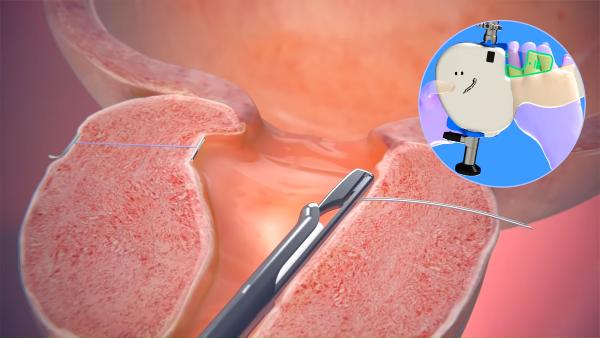
UroLift procedure – Source
Benefits of UroLift
- Minimally invasive. No prostate tissue is removed.
- No hospitalization and faster recovery. Because UroLift requires fewer and smaller incisions than TURP, UroLift is an outpatient procedure. Recovery is usually done at home.
- No catheter needed. Due to the design of the procedure, catheterization is unnecessary.
- Almost no risk of ED or retrograde ejaculation. So far, there have been no reports of ED or retrograde ejaculation caused by a UroLift procedure.
- Safer for elderly patients and cardiac patients. Since there’s less risk of bleeding, older patients and patients with heart health risks can usually safely undergo UroLift.
- Minimal long-term risk. If the implants fail, they won’t need to be removed unless the prostate is operated on later.
Drawbacks of UroLift
- Relatively high failure rate. Five years after the procedure, UroLift has a reported failure rate of 7% to 14%. In these situations, patients may opt for TURP or another BPH procedure, such as HoLEP. In that case, the implants will need to be removed.
- Best results when BPH is caught early. Men with large prostates or advanced BPH report less symptom relief with UroLift.
TURP vs. UroLift: Which Procedure is Better for Me?

The main benefit of both procedures is that they have short recovery times, high success rates, and limited postoperative symptoms, particularly ED. If you’re considering intervention beyond medication, either is likely to be effective. However, early results are showing more short-term relief from UroLift and similar procedures.
Beyond that, consider your overall health. If you’re otherwise healthy, TURP is an option, but if you have any concerns about surgery or recovery, UroLift may be a better choice.
Discuss your symptoms and your options with your doctor. They may recommend prostate imaging to determine its size and growth rate. As smaller prostates and earlier cases benefit most from UroLift, it may not be an option for men with a larger prostate or advanced BPH.
If you and your provider determine that both procedures are options for you, ask yourself what will best fit into your life. Weigh the risks and benefits of each along with long-term outcomes to make your best decision.
BPH is Manageable Without Surgery
Also, remember that there are noninvasive options for BPH. Daily Cialis and finasteride are two medications that can help you keep BPH and its urinary symptoms manageable and are worth discussing with your doctor.
To stay on top of the latest news about erectile dysfunction, prostate care, and men’s health, follow the eDrugstore blog.

Dan is a long-time freelance writer focusing on technology, science, health, and medicine, with a lifelong interest in physics, biology, and medicine. His work has taken a particular focus on scientific studies “beyond the headlines,” reading the study to more closely examine the results.