


Highlights
- An increasing body of evidence has found that Viagra — the little blue pill — and other PDE5 inhibitors can help manage and treat heart disease.
- Men with certain medical conditions should be cautious about taking PDE5 inhibitors, but likely can do so with proper guidance from a doctor.
- Treating heart disease can help with erectile dysfunction symptoms.
Heart disease is incredibly common, with an American dying of it every 34 seconds. New and better treatments are being developed and launched constantly, yet there’s one that’s beginning to emerge that’s surprised many: phosphodiesterase-5 inhibitors like Viagra, Cialis, and Levitra. While the studies are preliminary, the links between a better heart and the little blue pill are becoming stronger.
The Link Between Heart Disease and Erectile Dysfunction
“Heart disease” is an umbrella term for a wide range of conditions, many of which involve the narrowing of blood vessels. This makes erectile dysfunction (ED), an early warning sign of heart disease; men who have heart attacks often suffer from ED afterward.
While ED can have a wide range of causes, one of the more common ones is a lack of blood flow to the penis. When blood vessels narrow, it becomes more difficult for blood to fill the spongiform tissues that are key to getting and keeping an erection.
Viagra and other phosphodiesterase-5 inhibitors, or PDE5i drugs, help treat ED by enlarging the blood vessels. To do that, they prevent PDE5 from degrading cyclic guanosine monophosphate (cGMP). Nitric oxide binds to cGMP and relaxes the blood vessels so they can stay open.
This effect applies across the body. In fact, Viagra wasn’t originally developed for ED, but instead was developed to treat angina, pain caused by limited blood flow to the heart. It’s still used to treat pulmonary arterial hypertension, under the brand Revatio.
While its side effect of strengthening erections has drawn more attention and made sildenafil (the generic name for Viagra) a top-selling drug, researchers were left wondering if PDE5i drugs can lower heart disease risk. And they’ve come across some compelling statistical evidence.
Can Viagra Lower Heart Disease Risk?

In a study published in January 2023, researchers ran what’s called a retrospective observational cohort study, where they take a large dataset of everyday people with similar characters and age (the cohort) and filter the data to look for interesting results.
In this case, they selected men who hadn’t reported heart problems before being diagnosed with ED and who got at least one PDE5i through their insurance coverage. It checked them against men who hadn’t gotten a prescription.
The study found that men who’d taken the PDE5 inhibitor at least once had a 13% overall lower incidence of heart disease-related issues, including death. These results are particularly compelling because they rule out a common problem with this analysis. Because it used insurance data, everyone in the study went to the doctor on a fairly regular basis.
There are, of course, some limits to this type of research. In particular, the researchers make clear that there may be unexpected factors their study simply didn’t consider. There’s a possibility that the men in the “control” group — those who did not get prescriptions for a PDE5i — may have used one paid for in a different way.
Still, the research aligns with other studies on PDE5 inhibitors. A cohort study published in 2021 conducted on Swedish men showed the same correlation, suggesting a protective effect. So while nothing definitive can be said yet, there’s definitely momentum toward a broader study and new recommendations.
So why does Viagra help the heart? The theory is that by expanding the arteries near the heart, phosphodiesterase-5 inhibitors make it easier for the heart to pump blood. The easier the heart has it, the less likely it is to be remodeled — changed in ways that are detrimental to long-term heart health.
What to Know About Viagra and Heart Disease

While this evidence is compelling, there are some risks related to PDE5i medication and heart disease. Remember, these medications work throughout the circulatory system, not just in the penis. In some situations, this widens arteries to the point where it can cause a dangerous drop in blood pressure. This is especially risky for those who are taking other blood pressure medication.
In particular, it’s recommended that you show caution if:
- You’ve experienced a cardiac event, stroke, or arrhythmia in the last six months
- You have a history of congestive heart failure or unstable angina
- You’re taking medication for low blood pressure
- You’re managing uncontrolled high blood pressure
If you’re considering ED medication and have any of these conditions, take these steps:
- Consult with your doctor. Ask about your options and any possible risk in taking ED drugs.
- Review any medication you’re currently taking. The risk of interaction can be particularly high for ED meds in combination with blood pressure medication. Drugs that affect liver enzymes can inhibit the breakdown of ED medication. And be sure to mention to your doctor any supplements you’re taking; they can have unexpected effects.
- Discuss changes to your lifestyle with your doctor. Many of the lifestyle interventions recommended for heart disease can also help with ED.
If I Don’t Currently Have Heart Disease, Should I Take Viagra Anyway?
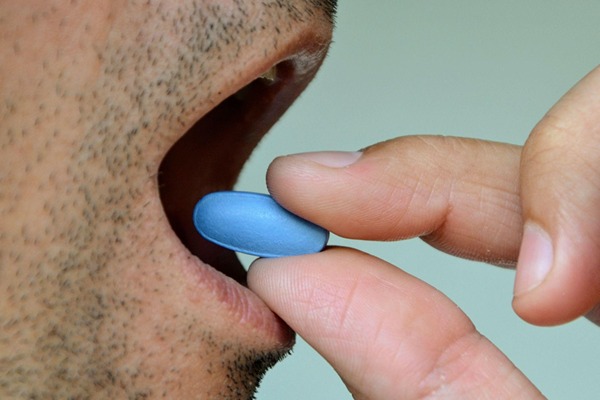
If your heart is healthy, and you don’t need a little blue pill, it’s better to not take it unless a doctor advises you to. While these studies are attention-getting, especially for men with heart disease, there’s a lot of research still to be done before definitive conclusions can be drawn.
The best way to manage heart disease is to not get it in the first place, so ask your doctor about lifestyle changes and how to best manage your risk. And if you do have heart disease, treating the problem at the source is the best way to deal with ED.
There is one exception. Some PDE5i drugs, like Cialis and Levitra, can be used as treatment for conditions like benign prostatic hyperplasia (BPH). If you have one of these conditions, check into it with your doctor.
Keep Heart Disease — and ED — In Check
If you have heart disease and ED, you likely don’t have to choose between treating one or the other. Management practices, medication, and lifestyle choices can help you reduce the impact of both on your life.
eDrugstore can help you find the ED medication that’s right for you, with free telehealth consultations, detailed reports on pricing, and other news you can use. To learn more, visit our erectile dysfunction page.
Frequently Asked Questions
Can I get an online Viagra prescription at eDrugstore?
Yes, you can get an online Viagra prescription at eDrugstore. The platform offers a convenient and confidential telemedicine service where licensed physicians review your medical information and provide a prescription if appropriate.
How does the blue pill work for men?
The blue pill, also known as Viagra, works by increasing blood flow to the penis, which helps men achieve and maintain an erection during sexual activity. It’s effective only when sexual stimulation occurs and is not a cure for erectile dysfunction.
How can I buy generic Viagra at eDrugstore?
To buy generic Viagra at eDrugstore, visit their website, provide your medical details, and complete the telemedicine consultation. Once approved, you can place an order for generic Viagra, which is a cost-effective alternative to the brand-name version.
Is the delivery discreet if I order Viagra online?
Yes, eDrugstore ensures discreet delivery when you order Viagra online. Packages are shipped in unmarked packaging to maintain your privacy and confidentiality.
Are there any Viagra coupons available at eDrugstore?
Yes, eDrugstore often provides Viagra coupons to help customers save on their purchases. Check their website or contact customer service for the latest deals and discounts on Viagra and other medications.

James West is a seasoned health and wellness writer with a focus on topics related to physiology, sleep, and men’s health. He has contributed articles on a range of subjects, from erectile dysfunction treatments and sleep aids to hair loss, providing well-researched insights to help readers make informed health decisions.