


Real Hair Regrowth. Proven. Prescribed. Private.
Doctor-prescribed hair loss treatments delivered discreetly to your door.
Physicians
Private
Delivery

Finasteride
Blocks DHT to stop hair loss at the source.
- Clinically Proven
- One Tablet Daily
- Slows Loss, Spurs Regrowth

Minoxidil Tablets
Boosts follicle blood flow for thicker growth.
- Stimulates Dormant Follicles
- Convenient Oral Dose
- Thicker, Fuller Hair

Men's Hair TriGro
Compounded triple-action formula for max regrowth.
- 3 Actives in One Dose
- Targets Loss Multiple Ways
- Physician-Formulated
Highlights
- Diffuse unpatterned alopecia (DUPA) is a less-common type of hair loss that affects the entire scalp.
- DUPA symptoms resemble those of telogen effluvium.
- Only a qualified doctor or trichologist can diagnose DUPA.
- Doctors believe the same hormonal and environmental factors cause DUPA as male pattern baldness (MPB).
Male pattern hair loss affects the hairline and the top of the head. It is a widespread condition, accounting for the majority of male hair loss cases. Male pattern baldness, with its highly recognizable horseshoe pattern, is not the only danger threatening your tresses, however. DUPA (diffuse unpatterned alopecia) may cause even worse damage.
What is Diffuse Unpatterned Alopecia (DUPA)?
DUPA is a type of hair loss that affects the entire scalp equally. Unlike male pattern baldness (MPB), it does not result in a hair loss pattern on the scalp, horseshoe-like or otherwise. It is, therefore, more difficult to recognize before the hair thinning becomes obvious.
Diffuse unpatterned hair loss can affect both men and women. It tends to be less common in men but can work hand-in-hand with MPB.
DUPA balding may look like telogen effluvium, a temporary hair loss problem caused by stress, medication, or a physical shock the body finds itself hard-pressed to handle.
If your unpatterned alopecia occurs after a major surgery, an infection, severe trauma, radical hormonal changes, long-lasting severe fever, or crash dieting, there’s a chance it may be telogen effluvium. Telogen effluvium can resolve once its trigger disappears.
The same is not true for DUPA. Doctors don’t yet understand much about what causes DUPA. Its underlying mechanisms may be similar to standard or patterned male hair loss. The experience is as traumatic, if not more so.
Is your hair loss DUPA, or is it something else?
DUPA Symptoms and Diagnosis
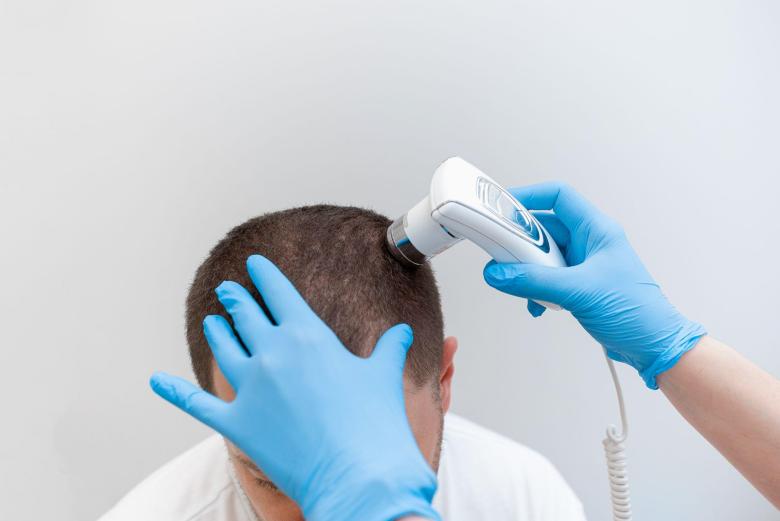
DUPA’s most obvious symptom is the thinning of the hair all over the scalp. When you suffer from unpatterned hair loss, your follicles undergo a gradual miniaturization. You may shed more hair. The hair on your scalp, including the back of your head and the areas above your ears, becomes thinner.
These symptoms are similar to those of telogen effluvium. Only a qualified dermatologist or trichologist can establish whether you’re dealing with telogen effluvium or DUPA.
So, how do doctors diagnose DUPA? Because we don’t understand much about DUPA yet and the condition is relatively rare, diagnosis focuses on excluding other causes and types of hair loss.
Your doctor may want to:
- Discuss your medical history
- Conduct a physical examination of your scalp
- Take a scalp biopsy
- Perform some special tests
When you visit a trichologist complaining of hair loss, the diagnosis process typically begins with a discussion about your symptoms and medical history. Your doctor will then determine whether your hair loss follows a specific pattern or is unpatterned.
If it is unpatterned, your doctor may perform a pull test, which is a simple way to determine if you have a hair-shedding problem. During this test, your doctor gently tugs on a section of about 40 hair strands and checks how many fall out. If more than six strands come out, it indicates a shedding problem, such as telogen effluvium.
However, if the pull test is negative, you may be dealing with diffuse unpatterned alopecia (DUPA). Your doctor may then opt for trichoscopy, a non-invasive procedure that uses a high-definition camera to examine your scalp and hair follicles, looking for irregularities like follicles of differing thickness.
If the doctor finds differences between the diameters of your hair follicles on your vertex and hairline but not elsewhere, you likely have diffuse pattern alopecia (DPA). On the other hand, if there are differences between your hair follicle diameters all over your head, you probably have DUPA.
It’s important to note that while a positive pull test suggests a hair-shedding problem like telogen effluvium, it can also be indicative of other conditions such as androgenetic alopecia, alopecia areata, and scarring alopecia. Therefore, the pull test alone is not definitive for any given diagnosis but rather an indication that something is not quite right with how you are losing hair.
The Science of Hair Loss: DUPA Explained
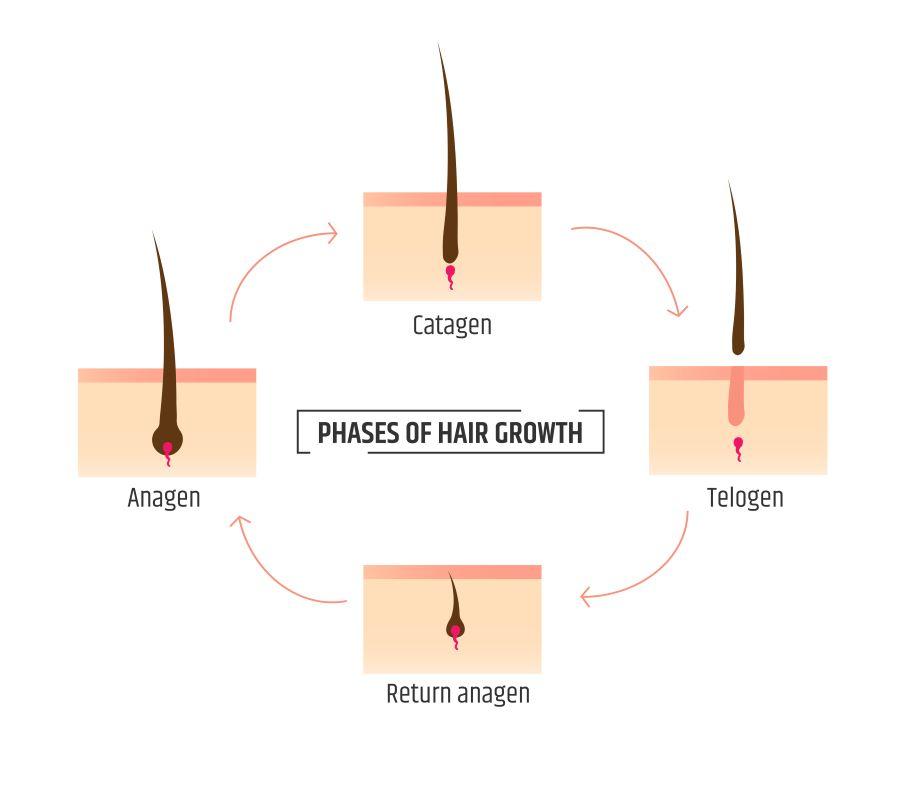
Human hair grows and sheds in a predictable cycle, which includes the following four phases:
- Anagen. The growth phase of the cycle lasts from two to eight years and results in the production of full hair from the follicle.
- Catagen. The regression phase lasts two weeks, representing a transition to the telogen phase.
- Telogen. The resting phase lasts two to three months and affects about 9% of the hair follicles on a healthy scalp.
- Exogen. In the termination phase, the hair detaches from the scalp, re-initiating the anagen phase.
Genetic factors, like sensitivity to androgens, and external factors, like stress or a physical shock, can upset the delicate balance of the hair cycle. Dihydrotestosterone (DHT) is a potent androgen that can disrupt that balance and negatively impact the growth cycle. Specifically, DHT shortens the anagen phase and shrinks the hair follicles.
Typically, men display increased sensitivity to DHT in the crown region of their scalps. Those with high DHT sensitivity all over their scalps may develop DUPA instead of MPB.
Other factors that may contribute to DUPA are:
- Chronic inflammation
- Thyroid disorders
- Poor nutrition
- Exposure to toxins
- Autoimmune diseases
Treatment Options: Beyond the Buzzwords
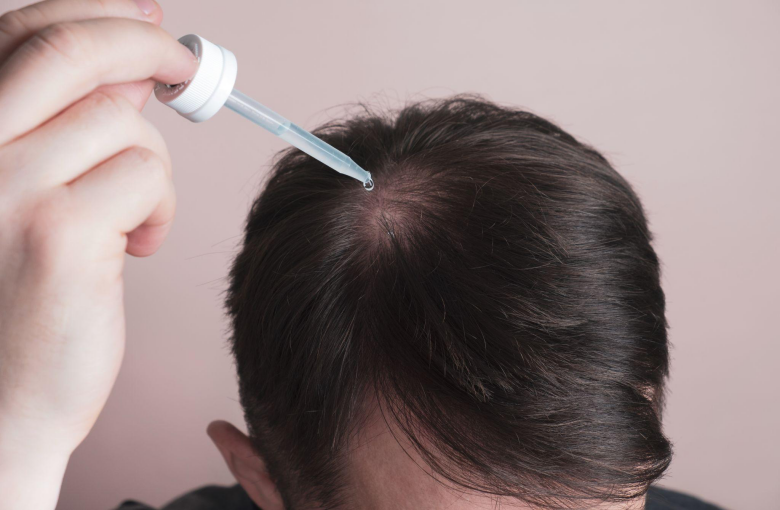
We don’t know much about DUPA causes, but doctors assume it works by the same mechanisms as MPB. As with MPB, lifestyle changes may help you boost hair growth and slow your DUPA.
These include:
- Adequate sleep
- Regular exercise
- As little stress as possible
- A well-balanced diet
Alongside lifestyle modifications, medications like generic finasteride, Propecia, and topical minoxidil are the best options.
Finasteride (Propecia) is a DHT blocker that reduces DHT levels in the body, allowing sensitive hair follicles to thrive. Its potential side effects include erectile dysfunction, reduced sexual desire, depression, and testicle pain.
Minoxidil (Rogaine) is a topical solution that boosts circulation in the scalp, improving the cellular processes involved in hair growth. Its potential side effects include dizziness, unwanted hair growth, weight gain, heart palpitations, and scalp irritation.
Hair transplant is not an option for DUPA patients. Their donor hairs are too weak and much more likely to further miniaturize after a transplant.
Avoiding Scams
The hair loss market is massive and profitable. The potential profits tempt scammers to sell counterfeit finasteride and minoxidil. To avoid hair loss scams, only buy medications from a reputable source like eDrugstore. Always verify the packaging and the manufacturer. Check for online pharmacy accreditation, and consult a healthcare professional to obtain the prescriptions you need.
eDrugstore Can Help

At eDrugstore, we carry Propecia, generic finasteride, and minoxidil topical, as well as hair growth-promoting supplements and devices like scalp massagers and minoxidil applicator combs.
When you become an eDrugstore client, you get a complimentary consultation with a U.S.-licensed doctor. Our doctors can help you figure out what type of hair loss you have and how to treat it.
Visit our hair restoration page today, and have your treatment delivered to your home quickly and discreetly.
Disclaimer: This article provides general information about health and related topics but is not intended as a substitute for professional medical advice, diagnosis, or treatment. Always seek the advice of your physician or other qualified health provider with any questions you may have regarding a medical condition.

James West is a seasoned health and wellness writer with a focus on topics related to physiology, sleep, and men’s health. He has contributed articles on a range of subjects, from erectile dysfunction treatments and sleep aids to hair loss, providing well-researched insights to help readers make informed health decisions.