


Effective ED Treatment. Private. Convenient. Trusted.
Doctor-prescribed ED medication delivered discreetly to your door.
Physicians
Private
Delivery

ED3 Max Dissolvable ED Pills
Long-lasting results up to 36 hours.
- Up to 36 Hour Window
- Improved Confidence
- Works When You Need It

Sildenafil 25mg
Proven effective treatment.
- Starts Working in 30–60 Min
- Effective, As Needed
- Trusted & Reliable
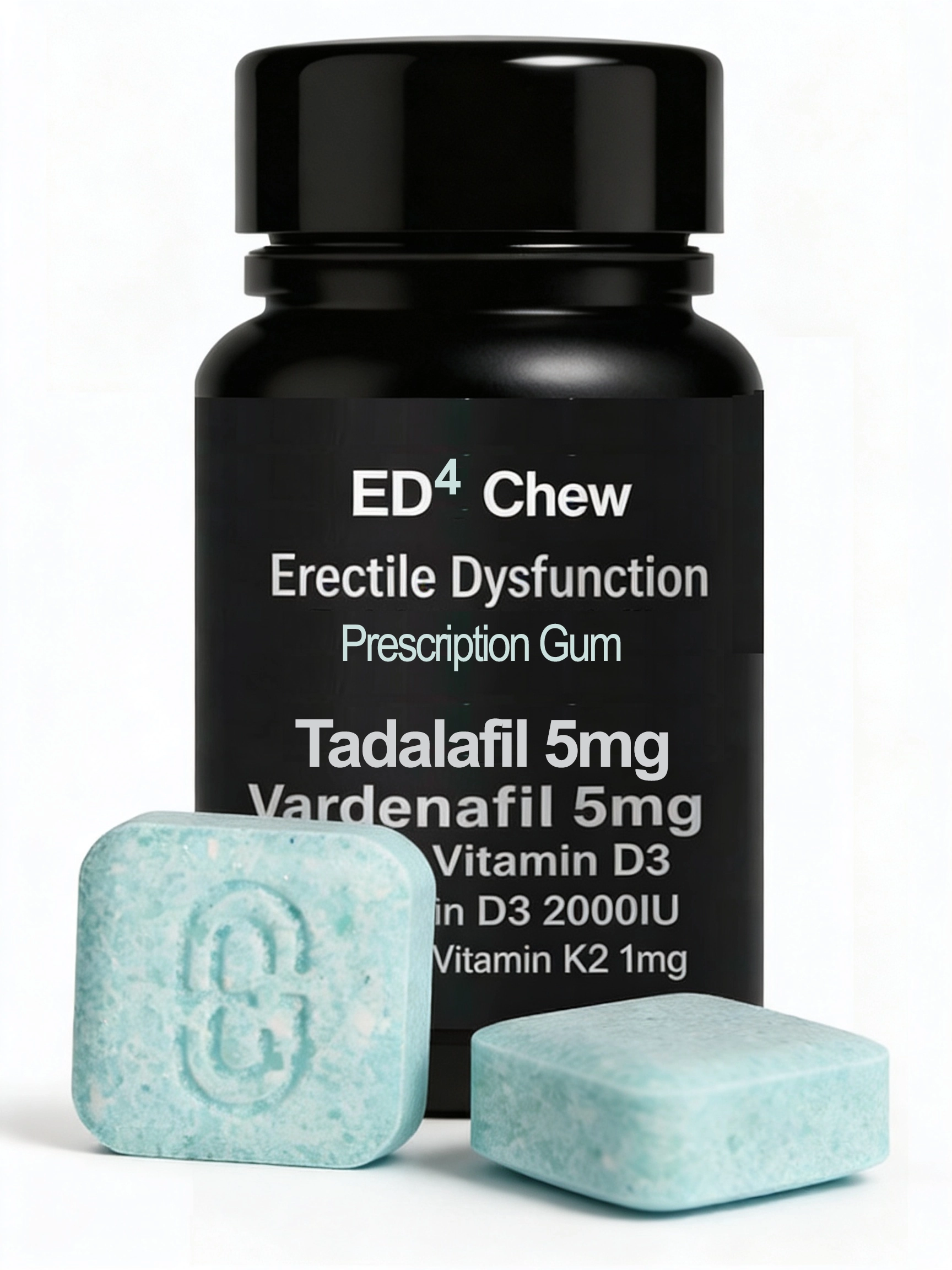
ED4 Chew Gum
Low daily dose for continuous readiness.
- Taken Once Daily
- Continuous Readiness
- Improves Confidence

The Search Term “Viagra” Is a Spam Magnet
If you have ever used Google to search on the term “Viagra” you have noticed that the results include a large number of obviously disreputable sites, right there on the first page. Include additional terms like the name of the manufacturer (Pfizer) or the name of the active ingredient in Viagra (Sildenafil Citrate), and you still get search results for sites you wouldn’t want to visit without the computer equivalent of a Hazmat suit.
However, Google search results today on Viagra are better than they used to be. The top results – the ones appearing “above the fold” – are for legitimate sites like the National Institutes of Health, Wikipedia, and Pfizer’s official Viagra site. Scroll down, however, and you get sites pitching “lowest prices for Viagra guaranteed,” sites for “generic Viagra” (which doesn’t legally exist in the United States), and spoof YouTube “commercials” for Viagra.
It’s no big mystery why this happens. Almost as soon as Viagra was introduced to the market in 1998, doctors were adding weekend and evening hours in an attempt to keep up with demand. It didn’t take counterfeiters long to discover that there were plenty of people willing to buy “Viagra” erection pills regardless of the pedigree of the site selling it. Today, Viagra is the number one most counterfeited drug in the world.
The Pharma Hack of 2011 and Viagra Search Results
In 2011, hundreds of legitimate websites became victims of the so-called “pharma hack” that redirected those who clicked on links to spam sites purporting to sell Viagra. Many of the sites that were hacked had absolutely nothing to do with Viagra or pharmaceuticals. When search engine users Googled “Viagra” by itself or alongside other search terms, many of the sites on the front page of the search results indeed carried ads for Viagra, even if those results happened to be the website of a library, a PR company, or a college.
Oddly, several of these sites that were victims of the pharma hack carry a warning placed by Google saying “This site may have been compromised.” In other words, Google knew (or suspected) these sites were hacked, yet still allowed them to rank on the first page of search results.
The pharma hack not only linked unrelated websites to spam sites selling Viagra (which was almost certainly counterfeit), but it kept legitimate sites that sell name-brand Viagra legally and safely out of the top search results. The unrelated sites and the legitimate sellers of Viagra were hurt by this hack. Fortunately, fixes for the pharma hack were available, and after fixing the affected software source code, hacked sites only had to wait around for the Google crawlers to crawl their site again to make things right.
Google’s Penguin Update of April 2012

1. Keyword stuffing – in which certain terms would be used many times on a page in an attempt to trick search robots into thinking it was a legitimate site about a particular keyword
2. Cloaking – in which spam sites direct search robots to one page and actual users to another
3. Backlink schemes – in which links from numerous sites were “funneled” to a particular web page
While the goal was to give searchers high-quality, relevant search results and reward sites with high-quality content, things didn’t always go as planned. Formerly high-ranking, legitimate sites plummeted in the search engine rankings, and many top spots were occupied by spam sites and blank web pages. Pfizer’s official webpage for Viagra even got knocked out of the search results for “Viagra.” Google asked for user feedback and got it, in the form of complaints by legitimate sites that lost ranking after the Penguin update.

Google search results on Viagra are better today than they were before the Penguin update, but many legitimate sites still aren’t satisfied, because Google has not been able to keep spam sites out of the top search results for certain search terms, and it’s not clear what they are doing to remedy the situation.
Today: Bing vs. Google Searches on “Viagra”
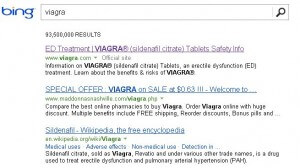
Bing is not immune to spam sites in search results either. The following screen cap from a Bing.com search on October 26, 2012 shows the following top three results:
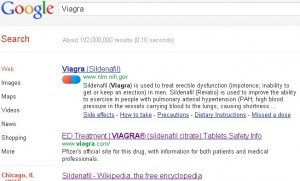
A Google search on Viagra on the same day produced these top three results:
Scroll down and the results in both search engines are rapidly taken over by shady sites, many of which are located overseas and many of which sell counterfeit Viagra. Clearly, search engines have not been able to keep spam sites out of top search results when it comes to very lucrative search terms like “Viagra.”
What Should Consumers Do?
The main thing that consumers searching for information on Viagra or looking for legitimate sites selling Viagra erection pills online should do is to ignore sites that offer unrealistically low prices, “generic Viagra,” and “herbal Viagra.” At best, you could lose your money on a product with no active ingredient. At worst, you could have your identity stolen or purchase a counterfeit product containing harmful ingredients. Chemicals found in fake Viagra range from inert starches to house paint (to match the distinctive blue of genuine Viagra tablets) to rat poison.
Consumers should look for legitimate online medical facilitators that sell name-brand Viagra manufactured by Pfizer that is dispensed by U.S.-licensed pharmacists. Two such sites are eDrugstore.com and eDrugstore.com. These sites contract with licensed physicians and pharmacists and dispense Viagra on the basis of a doctor’s prescription, shipping the product quickly, discreetly, and at competitive prices.
There is simply no reason to take the risk of ordering any medical product from a website that doesn’t require a prescription, that offers products that aren’t legal in the U.S., and that could get you into trouble with U.S. Customs and Border Protection if your shipment is intercepted. Safe and secure online resources for Viagra and other lifestyle drugs exist, and you owe it to yourself to seek these out so that you don’t risk your health.
Photo Credits: TedsBlog, Christopher John SSF, AlMixNuts,

We specialize in providing our over 1,000,000 customers with relevant product and condition information created by our professional editorial staff which includes our team of medical writers, medical practitioners, and health educators. eDrugStore.com Staff on Facebook