

Effective ED Treatment. Private. Convenient. Trusted.
Doctor-prescribed ED medication delivered discreetly to your door.
Physicians
Private
Delivery

ED3 Max Dissolvable ED Pills
Long-lasting results up to 36 hours.
- Up to 36 Hour Window
- Improved Confidence
- Works When You Need It

Sildenafil 25mg
Proven effective treatment.
- Starts Working in 30–60 Min
- Effective, As Needed
- Trusted & Reliable
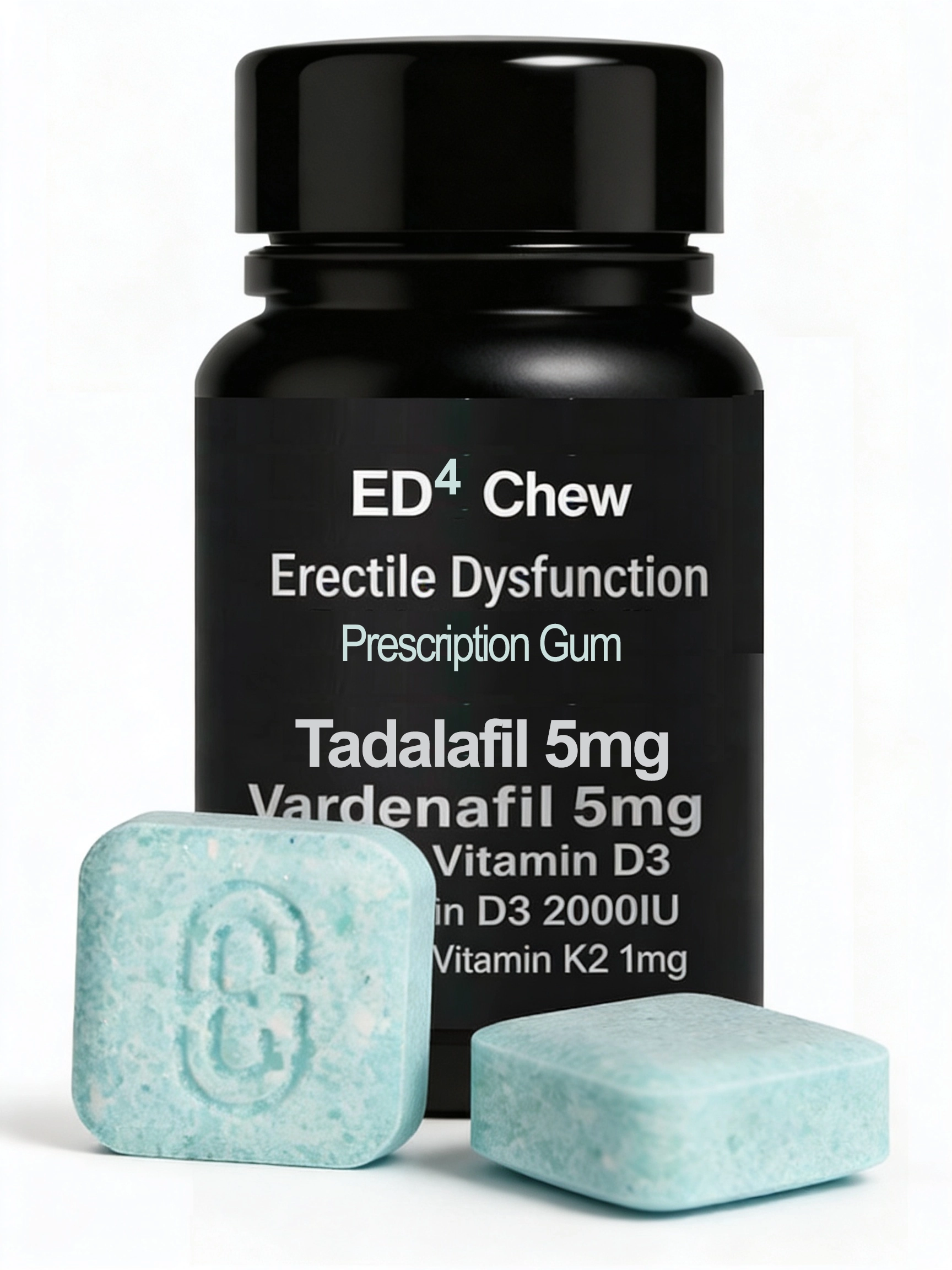
ED4 Chew Gum
Low daily dose for continuous readiness.
- Taken Once Daily
- Continuous Readiness
- Improves Confidence
 With a projected 2017 U.S. death toll of 9,730, melanoma is the deadliest skin cancer, according to the American Cancer Society.
For sun-loving Viagra users, the news is very good indeed. Just in time for the beach season, researchers announced recently that they have found no scientific evidence to support earlier reports that the little blue pill increased the risk of melanoma, the deadliest of skin cancers.
This welcome revelation in no way diminishes the threat posed by overexposure to the damaging ultraviolet rays of the sun, so sunbathers will still need to slather on plenty of high-SPF sunscreen and limit their time in the sun. However, it does relieve fears that men who are taking Viagra to treat their erectile dysfunction symptoms face a heightened risk of developing melanoma.
Data from Multiple Studies Analyzed
The good news came in the form of a meta-analysis of data developed from three case-control studies and two cohort studies published between 1998 and 2016. Study participants in the five studies totaled 866,049 men, all of whom were identified as users of erectile dysfunction drugs.
Findings from the meta-analysis were published in the May 19, 2017, issue of the “Journal of the National Cancer Institute.” At first glance, those findings might seem to support the hypothesis of a link between ED drug use and melanoma risk, showing that the rate of melanoma diagnoses was 11 percent higher among those using ED drugs.
However, researchers concluded that the higher rate of melanoma diagnoses among ED drug users was accounted for by a phenomenon they call “detection bias.” This theory holds that men who are treating their erection problems with PDE5 inhibitors — Viagra, Levitra, Cialis, Staxyn, and Stendra — are more health-conscious, more likely to see a doctor regularly, and thus more likely to have melanoma diagnosed than those less health-conscious.
2014 Study Causes Alarm
Concerns about a link between Viagra use and melanoma risk first arose in the wake of a 2014 study conducted by a team of dermatology and epidemiology scientists. That study was published in the June 2014 issue of “JAMA Internal Medicine,” a publication of the American Medical Association.
_600x.jpg)
The stated objective of the 2014 study was “to evaluate the association between sildenafil [Viagra’s active ingredient] use and risk of incident melanoma among men in the United States.” To accomplish that goal, researchers studied the incidence of skin cancer among 25,848 men who were participants in the Health Professionals Follow-up Study.
Test Subjects Tracked for a Decade
The sildenafil-melanoma study began in 2000, at which time none of the study participants had been diagnosed with any type of skin cancer. Study subjects were tracked for a decade from 2000 until 2010. At the conclusion of the study period, researchers had identified 3,752 cases of skin cancer — 3,030 diagnoses of basal cell carcinoma, 580 of squamous cell carcinoma, and 142 of melanoma.
This earlier study found that melanoma diagnoses were significantly higher among study subjects who revealed they had recently used sildenafil than among those who did not use the drug. However, the research team that conducted the 2014 study was cautious in drawing its conclusion, writing that “sildenafil use may be associated with an increased risk of developing melanoma. Although this study is insufficient to alter clinical recommendations, we support a need for continued investigation of this association.”
Recent Study More Broad-Based
And the more recent 2017 study is considerably broader in scope than the one published in 2014. While the latter study covered a total of less than 26,000 men, the latest study looked at the link between ED drug use and melanoma risk in study groups covering more than 866,000 men.
Even shortly after its publication in 2014, the study suggesting an increased risk of melanoma among sildenafil users had attracted its fair share of skeptics. In one such example, Daniel Pendick, then-executive editor of “Harvard Men’s Health Watch,” said the study’s conclusion was what he would call “a true lie: a scientifically correct statement that could easily be misunderstood to mean ‘that little blue pill gives you deadly skin cancer.’”
Melanoma a Very Real Health Threat
The large-scale meta-analysis of data from multiple studies, including the 2014 study that first raised concerns about a Viagra-melanoma link, appears to have knocked down concerns about such an association. However, as Pendick pointed out in his June 2014 blog post, melanoma is a serious health concern, particularly for men and women who spend a good deal of time in the sun.

The Melanoma Research Foundation is an excellent source of detailed information about this most dangerous of skin cancers. The foundation explains that this skin cancer gets its name from the cells — melanocytes — in which it originates. Melanocytes are the cells responsible for producing melanin, which is responsible for the color of our skin, hair, and eyes.
Melanoma is most often a cancer of the skin, according to MRF, because pigmenting cells are most common in the skin. However, cutaneous melanoma — a cancer of the skin — is only one, albeit the biggest one, of melanoma’s three basic forms.
Mucosal, Ocular Melanomas
The others are mucosal melanoma and ocular melanoma. The former can occur in any of the body’s mucous membranes, including those lining the mouth, throat, nasal passages, anus, and vagina. The rarest of all forms of this skin cancer is ocular melanoma, sometimes known as uveal melanoma or choroidal melanoma, that develops in the tissues of the eye.
As we’ve noted, cutaneous melanoma occurs on the skin and can be easily detected by the naked eye. However, since most of us cannot easily scan certain areas of our own body — our backs, for instance — visits at least once a year to the dermatologist are very important and essential for those who are regularly exposed to either natural or artificial ultraviolet rays. That means that those who get their tans on indoor tanning beds are also at risk of developing melanoma and other skin cancers.
Melanoma Quicker to Metastasize
Unlike the milder skin cancers — basal cell carcinoma and squamous cell carcinoma — melanoma first materializes on the skin’s surface. However, if it goes undetected or untreated, it metastasizes to other organs in the body, at which point it becomes far more difficult, if not impossible, to cure.
MRF predicts that more than 160,000 Americans will be diagnosed with melanoma in 2017. Of those, roughly 74,000 will be diagnosed with melanoma in situ, meaning that it has not spread beyond the site of origin. However, 87,000 Americans will be diagnosed with one of various stages — I through IV — of invasive melanoma, which has metastasized from its site of origin to other parts of the body. Most worrisome of all, says MRF, almost 10,000 Americans will die from melanoma in 2017.
Protection Against Sun Is Essential
Again, although no causal link between ED drugs and melanoma has been found to exist, those who spend time in the sun must still remember to protect themselves from the harmful rays of the sun. This means slathering high-SPF sunscreen on all exposed areas of the body, wearing a hat, and limiting your exposure to either artificial or natural ultraviolet radiation.
With Viagra and the other PDE5 inhibitors now cleared of any link to a higher risk of melanoma, men who need these drugs to treat their symptoms of erectile dysfunction can do so with less trepidation. If you want to order your ED drugs from a trustworthy online supplier, consider using the services of eDrugstore.com.
Based in the United States, eDrugstore is a member of the Secure Medical family of online drugstores, and it sells only FDA-approved drugs, all of them sourced from licensed U.S. pharmacies. If you have a prescription from your doctor, you can fax or scan and email it along with your order. If you don’t yet have a prescription, eDrugstore can arrange an online consultation with a member of its team of licensed U.S. physicians. To get started, click below to reach eDrugstore’s Male Impotence page.

We specialize in providing our over 1,000,000 customers with relevant product and condition information created by our professional editorial staff which includes our team of medical writers, medical practitioners, and health educators. eDrugStore.com Staff on Facebook