


Effective ED Treatment. Private. Convenient. Trusted.
Doctor-prescribed ED medication delivered discreetly to your door.
Physicians
Private
Delivery

ED3 Max Dissolvable ED Pills
Long-lasting results up to 36 hours.
- Up to 36 Hour Window
- Improved Confidence
- Works When You Need It

Sildenafil 25mg
Proven effective treatment.
- Starts Working in 30–60 Min
- Effective, As Needed
- Trusted & Reliable
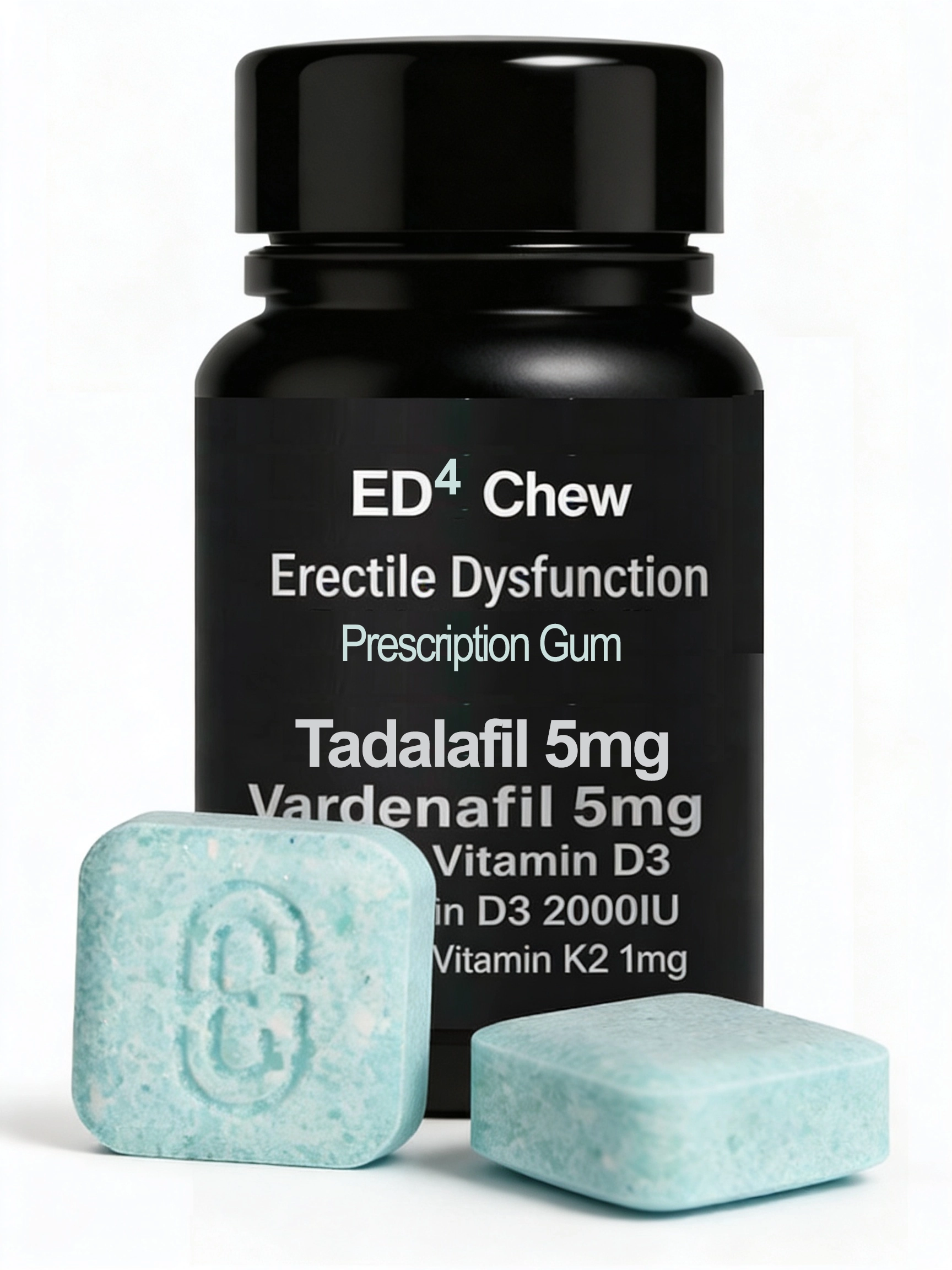
ED4 Chew Gum
Low daily dose for continuous readiness.
- Taken Once Daily
- Continuous Readiness
- Improves Confidence
A Chinese research study has found that sildenafil citrate, the active ingredient in Viagra, appears to relieve the symptoms of interstitial cystitis, at least temporarily. This painful bladder infection targets women primarily.
Known best as the active ingredient in the pioneering impotence drug Viagra, sildenafil citrate continues to show its versatility. In a recent Chinese research study, the compound appeared to ease the symptoms of interstitial cystitis, or IC, a hard-to-cure bladder infection seen most commonly in women.
This is just the latest in a string of studies purporting to show that sildenafil in varying doses can be helpful in treating a number of diseases and conditions other than impotence. In an Italian study, sildenafil improved cardiac function in patients with early-stage heart failure, and it also appeared to prevent thickening of the cardiac muscle, which can compromise the heart’s effectiveness.
Also marketed as Revatio, sildenafil in 2005 got the FDA’s seal of approval as a treatment for pulmonary arterial hypertension, a life-threatening form of high blood pressure that targets the tiny arteries that supply the lungs.
Chinese Study
In its study of sildenafil as a treatment for interstitial cystitis, a team of researchers at China’s Wenzhou Medical University found that the compound significantly reduced symptoms in women with the chronic bladder condition.
While its cause remains unknown, interstitial cystitis — also known as painful bladder syndrome — is a chronic condition that causes bladder pressure and pain. Ranging from mild discomfort to severe, IC’s pain sometimes is more generalized, affecting the entire pelvic region.
As explained at MayoClinic.com, the bladder is a hollow, balloon-like organ designed to store urine. Under normal conditions, the bladder expands as it fills with urine and, when full, signals the brain that it’s time to urinate. In IC, however, those signals somehow get scrambled. As a result, IC patients feel a much more frequent need to urinate, even when the bladder is far from full.
The Pain of Cystitis
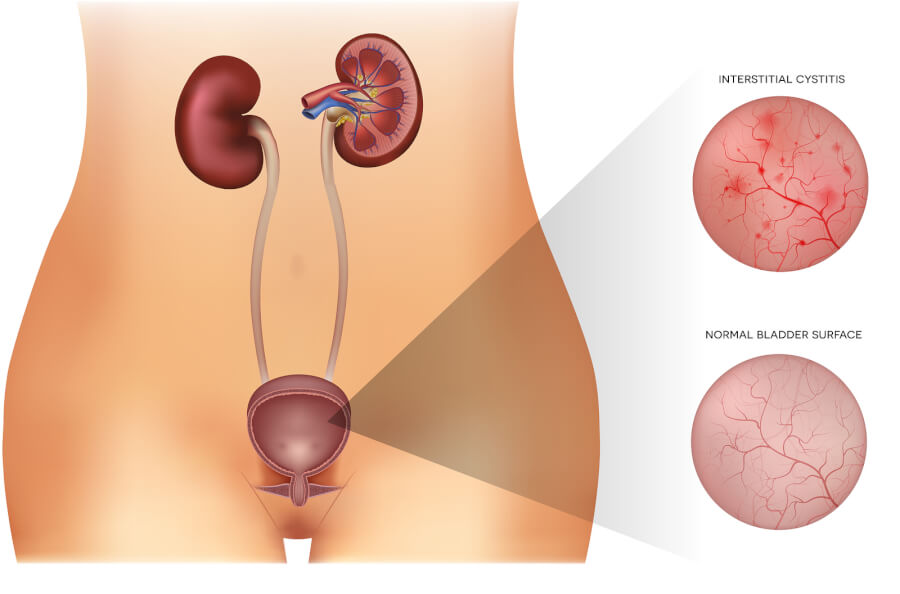
The pain associated with IC comes from the condition’s characteristic inflammation of the bladder’s lining, which can cause scarring and may eventually lead to a stiffening of the bladder. According to WebMD.com, this inflammation causes pinpoint bleeding in the bladder’s lining in almost 90 percent of all IC cases. In extreme cases, ulcers or sores will develop in the delicate tissues lining the bladder.
The Chinese study evaluated the effects of sildenafil on symptoms of IC in women who had no ulceration of the bladder lining. Researchers assembled a study group of 48 women, all of whom had received a clinical diagnosis of IC. Half of the women got a daily dose of 25 milligrams of sildenafil (roughly half the minimum dosage for treating impotence in men). The other half got a placebo.
Over the next three months, researchers evaluated the women for frequency and urgency of urination and incidence of urgent nighttime urination, or nocturia. Overall, the efficiency of sildenafil treatment was 62.5 percent, according to the Chinese study, which was published in the July 2014 issue of Urology.
Can Strike at Any Age
According to WebMD, anyone can develop IC, although it is far more common in women than in men. It can strike at any age but is most commonly diagnosed among the middle-aged. It also seems to appear most frequently in people who have other pain-related conditions, such as fibromyalgia and irritable bowel syndrome.
Once thought to be confined to a relatively small segment of the U.S. population, IC affects roughly 3 to 6 percent of all American women over the age of 18, according to data presented at the 2009 annual meeting of the American Urological Association. Funded by the National Institutes of Health, the RAND Interstitial Cystitis Epidemiology (RICE) survey suggests that IC could affect anywhere from 3.4 million to 7.9 million American women.
Survey’s Findings Welcomed
Barbara Gordon, then-executive director of the Interstitial Cystitis Association, welcomed the RICE study, saying, ¨It is gratifying to see such a rigorous study that provides us with an accurate picture of how many American women are living with IC.¨
Of the Chinese study and its findings about sildenafil’s potential as a treatment for IC, consultant urologist Robyn Webber, M.D., pointed out to DailyMail.co.uk that the study’s ¨number of patients . . . was small, and the findings need to be reproduced with bigger numbers.” However, she said that ¨if the results do hold up, it could potentially offer hope to some patients.¨
Just how sildenafil eases the symptoms of IC is unclear. However, some speculate that by increasing blood flow to the pelvic region, sildenafil relaxes muscles in the bladder. With the relaxation of the bladder’s muscles, the urge to urinate is reduced.
Optimizes Blood Flow
Sildenafil’s effects on blood flow are key to its success in the treatment of impotence. The vast majority of men with erection problems can trace their impotence to diminished blood flow to the penis. Sildenafil and the other PDE5 inhibitors that have followed work by temporarily blocking the effects of the phosphodiesterase-5 enzyme, which interferes with erectile function.
Erectile function actually originates in the brain as feelings of sexual desire. Those feelings trigger the brain to send a flood of nitric oxide to the pelvic region. Among the many chemical reactions set in motion by this flood of nitric oxide is the creation of a substance known as cyclic guanosine monophosphate, or cGMP. To facilitate the flow of blood into the penis’s spongy erectile tissues, thus creating an erection, cGMP relaxes the smooth muscles that line the blood vessels of the pelvic region.
The primary role of the PDE5 enzyme is to break down cGMP. However, if it starts doing its job before cGMP has boosted blood flow to the penis, getting an erection is much more difficult, if not impossible.
Key to Versatility
This ability to temporarily boost blood flow to key parts of the circulatory system plays a significant role in sildenafil’s potential to treat a growing number of diseases and disorders. For example, in the drug Revatio, sildenafil relaxes the blood vessels supplying the lungs, thus lowering pulmonary blood pressure and reducing the heart’s workload. In the Italian study of sildenafil’s potential in the treatment of early-stage heart failure, the drug improves cardiac function by optimizing blood flow to the heart.
While sildenafil’s effects on blood pressure are an obvious benefit in the treatment of some of these ailments, it makes the drug incompatible with other medications that also have comparable effects on blood pressure. Perhaps most notable of these are the nitrate-based medications, used most often to treat angina pectoris, chest pain that arises because of insufficient blood flow to the heart.
Taking sildenafil — or any PDE5 inhibitor — at the same time as a nitrate-based drug, such as nitroglycerin, causes a dangerously sharp drop in blood pressure and in extreme cases can cause death.
If you’ve found this article helpful and would like to see more of the same, follow our blog on a regular basis.
Don Amerman is a freelance author who writes extensively about a wide array of nutrition and health-related topics.

We specialize in providing our over 1,000,000 customers with relevant product and condition information created by our professional editorial staff which includes our team of medical writers, medical practitioners, and health educators. eDrugStore.com Staff on Facebook