

By Dan Seitz
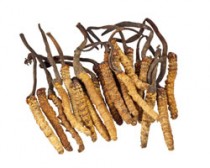 Recently, a new “herbal” erectile dysfunction treatment has been making the rounds, another entry in the herbal Viagra. But what is it? Is it really a caterpillar? And, most importantly, does it work?
Let’s start with what it is: cordyceps sinensis, and it’s actually kind of awful. It infects a specific species of moth found only in the Himalayas and surrounding area, generally called the “ghost moth”. It usually attacks the larvae, kills them by filling its entire body with itself, and uses its body as a house to grow in right as the caterpillar dies trying to struggle to the surface. Oh, and it flowers by punching through the forehead of the dead caterpillar. In other words, it’s a great argument for paving nature right out of existence.
Any claim you’ve heard that it’s been used by the Chinese for thousands of years are unsupported by any historical evidence, but it is common in Tibetan medicine, and has been documented in use as far back as the 1400s. The first evidence the Chinese used it comes from the 17th century, in “Ben Cao Yei Bao”, a summary of available medicial substances and techniques. Before you ask, yes, it recommends you use the whole thing, caterpillar corpse and all. No, ketchup isn’t allowed. 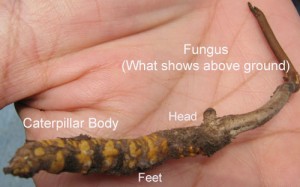
What did they use it for? A better answer is what they didn’t use it for. It’s been used to treat cancer, fatigue, and, yes, erectile dysfunction. But that’s just one of a long list of ailments the fungus is supposed to treat; it’s hardly unique in Chinese medicine in that respect.
It first came to the West in 1993, when it was claimed to have helped a Chinese track team break several world records. When their doping records came back clean, they stated their unusual performance wasn’t due to steroids, but to the fungus, which their coach made them eat every day. It’s worth noting track team that would later suddenly drop out of several major contests when new doping tests were introduced, so it may not have been the fungus helping them out.
The increased Western demand combined with the already high Asian demand has driven prices through the roof. It currently sells for $5000 a pound, and has pulled families out of poverty. It has to be located and picked by hand, adding to the price, and in the West, there’s also shipping costs.
But does it work? Well, the fungus itself does have pharmacologically active ingredients, and scientific work has been done demonstrating that it can protect mice from radiation, might have a hypoglycemic effect, may have an anti-depressant effect, and might protect the liver. One thing it definitely does do is help fight cancer: cordycepin, developed from 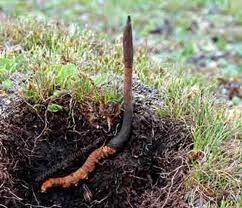 several varieties of cordyceps, has real promise in treatment of several cancers.
In other words, there might be something to the health claims, but so far, nobody has tested the erectile dysfunction claims. It seems unlikely that the fungus will have any clinical effect: cordycepin has been shown to modulate the immune system and induce certain processes in cells, but neither of these are useful in treating erectile dysfunction.
In short, it’s expensive, it’s gross, and it probably doesn’t work for erectile dysfunction. It’s best to stick with treatments proven in scientific research, which you know will work. Especially if the alternative is a creepy mushroom.

We specialize in providing our over 1,000,000 customers with relevant product and condition information created by our professional editorial staff which includes our team of medical writers, medical practitioners, and health educators. eDrugStore.com Staff on Facebook