
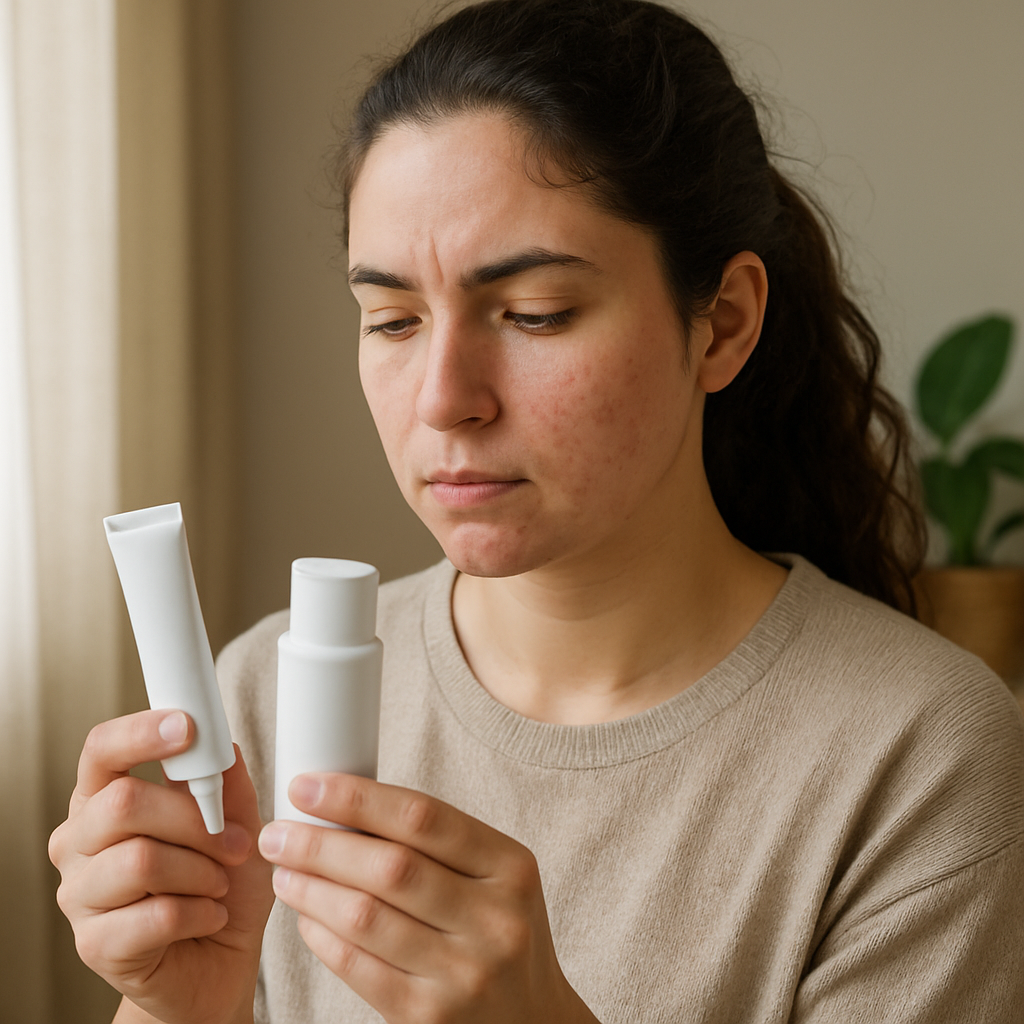

If you’ve been researching adapalene vs tretinoin for acne, you’ve probably run into the same confusing pattern: both are retinoids, both unclog pores, both take weeks to work, and both come with a reputation for stinging, peeling, and general skin drama in the first month. So which one is actually gentler on your face?
The short answer, backed by decades of dermatology data, is adapalene. But the fuller answer is more interesting, because "gentler" doesn’t automatically mean "better for your skin," and there are situations where tretinoin still wins.
Here’s what actually matters when you’re standing at the pharmacy counter deciding between them.
How Adapalene and Tretinoin Work
Both drugs belong to a family called topical retinoids, which are vitamin A derivatives that speed up skin cell turnover, keep pores from clogging, and calm the inflammation that turns a clogged pore into an angry red bump. Tretinoin, the older of the two, has been FDA-approved since 1971 and binds directly to multiple retinoic acid receptors in the skin.
Adapalene came along in 1996 and works a little differently. It’s a third-generation retinoid that selectively targets certain receptors (mainly RAR-beta and RAR-gamma), which is a fancy way of saying it does the acne-fighting work with less collateral damage to surrounding skin. That receptor selectivity is the main reason the adapalene vs tretinoin comparison usually lands in adapalene’s favor for tolerability.
Adapalene is also more chemically stable. It doesn’t break down in sunlight the way tretinoin can, and it’s less likely to be inactivated when layered with benzoyl peroxide, which matters if you’re building a real acne routine.
Adapalene vs Tretinoin: The Irritation Question
This is the piece most patients care about. In head-to-head studies, adapalene 0.1% gel produced significantly less redness, peeling, dryness, and burning than tretinoin 0.025% cream, while clearing a similar number of acne lesions after 12 weeks. A review published on PubMed summarizing multiple randomized trials found adapalene consistently ranked as the better-tolerated option.
What I tell patients: if your skin barrier is already fragile, if you have eczema-prone skin, or if you’ve failed tretinoin in the past because of pure irritation, adapalene is almost always the smarter starting point. It’s also the retinoid I’d suggest for teenagers, whose compliance drops off a cliff the moment their face starts flaking during high school.
Tretinoin, on the other hand, is stronger milligram for milligram. That extra potency shows up as faster results for some patients, particularly those with a mix of acne and early photoaging. If you’re weighing anti-aging benefits alongside acne control, the tretinoin vs adapalene wrinkle comparison is worth reading, because tretinoin has the stronger evidence base for fine lines.
Strength Options and What to Expect
Both drugs come in a range of strengths, and choosing the right one matters more than choosing the drug itself.
- Adapalene: 0.1% (available OTC as Differin Gel) and 0.3% (prescription)
- Tretinoin: 0.025%, 0.05%, and 0.1% in creams, gels, and microsphere formulations
For most patients starting out, 0.1% adapalene gel or 0.025% tretinoin cream are the standard entry points. Your prescriber will decide which strength fits your skin type, acne severity, and history of sensitivity. Going straight to a high strength almost guarantees a bad first month.
Expect a "retinization" period of two to six weeks where things may look worse before they get better. Dryness, mild peeling, and occasionally a temporary flare of new pimples are all normal. If you’re seeing more severe reactions, the warning signs your skin needs a break from tretinoin apply to adapalene too.
Cost, Access, and the OTC Advantage
Here’s where adapalene has a practical edge that has nothing to do with pharmacology. In 2016, the FDA approved adapalene 0.1% gel for over-the-counter sale, meaning you can walk into any pharmacy and buy it without a prescription. Tretinoin still requires a prescription in the United States.
For patients paying cash, generic adapalene 0.1% typically runs 15 to 25 dollars for a 45-gram tube. Generic tretinoin cream varies more widely, anywhere from 20 to over 100 dollars depending on strength, formulation, and pharmacy. Compare prices on generic tretinoin and adapalene at edrugstore.com to see what your out-of-pocket cost would actually be.
If you’re also comparing tretinoin to other prescription options, the azelaic acid vs tretinoin gentleness breakdown is a useful next read, especially for patients with rosacea overlap.
Who Should Choose Which
There’s no universal winner in the adapalene vs tretinoin debate. But there are clear patterns:
Adapalene is usually the better pick if you:
- Are new to retinoids
- Have sensitive or dry skin, or a history of eczema
- Want to combine with benzoyl peroxide daily
- Prefer OTC access without a prescription visit
- Are a teenager or have compliance concerns about irritation
Tretinoin tends to win when you:
- Have moderate to severe acne that adapalene hasn’t fully controlled
- Want combined acne and anti-aging benefits
- Have oily, resilient skin that tolerates strong actives
- Are already on a stable retinoid routine and want more results
Pregnancy is a hard stop for both. Topical retinoids are pregnancy category C, and most dermatologists recommend discontinuing during pregnancy and breastfeeding. If you’re planning to conceive, mention it to your prescriber before starting either drug.
The Bottom Line
In the adapalene vs tretinoin matchup for acne, adapalene is genuinely gentler, better tolerated, more stable in sunlight, and easier to access without a prescription. Tretinoin is stronger, has a longer clinical track record, and offers anti-aging benefits adapalene can’t quite match. Neither is universally "better." The right choice depends on your skin type, your acne severity, your budget, and how patient you are with a slow ramp-up.
Talk to your pharmacist or dermatologist about starting low, going slow, and pairing whichever retinoid you choose with a good moisturizer and daily sunscreen. That combination, more than the drug you pick, is what separates people who succeed with retinoids from people who quit in month two.
This article is for informational purposes only and is not medical advice. Always consult a licensed pharmacist or physician before starting, stopping, or changing any medication.
References
- U.S. Food and Drug Administration, approval history and labeling for topical retinoids.
- PubMed, peer-reviewed comparative trials of adapalene and tretinoin tolerability.
- MedlinePlus: Adapalene Topical, patient-facing drug information on adapalene use and precautions.
- MedlinePlus: Tretinoin Topical, patient-facing drug information on tretinoin use and precautions.

Dr Steven Schlosser
Dr. Schlosser graduated from Lafayette College Phi Beta Kappa and attended Georgetown Medical School. He had 4 years of medical residency training at Tufts University in Boston in both Gynecology and Internal Medicine. He has had a spotless medical career for the past 40+ years and is Board Certified. Learn More