
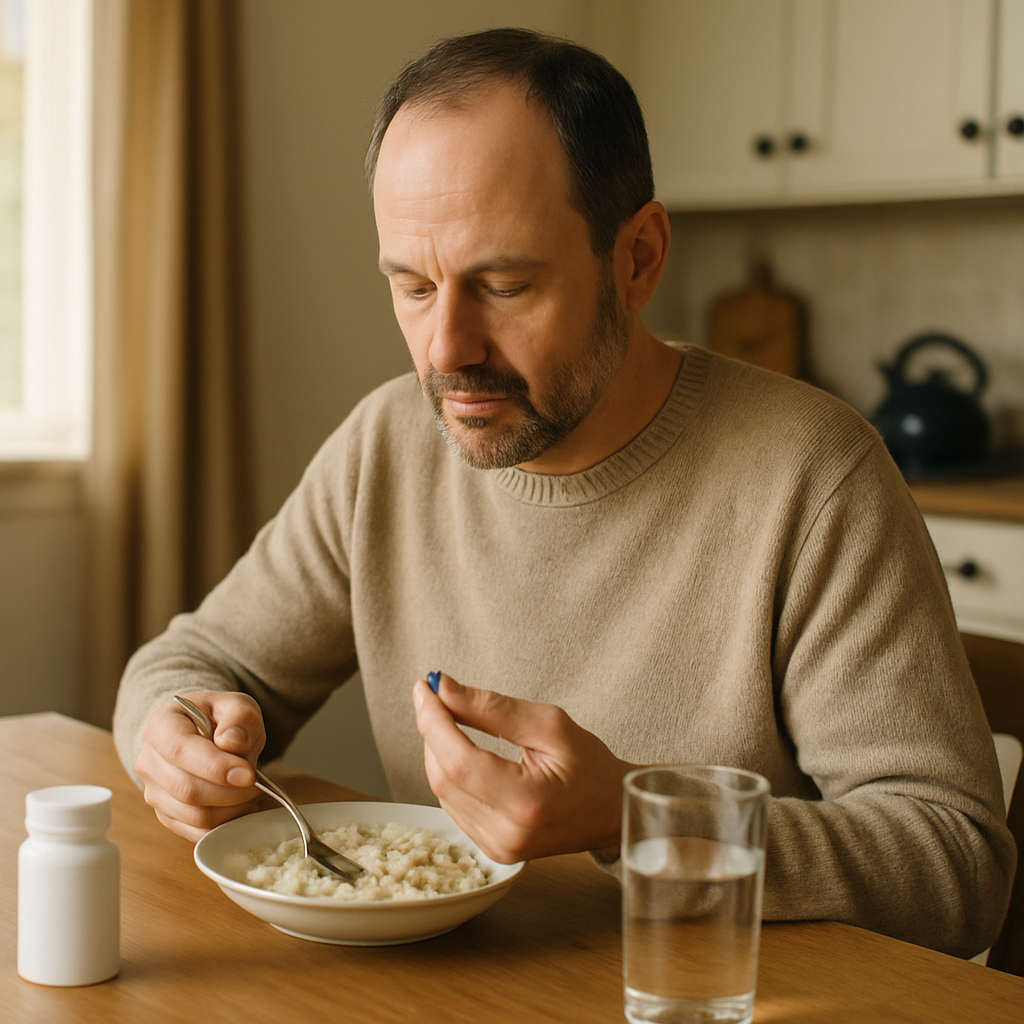

You’ve probably heard the advice from a friend, a forum thread, or maybe even your prescriber: take sildenafil on an empty stomach if you want it to kick in faster. It’s one of the most common questions people ask about Viagra, and it’s not a myth. There’s real pharmacology behind it.
But the answer is more nuanced than "skip dinner and you’re golden." How much faster? Faster than what? And does the size of the meal actually matter, or is it the type of food?
Here’s what the clinical data actually says, and how to time your dose so the medication has the best chance of doing its job.
Why Food Slows Sildenafil Down
Sildenafil is absorbed in the small intestine. When your stomach is empty, the drug moves through quickly, gets absorbed, and reaches peak blood levels in roughly 30 to 60 minutes. According to the FDA prescribing information, peak plasma concentrations are typically reached within about one hour under fasting conditions.
Eat a big meal first, especially one heavy in fat, and that timeline shifts. The FDA label notes that a high-fat meal reduces peak concentration (Cmax) by about 29% and delays the time to peak by roughly an hour. So instead of working in 30 to 60 minutes, you might be looking at 90 minutes or more, and the drug may not hit as strong a peak when it does kick in.
That’s the real reason taking sildenafil on an empty stomach matters. It’s not magic. It’s just absorption kinetics.
What "Empty Stomach" Actually Means
Here’s where patients get tripped up. "Empty stomach" doesn’t mean you have to skip dinner entirely. In clinical pharmacology, it usually means no food for at least two hours before, and ideally one hour after, taking the medication.
What I tell patients is to think about it this way:
- A light meal, like a salad or a piece of toast, probably won’t slow things down meaningfully.
- A heavy, fatty meal, think steak, fries, pizza, fettuccine alfredo, will definitely delay onset and blunt the peak.
- A few hours between dinner and your dose is usually enough.
If you’re planning ahead, taking sildenafil on an empty stomach about an hour before intimacy gives you the most reliable onset. If you’ve just eaten a big dinner, give it a bit more time. The medication still works. It just runs on a delayed schedule.
How This Compares to Other ED Drugs
One reason people switch medications is the food sensitivity issue. Sildenafil and vardenafil are both affected by fatty meals. Tadalafil isn’t, which is part of why some patients prefer it for spontaneity. If you’re weighing options, our comparison of sildenafil vs vardenafil and which lasts longer breaks down the timing differences in more detail.
Avanafil (Stendra) is the newest of the group and was specifically designed for faster onset. Some patients see effects in as little as 15 minutes. If meal timing is a constant frustration, the avanafil vs sildenafil onset comparison is worth a read.
Alcohol, Grapefruit, and Other Variables
Food isn’t the only thing that messes with timing.
- Alcohol: A glass of wine probably won’t derail things, but heavy drinking lowers blood pressure and can both worsen erectile function and amplify sildenafil’s side effects (headache, flushing, dizziness).
- Grapefruit juice: Grapefruit inhibits the CYP3A4 enzyme that metabolizes sildenafil. The result is higher drug levels in your blood, which sounds good but actually raises the risk of side effects. MedlinePlus specifically warns against combining the two.
- Nitrates: This isn’t a timing issue, it’s a hard contraindication. Sildenafil plus nitrates can cause a catastrophic drop in blood pressure. If you take heart medications, our guide on sildenafil vs tadalafil safety with nitrates is essential reading before any PDE5 inhibitor.
Practical Timing Tips
If you want sildenafil to work as predictably as possible, here’s what tends to work in practice:
- Take it on an empty stomach, or at least two hours after a meal.
- Plan for a 45 to 60 minute window before you need it to work.
- Skip the heavy fatty dinner that night, or move it earlier.
- Drink water with the pill, not grapefruit juice.
- Limit alcohol to one drink or less.
One more thing worth mentioning. The standard 50 mg dose works for most patients, but your prescriber may adjust based on response and other medications. Don’t double up if the first dose seems slow. Sometimes it’s just the meal you had three hours ago. If you’re shopping around, you can compare generic sildenafil prices at edrugstore.com to see what your out-of-pocket cost looks like without insurance.
Side Effects to Watch For
Faster absorption can mean a slightly more intense peak, which sometimes means more pronounced side effects like flushing, headache, or nasal congestion. These are usually mild and short-lived, but if you’re new to the medication, our overview of common sildenafil side effects covers what’s normal and what isn’t.
Call your doctor right away if you experience chest pain, sudden vision changes, hearing loss, or an erection lasting more than four hours. These are rare but serious.
The Bottom Line
So, does taking sildenafil on an empty stomach really work faster? Yes, but the difference is mostly about predictability rather than raw speed. On an empty stomach you get a reliable 30 to 60 minute onset and a stronger peak. After a heavy meal, you might wait 90 minutes or more, with a weaker peak. The drug still works either way.
If timing matters to you, take sildenafil on an empty stomach, give it about an hour, and avoid grapefruit and heavy fatty foods that day. Talk to your pharmacist or prescriber if you’re not getting the response you expected. Sometimes the fix is as simple as moving dinner earlier.
This article is for informational purposes only and is not medical advice. Always consult a licensed pharmacist or physician before starting, stopping, or changing any medication.
References
- FDA Prescribing Information for Viagra (sildenafil), official pharmacokinetic data on food effect and absorption timing.
- MedlinePlus: Sildenafil, patient-facing guidance on grapefruit, drug interactions, and dosing.
- Cleveland Clinic: Erectile Dysfunction Treatment, clinical overview of PDE5 inhibitors and treatment considerations.

Dr Steven Schlosser
Dr. Schlosser graduated from Lafayette College Phi Beta Kappa and attended Georgetown Medical School. He had 4 years of medical residency training at Tufts University in Boston in both Gynecology and Internal Medicine. He has had a spotless medical career for the past 40+ years and is Board Certified. Learn More