


If you’re researching weight loss medications, you’ve probably noticed the conversation has changed significantly in recent years. GLP‑1 medications have generated real clinical excitement, and for good reason. But that doesn’t mean traditional options are irrelevant; they’ve helped plenty of people and may still be appropriate depending on your situation.
Here’s a clear-eyed comparison of what each approach actually delivers.
What Counts as “Traditional” Weight Loss Medication?
Source: Obesity Medications: Evidence-Based Management, StatPearls/NCBI, 2025 | Metformin off-label use, Cleveland Clinic Journal of Medicine, 2023
Before GLP‑1s arrived, physicians had a limited toolkit for medication-assisted weight loss. The most commonly prescribed options fell into a few categories.
Orlistat (Xenical)
Xenical works in the gut by blocking roughly a third of dietary fat from being absorbed. It doesn’t affect appetite or metabolism—it physically prevents fat absorption, which means what you eat matters a great deal. Side effects are largely digestive and can be significant if a high-fat diet continues.
Appetite Suppressants
Older options like phentermine work on the central nervous system to reduce hunger signals. They’re typically prescribed short-term because of tolerance buildup and cardiovascular concerns. Phentermine has been around since the 1950s and remains one of the most prescribed weight loss drugs in the U.S.
Metformin
Metformin HCL ER is primarily a diabetes medication, sometimes used off-label for weight management—particularly in people with insulin resistance or prediabetes. It doesn’t produce dramatic weight loss on its own but can support metabolic improvement as part of a broader plan.
Each of these has a defined role, but their results tend to be modest compared to what newer mechanisms have made possible.
How GLP‑1 Medications Work vs Traditional Options
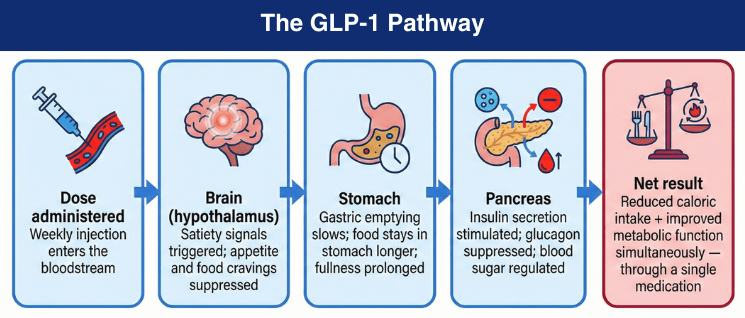
Traditional weight loss medications generally target one variable: fat absorption, appetite signaling, or blood sugar regulation. GLP‑1 enhanced weight loss medications work differently by engaging multiple systems at once.
GLP‑1 stands for glucagon-like peptide-1, a hormone your body naturally produces after eating. It signals satiety to the brain, slows gastric emptying so food stays in your stomach longer, and helps regulate insulin and blood sugar. Pharmaceutical GLP‑1 receptor agonists mimic and extend these effects, creating sustained appetite suppression alongside improved metabolic function.
That multi-pathway approach is a meaningful distinction. GLP‑1 medications address appetite, digestion, and blood sugar simultaneously—something no traditional option does on its own.
Weight Loss Outcomes and Maintenance
The clinical data here is worth understanding directly.
Average Weight Loss by Medication Type
- Semaglutide 2.4 mg (Wegovy®). A 2021 phase 3 trial published in the New England Journal of Medicine found participants achieved an average body weight reduction of approximately 14.9% over 68 weeks, compared to 2.4% with placebo.
- Orlistat. A meta-analysis of 22 controlled trials published in Annals of Internal Medicine found average weight loss of 2.89 kg (about 6.4 lbs) compared to placebo at 12 months. This is meaningful, but well below what GLP‑1 data shows.
- Phentermine. A large surveillance study found a mean weight loss of 5.2% of body weight over 12 weeks, with tolerance and high dropout rates documented as the treatment continued.
- Metformin. In the landmark Diabetes Prevention Program trial, participants taking metformin lost an average of 2.1 kg over roughly three years, compared to 5.6 kg in the intensive lifestyle group, confirming that weight effects are real but modest.

Sources: Wilding et al., NEJM, 2021, Kang et al., Korean Journal of Family Medicine, 2013, Padwal et al., Annals of Internal Medicine, 2005, \DPP Trial, as cited in Cleveland Clinic Journal of Medicine, 2023
Participants who stopped semaglutide regained an average of 0.8 kg per month, returning to their baseline weight within approximately 18 months of discontinuation.
What Happens After You Stop
Maintenance is where the comparison gets more complicated. Weight regain after stopping medication is a documented challenge across all categories.
Research shows that patients who discontinued semaglutide regained approximately two-thirds of their lost weight within a year, which underscores that these are ongoing treatments, not short courses.
Wegovy® treatment is associated with that 15% average weight loss figure and is designed for sustained weight management. That framing matters when comparing it against traditional options that were often presented as short-term interventions.
Side Effects and Safety Considerations
Both GLP‑1 and traditional medications come with side effect profiles worth understanding before starting anything.
GLP‑1 Medications
- Gastrointestinal effects. Nausea, vomiting, diarrhea, and constipation are the most common complaints. These tend to be most pronounced during dose escalation and often improve over time.
- Serious but rare concerns. These include pancreatitis and, for those with a personal or family history of medullary thyroid carcinoma, possible thyroid effects based on animal studies.
Traditional Medications
- Orlistat. Side effects are primarily GI: oily stools, urgent bowel movements, and fat-soluble vitamin malabsorption if diet isn’t managed carefully.
- Phentermine. Carries cardiovascular risks including elevated heart rate and blood pressure, which rules it out for many patients.
- Metformin. Generally well-tolerated but can cause GI discomfort and, rarely, lactic acidosis.
None of this is a reason to avoid medication—it’s a reason to have the right conversation with a provider who knows your health history. For a fuller picture, visit our overview of safety and side effects of weight loss medications.
Cost, Convenience, and Access
Understanding the Cost Landscape
Cost is a legitimate factor. Brand-name GLP‑1 medications like Wegovy® carry a high list price, and insurance coverage varies. Compounded semaglutide options exist at lower price points, though they’re subject to evolving FDA guidance. Traditional medications tend to be significantly less expensive, particularly generics like orlistat and metformin.
How Telehealth Changes Access
Telehealth has meaningfully changed how people access weight loss care. You can now connect with licensed providers online without an in-person office visit, receive a prescription if appropriate, and have medications delivered directly to your home.
When GLP‑1 May Be a Better Fit and When It Isn’t
GLP‑1 Medications Tend to Be Worth Considering If:
- Your BMI is 30 or higher
- Your BMI is 27 or above with at least one weight-related health condition
- Metabolic factors like blood sugar regulation or insulin resistance are part of your picture
- You’ve had limited results with diet, exercise, or traditional medications
“We have good trials showing that when patients stop medication, the disease comes back.” – Dr. Amanda Velazquez, MD, Director of Obesity Medicine, Cedars-Sinai Center for Weight Management and Metabolic Health, Cedars-Sinai Newsroom, March 2024
Traditional Medications May Still Make Sense If:
- Dietary fat intake is your primary challenge and you prefer a non-systemic approach (orlistat)
- You have prediabetes or insulin resistance but aren’t a candidate for GLP‑1s (metformin)
- Short-term appetite management is the goal and cardiovascular history permits it (phentermine)
The right choice depends on your individual health profile, goals, and medical history—a provider can help sort through what fits. You can also learn the basics of how GLP‑1 medications work or see how GLP‑1 compares to GLP‑1 Plus, which adds ongoing support before that conversation.

Additional Resources
If you’re still considering your options, we’ve created resources to help you compare treatments.
How Do GLP‑1 Weight Loss Medications Work? A Simple Patient Guide
Wegovy vs. Zepbound: Which Will Cause the Most Weight Loss?
Wegovy Oral Pills vs Wegovy Injections: Which Is Right for You?
GLP-1 vs. GLP-1 Plus: What’s the Difference and Which One Is Right for You?
What Do I Get With a Wegovy Consultation?
Why Buy Weight Loss Medications Online From eDrugstore?
When you order a Wegovy consultation or Zepbound consultation, a licensed provider can help you weigh GLP-1 options against traditional medications based on your health history and goals and write your prescription. You can then take adadvange of reduced pricing through LillyDirect and TrumpRx. Wegovy is available through NovoCare and TrumpRx.
eDrugstore makes it straightforward to explore your options and connect with a licensed provider, all from home. Visit our weight loss evaluation page to learn more and take the next step at your own pace.
Frequently Asked Questions
Is semaglutide more effective than phentermine for weight loss?
Clinical trial data suggests semaglutide produces significantly greater average weight loss than short-term phentermine monotherapy. In a 68-week trial, semaglutide 2.4 mg was associated with about 14.9% average body weight reduction, while phentermine studies typically show around 5% over 12 weeks. Duration of treatment and patient profile still matter when interpreting those numbers.
Can you take GLP-1 medications and traditional weight loss drugs together?
In some cases, clinicians may combine medications, but this depends on safety, cardiovascular history, and metabolic factors. For example, metformin is sometimes used alongside GLP-1 therapy in people with insulin resistance or type 2 diabetes. Combination therapy should always be guided by a licensed prescriber.
How long do you need to stay on a GLP-1 medication?
GLP-1 medications are generally intended for long-term use when prescribed for chronic weight management. Research shows weight regain commonly occurs after discontinuation, which supports ongoing treatment rather than short courses. The appropriate duration depends on response, tolerance, and medical oversight.
Do GLP-1 medications work if you don’t have diabetes?
Yes. Medications such as semaglutide 2.4 mg (Wegovy®) are FDA-approved specifically for chronic weight management in adults with obesity or overweight plus a related health condition, regardless of diabetes status. Blood sugar effects are part of the mechanism, but diabetes is not required for eligibility.
Is orlistat safer than GLP-1 medications?
Safety depends on the individual rather than the drug category alone. Orlistat works locally in the gastrointestinal tract and does not act systemically, but it can cause persistent digestive side effects. GLP-1 medications have different risks, primarily gastrointestinal and rare but serious concerns like pancreatitis, which require medical screening.
What happens if you stop taking phentermine?
Phentermine is approved for short-term use, typically up to 12 weeks. Appetite suppression diminishes after discontinuation, and weight regain can occur if lifestyle changes are not sustained. It is not designed as a long-term maintenance therapy.
Are GLP-1 medications covered by insurance for weight loss?
Coverage varies widely by insurer and plan. Some commercial plans cover FDA-approved obesity treatments, while others restrict coverage to diabetes indications. Patients often need prior authorization, and out-of-pocket costs can be significant without coverage.
Is metformin effective for weight loss in people without diabetes?
Metformin can produce modest weight reduction, particularly in individuals with insulin resistance or prediabetes. Average weight loss tends to be significantly lower than that seen with GLP-1 medications. It is often considered when metabolic improvement is the primary goal rather than substantial weight reduction.
How quickly do GLP-1 medications start working?
Many patients notice reduced appetite within the first few weeks, but clinically meaningful weight loss typically develops over several months. Dose escalation schedules are gradual to improve tolerability. Full trial results reflect outcomes over 48 to 72 weeks.
Do GLP-1 medications permanently change metabolism?
GLP-1 medications influence appetite signaling, gastric emptying, and insulin regulation while actively taken. Current evidence does not show permanent metabolic changes after discontinuation. Weight maintenance generally requires continued therapy or sustained lifestyle intervention.
Are compounded semaglutide products the same as brand-name Wegovy®?
Compounded semaglutide is not FDA-approved in the same way as branded products and may differ in formulation or sourcing. Availability depends on regulatory guidance and pharmacy compliance standards. Patients should confirm that any compounded medication is dispensed through a licensed pharmacy under medical supervision.
Who is not a good candidate for GLP-1 medications?
Individuals with a personal or family history of medullary thyroid carcinoma or multiple endocrine neoplasia syndrome type 2 are generally advised against GLP-1 therapy. Those with certain gastrointestinal disorders or a history of pancreatitis may also require caution. A full medical evaluation is necessary before prescribing.
Disclaimer: This article provides general information about health and related topics but is not intended as a substitute for professional medical advice, diagnosis, or treatment. Always seek the advice of your physician or other qualified health provider with any questions you may have regarding a medical condition.
References
Cleveland Clinic Journal of Medicine. 2023. Metformin for weight loss in patients without diabetes. Cleveland Clinic Journal of Medicine, 90(9), 545–548. https://www.ccjm.org
Kang, J. G., Park, C. Y., Kang, J. H., Park, Y. W., & Park, S. W. 2013. Randomized controlled trial to investigate the effects of phentermine on weight loss. Korean Journal of Family Medicine, 34(5), 322–329. https://doi.org/10.4082/kjfm.2013.34.5.322
Knowler, W. C., Barrett-Connor, E., Fowler, S. E., Hamman, R. F., Lachin, J. M., Walker, E. A., et al. 2002. Reduction in the incidence of type 2 diabetes with lifestyle intervention or metformin. New England Journal of Medicine, 346, 393–403. https://doi.org/10.1056/NEJMoa012512
Padwal, R., Li, S. K., & Lau, D. C. 2005. Long-term pharmacotherapy for obesity and overweight. Annals of Internal Medicine, 142(7), 532–546. https://doi.org/10.7326/0003-4819-142-7-200504050-00012
StatPearls Publishing. 2025. Obesity medications: Evidence-based management. StatPearls. National Center for Biotechnology Information. https://www.ncbi.nlm.nih.gov/books
Velazquez, A. 2024, March 20. Weighing in on weight loss medications. Cedars-Sinai Newsroom. https://www.cedars-sinai.org/newsroom/weighing-in-on-weight-loss-medications/
Wilding, J. P. H., Batterham, R. L., Calanna, S., Davies, M., Van Gaal, L. F., Lingvay, I., et al. 2021. Once-weekly semaglutide in adults with overweight or obesity. New England Journal of Medicine, 384, 989–1002. https://doi.org/10.1056/NEJMoa2032183

Paula Clark worked in the healthcare industry for 17 years before becoming a full-time freelance health and medical writer. Her clients appreciate her ability to convey complex information in terms laypeople can understand. Paula prides herself on the depth and accuracy of her research. Her goal is to add authority to your site in words that will delight both Google and your readers.