


Reach Your Goal Weight. Prescribed. Proven. Private.
Doctor-prescribed GLP-1 weight loss treatments delivered discreetly to your door.
Physicians
Private
Delivery
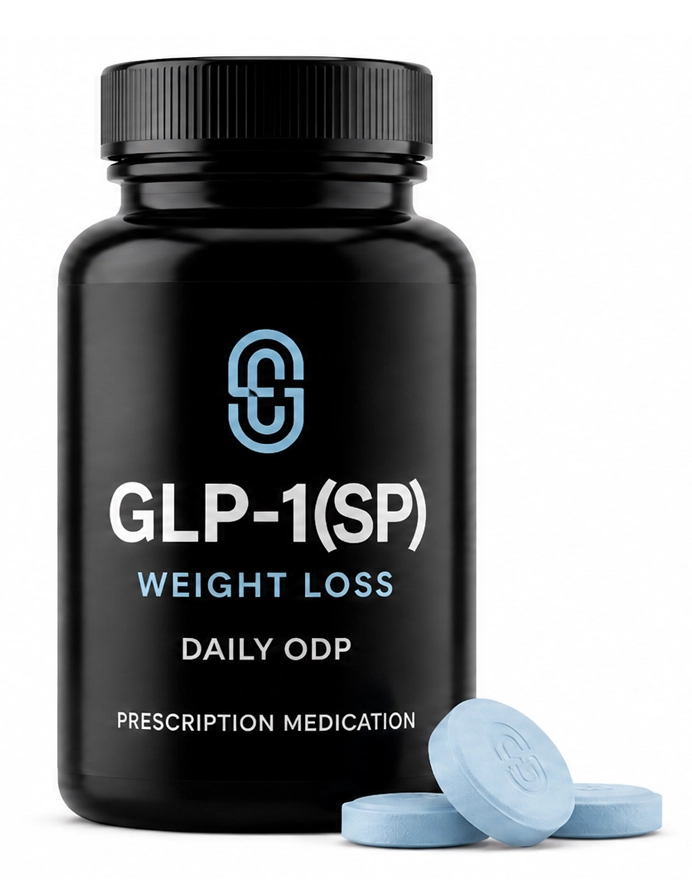
GLP SP 2mg
Daily dissolvable GLP-1 to curb appetite and drop weight.
- Curbs Appetite
- Daily Dissolvable Tablet
- Steady, Lasting Results

GLP T 3mg
Dual-action GLP-1 for stronger appetite control.
- Dual-Action Formula
- Daily Dissolvable Tablet
- Maximum Appetite Control

Berberine with Ceylon Cinnamon
Natural metabolic support for blood sugar and weight.
- Supports Healthy Metabolism
- Balances Blood Sugar
- Once-Daily Tablet
Weight loss medications have come a long way in a short time. GLP-1 agonists like semaglutide became household names almost overnight, and now a newer class of combination therapies is pushing results even further.
If you’ve been researching your options, you’ve probably noticed terms like “dual agonist” or “GIP plus GLP-1” floating around. Here’s what those actually mean, how the numbers compare, and what might make one a better fit for you than the other.
What Is a GLP-1 Agonist?
How It Works
GLP-1 stands for glucagon-like peptide-1, a hormone your gut naturally releases after you eat. It signals your brain that you’re full, slows down how quickly your stomach empties, and helps your pancreas regulate insulin. GLP-1 agonist medications mimic this hormone, keeping those signals active longer than your body would on its own.
Common GLP-1 Medications
- Semaglutide (brand names Ozempic, Wegovy). Ozempic is prescribed for type 2 diabetes; Wegovy is the higher-dose version approved specifically for weight loss.
- Liraglutide (brand name Saxenda). An earlier GLP-1 agonist, still prescribed but largely overshadowed by semaglutide’s stronger results.
Who Is Typically Prescribed a GLP-1?
These medications are generally prescribed for adults with a body mass index (BMI) of 30 or higher, or a BMI of 27 or higher alongside a weight-related condition like high blood pressure or type 2 diabetes.
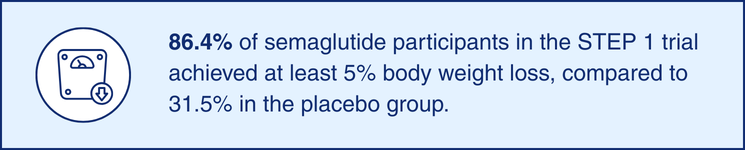
In the landmark STEP 1 clinical trial, participants taking semaglutide lost an average of 14.9% of their body weight over 68 weeks. For someone weighing 250 pounds, that’s roughly 37 pounds, a meaningful jump from older weight loss medications. This is what put GLP-1 agonists on the map.
What Is a GLP-1 “Plus”?
The “plus” refers to combination therapies that activate GLP-1 receptors alongside one or more additional hormone pathways. Targeting multiple mechanisms at once tends to produce stronger results than any single pathway alone.
Dual Agonists: GLP-1 + GIP
The most widely available combination therapy is tirzepatide, sold as Mounjaro for type 2 diabetes and Zepbound for weight loss. Tirzepatide activates both GLP-1 receptors and GIP receptors. GIP stands for glucose-dependent insulinotropic polypeptide — another gut hormone that enhances insulin secretion and appears to improve how the body processes and stores fat.
Triple Agonists: GLP-1 + GIP + Glucagon
Retatrutide is currently in clinical trials and hits three targets: GLP-1, GIP, and glucagon receptors. Glucagon is a hormone that raises blood sugar between meals, but in a controlled combination therapy context, it also increases the rate at which your body burns calories. Retatrutide is not yet FDA-approved, but its early data has drawn significant attention from the research community.
How Do the Results Compare?
Semaglutide (GLP-1 Only)
- Average weight loss of 14.9% of body weight over 68 weeks in the STEP 1 trial
- The established benchmark for GLP-1 monotherapy
Tirzepatide (GLP-1 + GIP)
- Participants on the highest dose (15 milligrams weekly) lost an average of 20.9% of their body weight over 72 weeks in the SURMOUNT-1 trial
- Even the lowest doses produced 15–16% reductions, competitive with semaglutide’s top results
- In the SURPASS-2 head-to-head trial, tirzepatide outperformed semaglutide at every dose tested
Retatrutide (GLP-1 + GIP + Glucagon)
- Phase 2 data showed an average of 24.2% body weight reduction at 48 weeks on the highest dose
- A shorter trial window than STEP 1 or SURMOUNT-1, so direct comparisons require some caution
- Phase 2 results don’t always replicate at scale, and long-term safety data doesn’t exist yet
The trajectory is clear: Adding hormone targets appears to amplify results. But more isn’t always better for every patient.
Note: Retatrutide data are from a Phase 2 trial; larger Phase 3 trials are ongoing. Direct cross-trial comparisons should be made with caution due to differences in study design and patient populations.
Side Effects and Tolerability
All three drug classes share a similar side effect profile.
Common Side Effects
- Nausea. The most frequently reported issue, particularly during dose escalation. Usually eases as the body adjusts.
- Vomiting and diarrhea. Also common early on, typically improving over time.
- Constipation. Less common than the above but reported across all three drug classes.
More Serious Risks
- Pancreatitis. A rare but documented risk with GLP-1 class medications.
- Potential thyroid effects. Animal studies have shown an association with thyroid tumors, though this has not been confirmed in human trials.
How Do Combination Therapies Compare on Tolerability?
Tirzepatide’s tolerability is generally comparable to semaglutide. The SURPASS trials found no meaningful difference in discontinuation rates due to side effects, This is a useful data point, since it suggests a more potent drug doesn’t automatically mean a rougher experience.
Retatrutide’s side effect profile is still preliminary, with GI effects appearing similar to other agents in Phase 2.
“The pathways that regulate weight are incredibly complicated. Targeting multiple mechanisms may pave the way to additive weight loss.” – Dr. Louis Aronne, MD, Director, Comprehensive Weight Control Center, Weill Cornell Medicine; Principal Investigator, SURMOUNT-5, Weill Cornell Medicine Newsroom, May 2025
Which Option Makes More Sense for You?
There’s no universal answer. This is a decision to make with a prescriber who knows your health history. But we can share some general patterns that emerge from the data.
A Standard GLP-1 May Be the Right Starting Point If:
- You’re earlier in your weight loss journey
- You’re primarily managing type 2 diabetes
- You prefer a drug with a longer track record and more extensive long-term safety data
A GLP-1 Plus Agent May Be Worth Discussing If:
- You haven’t hit your goals on a GLP-1 alone
- You have a significant amount of weight to lose
- Your provider believes a more aggressive metabolic approach fits your profile
A Note on Cost
Neither category is inexpensive without insurance coverage, and formulary access varies considerably from plan to plan. It’s worth investigating your coverage before making any decisions.
The most effective drug is the one you can actually access and afford consistently.
Additional Resources
If you’re still considering your options, we’ve created resources to help you compare treatments.
How Do GLP‑1 Weight Loss Medications Work? A Simple Patient Guide
Wegovy vs. Zepbound: Which Will Cause the Most Weight Loss?
Wegovy Oral Pills vs Wegovy Injections: Which Is Right for You?
GLP‑1 vs Traditional Weight Loss Medications: How Do Results Compare?
What Do I Get With a Wegovy Consultation?

Why Choose eDrugstore for Your GLP-1 Consultation?
GLP-1 agonists changed what’s possible in weight loss treatment, and combination therapies like tirzepatide are extending that progress further. The data shows meaningful differences in outcomes between single and dual agonists, and if early triple agonist results hold up, the field may shift again within a few years.
What works best depends on your starting point, your health history, and how your body responds. A licensed prescriber can help you sort through the options and find the approach that fits.
At eDrugstore, we offer consultations for GLP-1s Zepbound and Wegovy. You can connect with a licensed provider, explore your medication options, and get a prescription without the inconvenience of a provider visit.
Disclaimer: This article provides general information about health and related topics but is not intended as a substitute for professional medical advice, diagnosis, or treatment. Always seek the advice of your physician or other qualified health provider with any questions you may have regarding a medical condition.
References
Aronne, L. J., Horn, D. B., le Roux, C. W., et al. 2025. Tirzepatide as compared with semaglutide for the treatment of obesity. New England Journal of Medicine, 393(1), 26–36. https://doi.org/10.1056/NEJMoa2416394
Frias, J. P., Davies, M. J., Rosenstock, J., Pérez Manghi, F. C., Fernández Landó, L., Bergman, B. K., et al. 2021. Tirzepatide versus semaglutide once weekly in patients with type 2 diabetes. New England Journal of Medicine, 385, 503–515. https://doi.org/10.1056/NEJMoa2107519
Jastreboff, A. M., Aronne, L. J., Ahmad, N. N., Wharton, S., Connery, L., Alves, B., et al. 2022. Tirzepatide once weekly for the treatment of obesity. New England Journal of Medicine, 387, 205–216. https://doi.org/10.1056/NEJMoa2206038
Jastreboff, A. M., Kaplan, L. M., Frías, J. P., Wu, Q., Du, Y., Gurbuz, S., et al. 2023. Triple-hormone-receptor agonist retatrutide for obesity — a phase 2 trial. New England Journal of Medicine, 389, 514–526. https://doi.org/10.1056/NEJMoa2301972
Wilding, J. P. H., Batterham, R. L., Calanna, S., Davies, M., Van Gaal, L. F., Lingvay, I., et al. 2021. Once-weekly semaglutide in adults with overweight or obesity. New England Journal of Medicine, 384, 989–1002. https://doi.org/10.1056/NEJMoa2032583
Optional (only if you retain the direct newsroom quote from Dr. Aronne):
Hopkin, K. 2025, May 12. Head-to-head trial compares weight loss drugs. Weill Cornell Medicine Newsroom. https://news.weill.cornell.edu/news/2025/05/head-to-head-trial-compares-weight-loss-drugs

Paula Clark worked in the healthcare industry for 17 years before becoming a full-time freelance health and medical writer. Her clients appreciate her ability to convey complex information in terms laypeople can understand. Paula prides herself on the depth and accuracy of her research. Her goal is to add authority to your site in words that will delight both Google and your readers.