

 Miami-Dade County health officials said Friday that a negative validation test from a state lab in Tampa indicated that the patient said to have dengue fever in Miami-Dade County does not have the illness.
Original post follows
A new locally acquired case of dengue fever has been diagnosed in the Miami-Dade County area, just days after news broke about the outbreak of the same illness in the Florida Keys. Twenty seven cases of dengue fever were reported in the Keys last year, and another 16 new cases have been confirmed since April.
The Centers for Disease Control and Prevention sampled more than 200 residents of the Keys last year, and the results revealed that about 4 to 5 percent of the 25,000 residents of the keys had been exposed to the tropical virus. A specific mosquito called the Aedes aegypti is to blame for the illness, which cannot be passed from human to human. The Aedes aegypti bite when either it’s daytime, or when lights are on inside a home.
Not one case of dengue fever was reported in the U.S. from 1946 to 1980, and since then, the only reported cases have been tied to outbreaks in towns across, but near, the U.S. border. Dengue fever is common on most other continents. In fact, at least 50 million people come down with the illness every year in South and Central America, Southeast Asia, sub-Saharan Africa, Northeastern Australia and other locations.
There is no medicine or vaccine to treat dengue fever. The only treatment is acetaminophen (Tylenol). Aspirin, ibuprofen, and naproxen should be avoided. Those who contract dengue fever should rest and drink plenty of fluids. They should also cover themselves to prevent further mosquito bites.
About 25,000 people die of dengue fever every year, but these are typically only very young children or sick elderly. That’s not to say that dengue fever is not a serious illness that essentially renders people to their bed for several days. The symptoms of dengue fever are likened to the flu. The illness starts with a high temperature, often 104 or 105 Fahrenheit, and a flat red rash may appear 2 to 5 days later. A second rash that looks like measles may also appear.
 Other symptoms include:
- Joint and Muscle Aches
- Headache
- Fatigue
- Nausea
- Swollen Lymph Nodes
- Vomiting
The newfound appearance of dengue fever in the U.S. was discovered last September by a New York doctor who diagnosed the illness in one of his patients who had traveled to Key West.
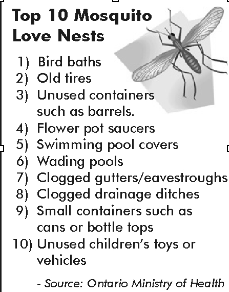
Two people from the Keys were diagnosed with the illness in the next two weeks, and not long thereafter the CDC became involved. Health officials are asking people to stay covered up with clothing, to remove any standing water on their property and to use mosquito repellent with DEET.
There has been no estimation as to how many people in Florida and the Southeast may become infected, but mosquito season typically ends around mid-October.

We specialize in providing our over 1,000,000 customers with relevant product and condition information created by our professional editorial staff which includes our team of medical writers, medical practitioners, and health educators. eDrugStore.com Staff on Facebook