
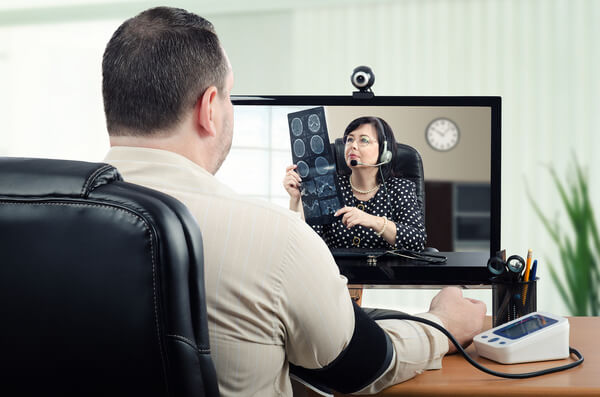

Telemedicine is slowly, but surely, becoming established in the United States. But there are numerous legal battles along the way.
For roughly five years, Texas has been on the front lines of a battle that could determine the future of telemedicine in the Lone Star State and, by extension, elsewhere in the United States.
At issue is the regulatory framework under which telemedicine providers must operate in Texas. The agency responsible for setting telemedicine regulatory policy in the Lone Star State is the Texas Medical Board. The face-off in Texas has pitted the TMB, an official state agency, against a number of telemedicine providers, including one of the nation’s largest that happens to be headquartered in the state.
Compromise Sought
This issue has been contested in the courts and until recently seemed headed for a battle royal in the Texas State Legislature’s 2017 session. However, a coalition of doctors and telemedicine industry representatives has now come together in a concerted effort to map out some sort of compromise that will satisfy all parties and head off a legislative tug-of-war. Absent such a negotiated settlement, both sides in this struggle would have to live with whatever decisions Texas state legislators eventually opted to hand down.
According to a news story that appeared in the Texas Tribune in early June 2016, representatives on both sides of the issue report that negotiations are in their infancy. However, they voiced hope that between them a compromise could be hammered out by the end of the summer. Such a compromise would hopefully allow Texans to more readily avail themselves of telemedicine’s cutting-edge technologies while staying within parameters acceptable to the state’s doctors.
Tensions Thawing
The fact that both sides have come together to try to iron out this dispute indicates that there has been a “thawing of tensions” between doctors and telemedicine providers, according to Tom Banning, CEO of the Texas Academy of Family Physicians.
Also expressing cautious optimism is Nora Belcher, executive director of the Texas e-Health Alliance, a health care information technology industry association. “What we used to be fighting about is, ‘What can technology do?'” she told the Texas Tribune. “Now we’re talking about what technology should do.”

According to the article in the Tribune, members of the Texas coalition looking for a compromise in the telemedicine battle are considering recommending regulations that are patterned after those in effect in Indiana. The Hoosier State’s rules do not require an in-person visit in order to establish a valid doctor-patient relationship. However, Indiana does require that remote telemedicine consultations meet certain standards of care spelled out by the state. The Tribune reports that Teladoc supported the Indiana regulations, according to legislative records.
How the Battle Began
To better understand what’s at stake in this ongoing debate, it’s helpful to know a little bit about the history that set the TMB and telemedicine providers on a collision course.
In June 2011, the TMB advised Dallas-based Teladoc by mail that the telemedicine provider’s doctors were operating in violation of Texas law by seeing patients without first establishing “a proper professional relationship.” Such a relationship, the board argued, required an initial face-to-face consultation and an in-person physical examination. TMB said that physicians working with Teladoc were jeopardizing their professional licenses by treating patients remotely without first establishing this type of relationship.
In response, Teladoc filed a suit arguing that the board’s letter constituted an “unpublished rule.” TMB contended that its letter to Teladoc was simply a restatement of the board’s regulations governing the practice of telemedicine in the state.
Board Wins First Round
Both parties asked the district court for a summary judgment. In this first legal skirmish, TMB carried the day. The court concluded that the board’s letter was not an “unpublished rule.” Teladoc appealed the court’s decision, and on December 31, 2014, the Texas Court of Appeals threw out the lower court’s decision, agreeing with Teladoc that TMB’s so-called rule was indeed invalid.
The appeals court’s decision did nothing to settle this heated dispute. Just a little over two weeks later, TMB issued an emergency rule limiting the use of telephones in the practice of medicine. Teladoc fired back with yet another suit, in which it claimed that TMB’s emergency rule violated the state’s Administrative Procedures Act, which holds that emergency rules can be issued only if there is “imminent peril to the public health, safety, or welfare.”
_600x.jpg)
Teladoc Files Antitrust Suit
Teladoc took things a step further in April 2015, filing an antitrust suit against TMB in U.S. District Court. That suit alleged that the board’s face-to-face consultation requirements illegally limited competition from telemedicine providers. Of the April 2015 suit, Teledoc CEO Jason Gorevic said, “It is clear that the medical board acted only when Teladoc consultations became sufficiently numerous to be perceived as a competitive threat to brick-and-mortar physician practices.”
TMB’s emergency rule was set to take effect on June 3, 2015, but only a few days before that date, U.S. District Judge Robert Pitman issued a temporary injunction that permitted telemedicine providers to continue offering their services to patients in Texas. TMB then asked the court to dismiss Teladoc’s antitrust suit. Although the board cited a variety of reasons why the suit should be dismissed, it claimed that as a state agency the board should be immune from antitrust liability. In December 2015, Judge Pitman rejected the board’s legal argument and denied TMB’s motion.
Board Asks for Review of Ruling
TMB next announced that it planned to appeal Judge Pitman’s decision and asked the 5th U.S. Circuit Court of Appeals to review Pitman’s ruling. These legal skirmishes led to the stalemate between TMB and telemedicine providers that prompted the Texas State Legislature to schedule a review of the controversy during its 2017 legislative session.
Telemedicine has been found to be a cost-effective and efficient way to bring health care services to those in remote rural settings that have little or no access to specialized medical care. Although Texas is home to some of the nation’s biggest and most cosmopolitan cities, it also contains wide areas of sparsely settled country that have long been medically underserved.
Uncertainty Persists
Most responsible telemedicine providers agree that their services are ideally suited for the treatment of routine health issues and some other areas of medical specialty but not necessarily suitable for certain more complex medical matters. However, with the current cloud of uncertainty hanging over the practice of telemedicine in the state, some providers are hesitant to enter the market at all until the courts have had their final say or the matter had been resolved through compromise.
Want to know more about the rapid expansion of telemedicine both here and abroad? To access additional articles about telemedicine and other topics of interest to health consumers, check out our blog.

We specialize in providing our over 1,000,000 customers with relevant product and condition information created by our professional editorial staff which includes our team of medical writers, medical practitioners, and health educators. eDrugStore.com Staff on Facebook