

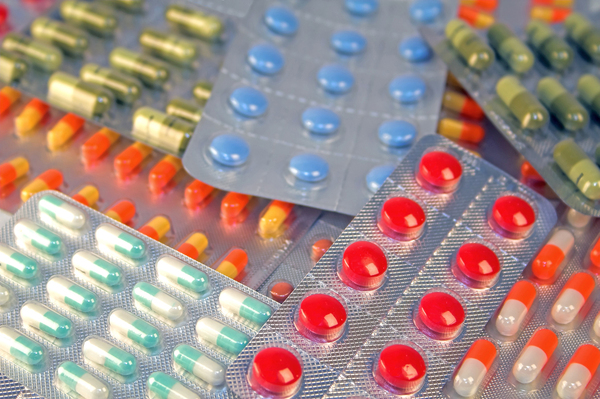
Prescription drugs fall into two broad categories: brand-name drugs — also known as innovator drugs — and generics.
For health consumers, the most significant distinction between the two is price.
Brand-name drugs are those discovered and/or developed commercially by a drug manufacturing company that then holds a patent on the drug for 20 years after the date of its invention.
When that all-important patent on a prescription drug expires, one or more generic drug manufacturers is likely to introduce a generic version of the drug, but only after the generic formulation has passed muster with the U.S. Food and Drug Administration.
Viagra Generic Due in 2017
In rare instances, a brand-name drugmaker may reach a licensing agreement under which a generic equivalent of its drug can be marketed before the patent has actually expired.
For this privilege, the generic manufacturer must pay the patent holder a royalty until that patent has actually expired. Such an agreement exists between Pfizer, which holds the patent on Viagra, and Teva Pharmaceuticals.
Under that accord, Teva will be allowed to begin selling a generic equivalent to Viagra in December 2017.
To put into perspective the relationship between brand-name drugs and their generic equivalents, where available, generic drugs account for nearly 90 percent of all prescriptions filled in the United States in a typical year.
However, the revenue generated through the sale of brand-name drugs dwarfs that produced by the sale of generics.
Generics Bring Lower Prices
Consumers who find themselves dependent on a pricey brand-name drug wait eagerly for the expiration of the drug’s patent, which signals the opening of the market to generic competition. Traditionally, the first generic equivalent of a brand-name drug to win FDA approval gets roughly six months of exclusivity.
After that period ends, other generic competition can enter the market. It is at that point where competitive forces truly come into play, as competing generic manufacturers try to win as big a chunk of the market as they can.
As noted above, the biggest difference between a brand-name drug and its generic equivalents is price. Under the regulations of the FDA, all generic drugs must contain the same active ingredient as the brand-name drug.
The generic also must be available in the same strength, dosage form, and route of administration as the brand-name product.
Generics Are Not Look-Alikes
Generics come in a variety of sizes, shapes, and colors, and usually bear little resemblance to the brand-name drugs they are based on. While a drugmaker’s patent on a new drug generally expires 20 years after the initial filing for patent, trademark laws protect the original drug’s external appearance and color for a considerably longer period.
While FDA regulations require that a generic equivalent of a brand-name drug contain the same active ingredient, those regulations do not require that the drugs’ inactive, or inert, ingredients be the same.
Inactive ingredients, also known as excipients, include coloring agents, preservatives, binding materials, and flavoring agents.
_600x.jpg)
Major pharmaceutical companies that specialize in the development of new and improved medications to treat the broad spectrum of human ills aren’t happy about current drug patent regulations.
When a company recognizes that it has developed a new drug with commercial potential, it files a patent to protect its investment in that compound. However, the countdown toward patent expiration begins long before the drug in question is actually introduced on the market.
First, laboratory and animal testing must be conducted to establish the efficacy and safety of the new drug. When such tests produce positive results, the next step is usually clinical trials among human patients who suffer from the disorder targeted by the new drug.
Several rounds of trials may be required before the drug wins FDA approval and actually comes on the market. During the years of research and development, the patent on the drug produces no revenue for the drug’s developer.
GPhA Annual Report
The Generic Pharmaceutical Association is America’s largest trade association for manufacturers and distributors of generic drugs, as well as manufacturers of bulk active pharmaceutical chemicals and suppliers of other goods and services to the generic industry.
In its most recent report on the state of the generics industry, released in October 2016, GPhA highlighted some eye-opening statistics about the role of generics in consumer health care. Here are some of those statistics:
- Generics in 2015 accounted for almost nine of every 10 prescriptions filled in the United States but represented only about 27 percent of total drug costs.
- Generics saved Americans $227 billion in 2015.
- Savings to U.S. consumers in the decade from 2006 through 2015 totaled $1.46 trillion.
- Generics saved Medicare $67.6 billion in 2015, which amounts to savings of more than $1,700 per enrollee.
- Generics saved Medicaid $32.7 billion in 2015, or about $450 per enrollee.
If you’d like to read more about topics of interest to health consumers, check out our blog.

We specialize in providing our over 1,000,000 customers with relevant product and condition information created by our professional editorial staff which includes our team of medical writers, medical practitioners, and health educators. eDrugStore.com Staff on Facebook