

Researchers have discovered that a yellow slime mold known as Physarum Polycephalum is able to retain memories, even though it doesn’t have a brain. — Click to Tweet.
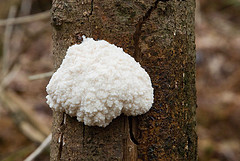
But researchers stress that the puddles of goo don’t possess a memory like we do; instead, the slime mold leaves behind a translucent slime trail that helps it to “remember.”
This discovery could very well change the way scientists define memory. Even though the slime mold doesn’t possess a brain, it can use its slime trail to solve complex mazes and make irrational decisions.
Remember, Remember
At one time, slime molds were thought of as a fungus, until it was discovered that they are actually composed of a number of microbes known as protists.
Slime molds come in all shapes and sizes, and vary in “intelligence.” The yellow slime known as Physarum Polycephalum is a single cell that is over a one square foot in size, and is composed of several million identical cell nuclei.
Researchers observed the yellow slime and noticed that the Physarum Polycephalum would use its slime trail to retrace its steps, but would become confused when researchers covered its slime trail with extra slime. So the researchers decided to test the yellow slime’s memory by having it attempt to traverse a maze to reach a sugary meal.

Researchers noted that the slime mold was able to find the meal three times more often and thirty times faster when it followed its slime trail. But it took the slime molds almost ten times longer when the researchers put down extra slime to “blind” the yellow slime of its trail.
Helping Us Understand The Past
These findings are particularly important because it is the first time a creature without a brain has been observed using spatial memory. Researchers believe that this spatial memory could have been used to ancient organisms to solve problems, and could help us to better understand how our ancient ancestors survived.

We specialize in providing our over 1,000,000 customers with relevant product and condition information created by our professional editorial staff which includes our team of medical writers, medical practitioners, and health educators. eDrugStore.com Staff on Facebook