


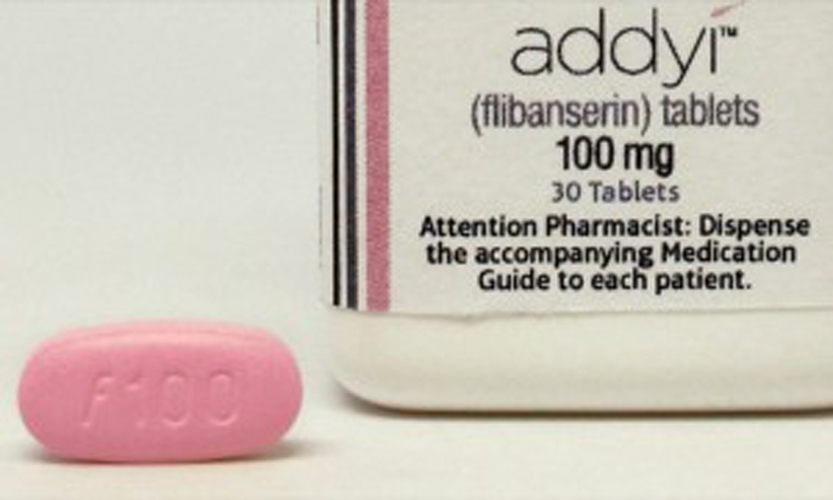
When the U.S. Food and Drug Administration finally gave conditional approval to Addyi in August 2015, the action was greeted with great relief by the drug’s supporters, all of whom felt that a drug to treat female sexual dysfunction was long overdue. At the same time, a smaller but equally passionate band of opponents of the drug warned that the risks of taking Addyi far outweighed any benefits that the medication might deliver.
Several months have passed, and the consumer reception to the drug, hailed as an important breakthrough for women, has been lukewarm at best. Sales of the drug have been very slow to take off, a reaction that may be due in part to the conditions that the FDA attached to its marketing and sale. Deeply concerned that the drug could cause dizziness and fainting, problems that would be exacerbated if used with alcohol, the FDA attached a black box warning to the drug and approved it under the agency’s REMS (risk and evaluation management strategy) program.
Drug’s Benefits Reportedly Modest
Already off to a very slow start, Addyi recently received another round of bad publicity when a scientific review published in the “Journal of the American Medical Association” suggested that the drug’s effects were less impressive than earlier advertised. A Belgian-Dutch medical research team conducted a systematic review and meta-analysis of data from clinical trials into the effectiveness of flibanserin, the active ingredient in Addyi.
The European research team looked at five published and three unpublished studies covering just over 5,900 women in all. The reviewers found that women taking flibanserin experienced an average of an additional one-half satisfying sexual encounter per month while at the same time exposing themselves to a heightened risk of dizziness, somnolence (drowsiness or sleepiness), nausea, and fatigue.
Additional Studies Recommended
In the conclusion to their study, the reviewers noted that they found the quality of the clinical evidence they reviewed to be very low. They called for additional studies to be conducted “before flibanserin can be recommended in guidelines and clinical practice.” Specifically, they suggested that future studies of flibanserin’s efficacy should include “women from diverse populations, particularly women with comorbidities, medication use, and surgical menopause.”

This latest study comes only a couple of months after the revelation that most of the pre-approval studies on the effects of concurrent flibanserin-alcohol use were conducted on men. This calls into questions the finding of pre-approval trials with regard to the use of flibanserin while drinking alcohol since men generally have a higher tolerance for alcohol and the drug being tested is for use by women only.
Already on record as an outspoken opponent of Addyi, Adriane Fugh-Berman, M.D., questioned how meaningful an additional half of a satisfying sexual encounter per month would be to women considering using the drug. In an interview with The New York Times, Dr. Fugh-Berman said that while only women could make that decision, it may well be that the drug’s sluggish sales indicate that female consumers have already decided against using Addyi.
Rocky Road to Approval
Getting FDA’s approval — even with the conditions attached — was no easy task for the drug’s patent-holder, Sprout Pharmaceuticals, which had battled for a few years to achieve that goal. The drug was initially developed by German drugmaker Boehringer Ingelheim, which submitted a petition for its approval as a treatment for hypoactive sexual desire disorder, or HSDD, in 2009.
In June 2010, members of an FDA advisory panel unanimously recommended against the drug’s approval, noting that little difference was seen between the sexual desire diaries of women taking flibanserin and those receiving a placebo. In October 2010, Boehringer Ingelheim announced that it was dropping its efforts to get flibanserin approved.
Sprout Buys Rights to Flibanserin
In early 2011, the German drugmaker sold the rights to flibanserin to a newly formed North Carolina company called Sprout Pharmaceuticals, established solely to further study and hopefully obtain FDA approval for the medication. After conducting a number of additional clinical trials of the drug, Sprout in June 2013 submitted a petition seeking FDA approval of the drug. The regulatory agency once again rejected flibanserin, explaining that the data provided indicated that the drug’s risks outweigh its benefits. In response to an appeal from Sprout, the FDA offered some guidelines for additional clinical trials that might be enough to win eventual approval for the drug.
Having conducted the additional tests requested by the FDA, Sprout in February 2015 resubmitted its petition for flibanserin. In June 2015, an FDA advisory panel voted 18-6 to recommend that the agency approve the drug, which it did on August 18, 2015. However, as previously noted, the FDA attached some pretty stringent conditions to its approval of Addyi. Because it was approved under the agency’s REMS program, physicians and pharmacists who wanted to prescribe and dispense the drug were required to take brief online courses covering the possible side effects of the drug so that they could properly counsel potential Addyi users.
.jpg)
And the FDA also required that the drug carry a boxed warning about the dangers of using Addyi concurrently with alcohol. The REMS instructions for physicians called for them to make clear to patients that no alcohol could be consumed while a patient was taking Addyi, which must be taken daily to become effective.
Despite all the conditions attached to Addyi’s use, Quebec-based Valeant Pharmaceuticals was sufficiently impressed by the drug’s potential that it snapped up Sprout Pharmaceuticals only two days after Addyi’s approval came down. It paid $1 billion for the small drugmaker, which now operates as a wholly-owned subsidiary of Valeant.
Addyi officially hit drugstore shelves on October 18, 2015. In the first few weeks that it was available, an estimated 227 prescriptions were filled. The slow start was at first thought to be caused by uncertainty about whether — and to what extent — insurers would reimburse policyholders who bought the drug. However, nearly three months later, in January 2016, David Maris, an analyst at Wells Fargo Securities, told The New York Times that Addyi was generating only 240 to 290 prescriptions a week. Maris said that at current levels, Addyi would generate 2016 sales of roughly $11 million, far below the $100-150 million Valeant had projected.
Opens Door to Further Research
Addyi’s ultimate fate remains to be seen. It may be that sales will pick up markedly once more patients have found the drug is producing positive results for them. At the very least, however, FDA’s approval of the first drug to treat HSDD, the most common form of female sexual dysfunction, will open the door for additional research and the eventual introduction of drugs that are even more effective than Addyi.
If you’d like to read more about Addyi, female sexual dysfunction, and related issues of interest to health consumers, check out our blog.
Don Amerman is a freelance author who writes extensively about a wide array of nutrition and health-related topics.

We specialize in providing our over 1,000,000 customers with relevant product and condition information created by our professional editorial staff which includes our team of medical writers, medical practitioners, and health educators. eDrugStore.com Staff on Facebook