
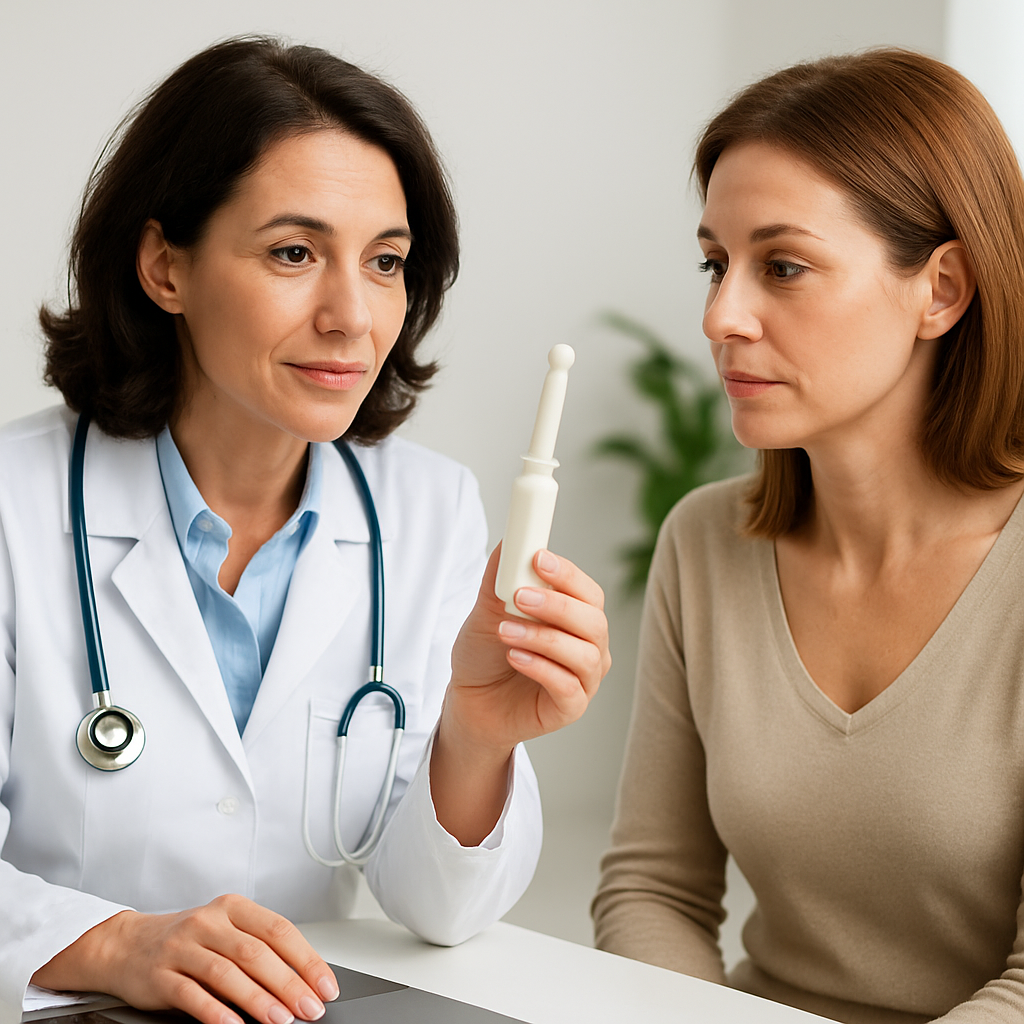

If you’ve been weighing vaginal estrogen against oral hormone replacement therapy, you’re asking exactly the right question. The two treatments share an active ingredient family, but they behave very differently inside the body, and that difference matters a lot when we’re talking about safety after menopause.
Most patients walk in worried about one thing: blood clots. Or breast cancer. Or both. They’ve read something scary, a friend had a stroke on HRT in the 2000s, and now they’re not sure whether any estrogen is safe. The honest answer is, it depends on what symptoms you’re treating and how the hormone gets into your system.
Here’s the short version, and we’ll back it up below. For localized symptoms like vaginal dryness, painful sex, or recurrent UTIs, low-dose vaginal estrogen is generally considered one of the safer hormone options available, according to The North American Menopause Society position statement. For hot flashes, night sweats, and broader systemic symptoms, oral HRT does more, but carries more risk too.
How Vaginal Estrogen Works Differently From Oral HRT
The route of delivery changes almost everything about how a hormone behaves.
Oral HRT is swallowed, absorbed through the gut, and processed by the liver before it reaches the rest of your body. That liver pass, called first-pass metabolism, is the reason oral estrogen raises clotting factors and can affect cholesterol, triglycerides, and inflammatory markers. It’s also why oral estrogen is linked, in studies like the Women’s Health Initiative, to a small but real increase in venous thromboembolism and stroke risk.
Vaginal estrogen skips that whole route. It’s applied locally as a cream, tablet, ring, or insert, and the dose is tiny, often 10 to 25 times lower than what you’d take orally. Blood levels of estradiol stay close to the postmenopausal baseline in most patients using low-dose products, according to FDA labeling and review data.
That low systemic absorption is the whole safety story in one sentence.
What the Evidence Says About Safety
Let’s talk numbers, because "safer" is a relative word.
Blood clot and stroke risk
Oral estrogen roughly doubles the risk of deep vein thrombosis compared with no hormone therapy, though the absolute risk for a healthy woman in her early 50s is still low. Transdermal estrogen (patches, gels) appears to carry less clot risk than oral, and low-dose vaginal estrogen has not been shown to meaningfully raise clot risk in observational studies. For women with a history of clots or strong family history, this difference is the whole ballgame.
Breast cancer
This is where patients get the most anxious. The WHI data showed a small increase in breast cancer risk with combined oral estrogen plus progestin after about five years of use. Estrogen-only oral therapy showed a smaller, and in some analyses neutral or slightly protective, effect in women without a uterus. Low-dose vaginal estrogen has not shown an increased breast cancer signal in the studies done so far, though long-term data in breast cancer survivors specifically is still limited.
Endometrial (uterine) cancer
If you still have your uterus and you’re using systemic estrogen, you need a progestin to protect the uterine lining. Period. Low-dose vaginal estrogen at standard doses generally does not require added progestin protection for most women, per American College of Obstetricians and Gynecologists guidance, though some clinicians still monitor closely.
When Vaginal Estrogen Is the Better Choice
If your main complaints are below the belt, vaginal estrogen is usually the smarter starting point. That includes:
- Vaginal dryness, burning, or itching
- Painful intercourse (dyspareunia)
- Recurrent urinary tract infections after menopause
- Urinary urgency or mild incontinence linked to tissue thinning
These symptoms fall under genitourinary syndrome of menopause, and local treatment hits them directly without flooding the rest of your body with hormone. Many women also notice fewer UTIs once tissue health improves, which is one reason it gets prescribed alongside or instead of repeated antibiotic courses like cephalexin for recurrent UTIs.
What vaginal estrogen won’t do well: hot flashes, night sweats, mood swings, or bone density protection. The dose is just too low.
When Oral HRT Still Makes Sense
Oral HRT, or systemic HRT in any form, is the better tool when you have moderate to severe vasomotor symptoms, significant bone loss risk, or both. If you’re waking up three times a night drenched in sweat, vaginal estrogen alone is not going to fix that.
The choice between oral, patch, and gel within systemic HRT matters too. If you’re trying to decide between formulations, the comparison of estradiol vs conjugated estrogens is worth reading before your next appointment. And many clinicians will quietly tell you that transdermal estrogen, not oral, is often the first choice now when systemic therapy is needed, because of the clot risk profile.
For women who can’t or won’t use systemic hormones, non-hormonal options exist for hot flashes (SSRIs, gabapentin, the newer fezolinetant) and for sleep disturbance, though sleep aids carry their own tradeoffs worth weighing, as covered in melatonin vs trazodone for sleep.
Who Should Avoid Each Option
A quick reference, though your prescriber will make the actual call:
- Avoid oral HRT if: you have a history of blood clots, stroke, active liver disease, estrogen-sensitive breast cancer, or unexplained vaginal bleeding.
- Use vaginal estrogen with caution if: you’re a breast cancer survivor on aromatase inhibitors (decisions are individualized, often with oncology input).
- Either may be reasonable if: you’re a generally healthy woman within 10 years of menopause without contraindications. The "timing hypothesis" suggests starting closer to menopause carries less risk than starting in your 60s or later.
Cost is also worth a conversation. Generic vaginal estradiol tablets and creams are widely available and often affordable. Compare prices on vaginal estrogen and oral HRT options at edrugstore.com before you fill anywhere else.
The Bottom Line on Vaginal Estrogen vs Oral HRT
For localized genitourinary symptoms, vaginal estrogen is generally the safer choice, with minimal systemic absorption and no clear increase in clot or cancer risk in standard doses. For widespread menopause symptoms like hot flashes and bone loss, systemic HRT does more but asks more of your risk tolerance. Many women end up on vaginal estrogen alone, or on a combination tailored to their specific picture.
Talk to your prescriber or an edrugstore.com pharmacist about which form fits your symptoms, your history, and your goals. The right answer is rarely one-size-fits-all, and small changes in formulation or dose can make a real difference in how you feel and how safe the treatment is over the long haul.
This article is for informational purposes only and is not medical advice. Always consult a licensed pharmacist or physician before starting, stopping, or changing any medication.
References
- The North American Menopause Society, position statements on hormone therapy and genitourinary syndrome of menopause.
- Women’s Health Initiative (NHLBI), landmark long-term data on oral HRT risks and benefits.
- U.S. Food and Drug Administration, approved labeling and systemic absorption data for vaginal estrogen products.
- American College of Obstetricians and Gynecologists, clinical guidance on endometrial safety and low-dose vaginal estrogen.

Dr Steven Schlosser
Dr. Schlosser graduated from Lafayette College Phi Beta Kappa and attended Georgetown Medical School. He had 4 years of medical residency training at Tufts University in Boston in both Gynecology and Internal Medicine. He has had a spotless medical career for the past 40+ years and is Board Certified. Learn More