


Metronidazole is a widely used antibiotic and antiprotozoal medication that treats several common infections, including some that directly affect your sexual and reproductive health.
Metronidazole can be highly effective when used correctly, but it also comes with some important rules, especially around alcohol, dosing, and sex during treatment.
What Is Metronidazole?
Metronidazole (brand name Flagyl and others) is a synthetic antibiotic in the nitroimidazole family that works against anaerobic bacteria and certain parasites (protozoa).
It’s commonly prescribed as tablets, capsules, or extended-release oral formulations, and in some cases as vaginal gels or intravenous formulations in hospitals.
Clinicians use metronidazole to treat a range of infections, including bacterial vaginosis, trichomoniasis, pelvic inflammatory disease (PID), giardiasis, amebiasis, and infections caused by anaerobic bacteria in the abdomen, pelvis, brain, lungs, and mouth.
Because several of these conditions involve the genital tract, metronidazole plays a key role in protecting sexual and reproductive health for people of all genders.
How Does Metronidazole Work?

Metronidazole is taken up by susceptible bacteria and protozoa and then chemically “activated” inside those organisms. Once activated, it damages their DNA and other critical cellular components, preventing them from reproducing and ultimately killing them.
This targeted mechanism makes metronidazole particularly effective against organisms such as Trichomonas vaginalis (which causes trichomoniasis), Gardnerella and other bacteria associated with bacterial vaginosis, and anaerobic bacteria in pelvic and intra-abdominal infections.
Because these infections can increase the risk of infertility, pelvic pain, pregnancy complications, and higher HIV transmission, clearing them with effective treatment is an important part of long-term sexual health.
Sexual Health Uses: Trichomoniasis and Bacterial Vaginosis

Two of the best-known sexual and reproductive health indications for metronidazole are trichomoniasis and bacterial vaginosis (BV).
- Trichomoniasis: A sexually transmitted infection caused by the parasite Trichomonas vaginalis, often leading to vaginal discharge, irritation, or urethral symptoms, but it can also be silent.
- Bacterial vaginosis: An imbalance in the vaginal microbiome, typically not classified as an STI but strongly linked to sexual activity and new or multiple partners.
The CDC STI guidelines recommend metronidazole 500 mg by mouth twice daily for 7 days as first-line therapy for trichomoniasis in women, noting that this regimen improves cure rates compared with a single 2 g dose. A randomized trial in women with trichomoniasis found that the 7-day regimen led to significantly fewer treatment failures and fewer positive follow-up tests than a single 2 g dose.
For BV, both 7-day oral regimens and intravaginal metronidazole are widely used and effective. Treating these conditions reduces symptoms like abnormal discharge and odor and may lower the risk of complications such as PID, adverse pregnancy outcomes, and increased susceptibility to HIV and other STIs.
How Metronidazole Fits Into Safer Sex

Treating infections like trichomoniasis and BV with metronidazole is an important step in protecting your sexual health, but it’s not a substitute for condoms, HIV prevention strategies, or routine STI testing.
Clearing these infections can reduce vaginal inflammation, abnormal discharge, and odor, which may make sex more comfortable and improve confidence and intimacy with partners.
Most guidelines recommend avoiding sex or using condoms every time until you and any partners have finished treatment, symptoms are gone, and at least 7 days have passed, to cut the risk of reinfection.
Successfully treating trichomoniasis and BV can also lower the risk of pelvic inflammatory disease, pregnancy complications, and higher HIV transmission linked to genital inflammation.
There are a few key behavior points during treatment:
- Avoid sex or use condoms consistently until you and (for trichomoniasis) your partner(s) have completed treatment and any recommended retesting.
- For trichomoniasis, partners should be treated at the same time to prevent “ping-pong” reinfection. In some regions, clinicians can use expedited partner therapy so partners are treated quickly even without an in-person visit.
- Continue regular STI screening if you have multiple partners, new partners, or condomless sex, as metronidazole doesn’t prevent viral infections like HIV, herpes, or hepatitis.
If you also use medications for erectile dysfunction or other sexual health treatments, make sure your prescribing clinician knows all your prescriptions so they can watch for interactions and overlapping side effects.
Dosing, Timing, and How to Take Metronidazole
Metronidazole dosing depends on the infection being treated and the product formulation.
Typical adult oral regimens include:
- Trichomoniasis: Either a single 2 g dose or 500 mg twice daily for 7 days, with current evidence favoring the 7-day regimen for women.
- Bacterial vaginosis: 500 mg twice daily for 7 days by mouth or a course of intravaginal metronidazole gel.
- Other anaerobic or protozoal infections: Various multi-day regimens tailored to the site and severity of infection.
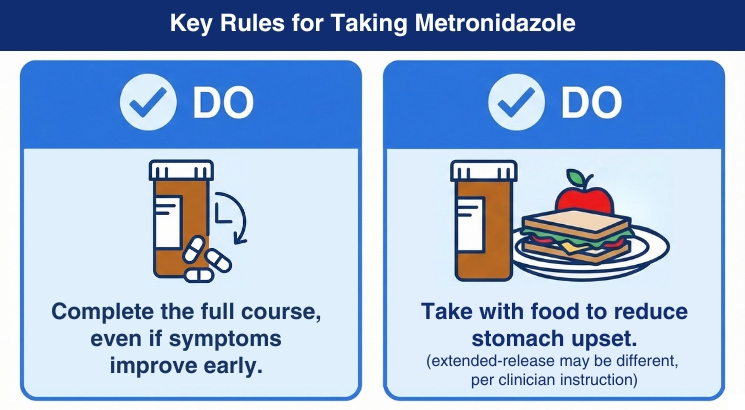
Many clinicians recommend taking metronidazole with food to reduce stomach upset, and extended-release formulations are usually taken on an empty stomach, exactly as directed. You must complete the entire course—even if symptoms improve early—to reduce the risk of recurrence and antibiotic resistance.
Alcohol and Metronidazole: Why “No Drinks” Really Matters
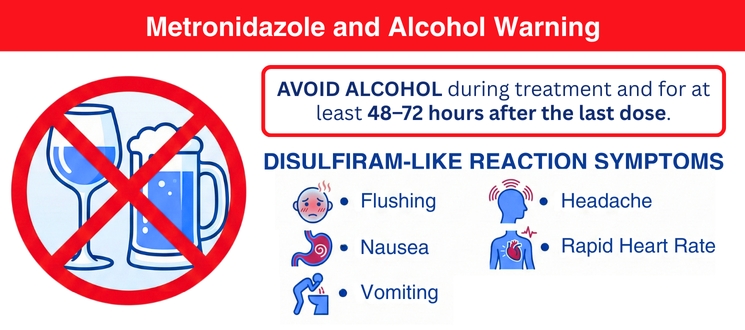
To be sure metronidazole clears your infection, avoid alcohol completely during treatment and for at least 48–72 hours after your last dose.
Mixing metronidazole with alcohol can trigger a “disulfiram-like reaction,” which causes unpleasant symptoms such as flushing, nausea, vomiting, abdominal cramps, headache, and rapid heart rate.
Because reactions can be serious and occur with relatively small amounts of alcohol, experts advise strict avoidance of all obvious and hidden sources, including alcohol-containing medications like cough syrups.
Common Side Effects and Safety Considerations
Most people tolerate short courses of metronidazole well, but side effects are not rare. Common reactions include:
- Nausea, vomiting, or abdominal discomfort
- Metallic or altered taste in the mouth
- Headache or dizziness
- Temporary loss of appetite or diarrhea
These effects are usually mild and resolve after treatment ends. More serious but less common risks include peripheral neuropathy (nerve tingling or numbness), seizures, and rare blood disorders, particularly with prolonged or repeated courses or in people with underlying conditions.
Metronidazole Black Box Warning

Metronidazole has a U.S. boxed warning because high, long-term doses caused cancer in some animal studies, so it’s usually reserved for clearly needed, time-limited courses rather than casual or repeated use.
People who are pregnant, trying to conceive, or breastfeeding should talk with a clinician about timing and dose, since recommendations can differ in early pregnancy and around delivery.
Anyone who develops severe headache, confusion, vision changes, unsteady gait, or persistent numbness or tingling while on metronidazole should seek medical attention promptly.
Drug Interactions and Special Precautions
Metronidazole interacts with several other medications, so a full medication review is important before starting it.
Notable interactions include:
- Warfarin and similar blood thinners, where metronidazole can increase bleeding risk by raising anticoagulant levels
- Lithium, which can reach higher, potentially toxic levels when combined with metronidazole
For a complete list of drugs that interact with metronidazole, see the Drugs.com Interaction Checker.
Testing and Follow-up
Seek medical evaluation if you notice new genital discharge, itching, burning, pelvic pain, pain with sex, or urinary symptoms, especially if you have new or multiple partners.
Testing can identify conditions like trichomoniasis, BV, chlamydia, gonorrhea, or other infections. Metronidazole may be part of the treatment plan if an anaerobic or protozoal cause is found.
Because reinfection is common, many experts recommend retesting for trichomoniasis after treatment, especially if you have ongoing risk, and follow-up for BV if symptoms return or never fully resolve.
If you have recurring BV, research shows that many people have symptoms again within 6–12 months, and newer studies are exploring whether treating male partners can reduce early recurrence.
Buy Metronidazole Online from eDrugstore

Need discreet, doctor-reviewed sexual health treatments? We offer fast, secure, and convenient service. Skip the waiting rooms and pharmacy lines: simply complete a brief online consultation, and if approved, your medication will be quickly and discreetly shipped directly to your door.
If you already have a prescription, you can fax it to us. It’s the easy way to access reliable treatment from a licensed U.S. pharmacy without leaving home. Protect your sexual health by ordering metronidazole today.
Protect your sexual health and order metronidazole today.
References
- Blakemore A, et al. Metronidazole. StatPearls. https://www.ncbi.nlm.nih.gov/books/NBK539728/
- Centers for Disease Control and Prevention. Trichomoniasis – STI Treatment Guidelines. https://www.cdc.gov/std/treatment-guidelines/trichomoniasis.htm
- Centers for Disease Control and Prevention. Bacterial Vaginosis – STI Treatment Guidelines. https://www.cdc.gov/std/treatment-guidelines/bv.htm
- Kissinger P, et al. Single-dose versus 7-day-dose metronidazole for the treatment of trichomoniasis in women. Lancet Infect Dis. (Trial Summary) https://pubmed.ncbi.nlm.nih.gov/30297322/
- BMC Infectious Diseases and related journals on BV recurrence and partner treatment: e.g., https://pmc.ncbi.nlm.nih.gov/articles/PMC8887553/ and https://pubmed.ncbi.nlm.nih.gov/40043236/
- FDA. Flagyl (metronidazole) label and boxed warning. https://www.accessdata.fda.gov/drugsatfda_docs/label/2010/012623s061lbl.pdf and https://labeling.pfizer.com/showlabeling.aspx?id=570
- GoodRx. Metronidazole and Alcohol. https://www.goodrx.com/metronidazole/drinking-alcohol-metronidazole-safety
Disclaimer: This article provides general information about health and related topics but isn’t intended as a substitute for professional medical advice, diagnosis, or treatment. Always seek the advice of your physician or other qualified health provider with any questions you may have regarding a medical condition.

Paula Clark worked in the healthcare industry for 17 years before becoming a full-time freelance health and medical writer. Her clients appreciate her ability to convey complex information in terms laypeople can understand. Paula prides herself on the depth and accuracy of her research. Her goal is to add authority to your site in words that will delight both Google and your readers.