


Reach Your Goal Weight. Prescribed. Proven. Private.
Doctor-prescribed GLP-1 weight loss treatments delivered discreetly to your door.
Physicians
Private
Delivery
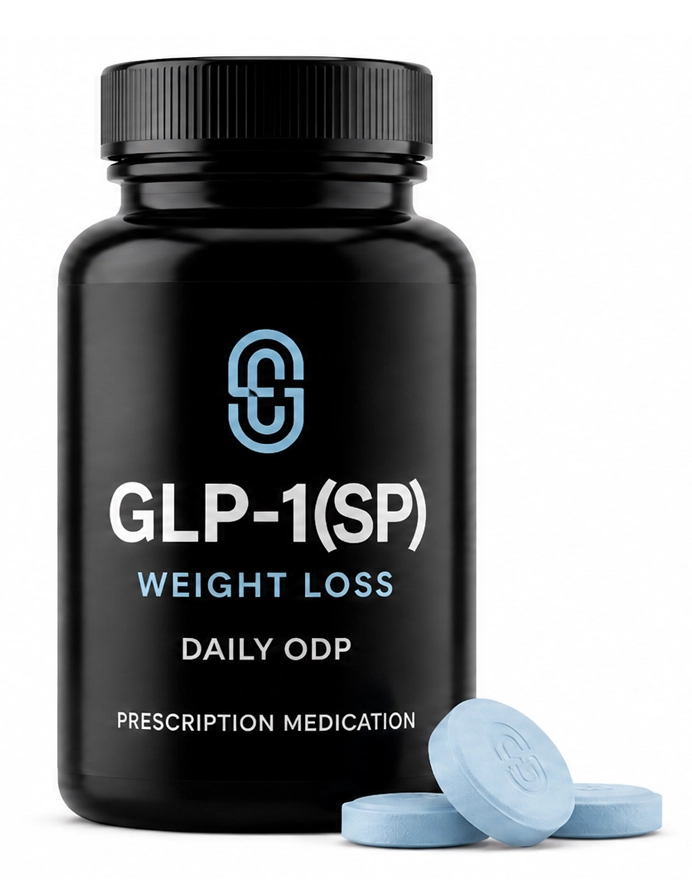
GLP SP 2mg
Daily dissolvable GLP-1 to curb appetite and drop weight.
- Curbs Appetite
- Daily Dissolvable Tablet
- Steady, Lasting Results

GLP T 3mg
Dual-action GLP-1 for stronger appetite control.
- Dual-Action Formula
- Daily Dissolvable Tablet
- Maximum Appetite Control

Berberine with Ceylon Cinnamon
Natural metabolic support for blood sugar and weight.
- Supports Healthy Metabolism
- Balances Blood Sugar
- Once-Daily Tablet
Quick answer: Zepbound. In the first direct head-to-head clinical trial, people on Zepbound lost an average of 20.2% of their body weight over 72 weeks, about 50 pounds. People on Wegovy lost 13.7%, or about 33 pounds. That’s 47% more relative weight loss with Zepbound.
However, if you have established heart disease, Wegovy has FDA-approved cardiovascular benefits that Zepbound does not. Wegovy is also the only drug approved for people with obstructive sleep apnea (OSA).
Two of the most-prescribed weight loss medications in the country, Wegovy and Zepbound, work in the same way but produce very different numbers. If you’ve been trying to figure out which one would actually work better for you, until recently, there wasn’t a great answer.
For years, comparing Wegovy and Zepbound meant looking at separate clinical trials with different patient groups, different timeframes, and no direct competition between the drugs.
That changed in May 2025, when the first head-to-head clinical trial was published in the New England Journal of Medicine. The results gave patients and doctors something they hadn’t had before: a real side-by-side comparison.
Here’s what the science shows, what it means in practical terms, and what to consider when you’re deciding which option makes sense for your situation.
How Each Drug Works
Wegovy (Semaglutide)
Wegovy contains a drug called semaglutide. It belongs to a class of medications called GLP-1 receptor agonists. GLP-1 (glucagon-like peptide-1) is a hormone your gut naturally releases after you eat. It signals your brain to reduce hunger, slows digestion, and helps regulate blood sugar.
Wegovy mimics that hormone at a higher, sustained level, so you feel full sooner and stay full longer.
It’s given as a once-weekly injection, with doses that gradually increase over about 16 weeks up to 2.4 mg. An oral tablet version of Wegovy received FDA approval in late 2025, giving patients who’d rather not inject a new option.
Zepbound (tirzepatide)
Zepbound contains tirzepatide, which targets two hormone receptors, GLP-1 and GIP (glucose-dependent insulinotropic polypeptide). GIP is another gut hormone involved in fat storage and metabolism.
Zepbound suppresses appetite by activating both pathways through two overlapping but distinct mechanisms.
Researchers believe this dual action is the key driver of its stronger results. According to the SURMOUNT-5 trial authors, the GIP and GLP-1 receptors are expressed in different brain regions that regulate food intake. Activating both appears to produce greater weight reduction than either one alone.
Zepbound is also the only weight loss drug currently FDA-approved to treat obstructive sleep apnea (OSA) in adults with obesity.
Source: FDA prescribing information for Wegovy and Zepbound
What the Individual Trials Showed
Before the head-to-head comparison existed, the evidence came from each drug’s own clinical trials against placebo.
Wegovy: The STEP 1 Trial
The STEP 1 trial tested Wegovy in adults with obesity or overweight (without diabetes) over 68 weeks. Participants who took semaglutide lost an average of 14.9% of their body weight, compared to just 2.4% in the placebo group. About 86% of people on Wegovy achieved at least 5% weight loss.
The results were published in the New England Journal of Medicine in 2021 and supported FDA approval of Wegovy that same year.
Zepbound: The SURMOUNT-1 Trial
Zepbound’s pivotal trial, SURMOUNT-1, ran for 72 weeks and tested three doses. At the highest dose (15 milligrams), participants lost an average of 22.5% of their body weight, roughly 52 pounds. Even at the lowest tested dose (5 mg), average weight loss was 16%.
The results, published in the New England Journal of Medicine in 2022, were strong enough to earn FDA approval for Zepbound in 2023.
These results looked promising for Zepbound even then. But the two trials couldn’t be fairly compared. They enrolled different populations, ran for slightly different lengths, and weren’t designed to compete with each other.
To actually answer which drug works better, researchers needed a randomized head-to-head study.

Note: These were separate trials with different patient populations and cannot be directly compared. The SURMOUNT-5 head-to-head trial in the next section addresses this directly.
The Head-to-Head Trial: SURMOUNT-5
How the Trial Was Set Up
SURMOUNT-5 was a 72-week, multicenter clinical trial that randomized 751 adults to receive either Zepbound or Wegovy at their maximum tolerated doses. All participants had obesity or overweight plus at least one related health condition, such as high blood pressure, high cholesterol, obstructive sleep apnea, or cardiovascular disease. None had type 2 diabetes.
Both groups received counseling on diet and exercise throughout.
The study was funded by Eli Lilly, the manufacturer of Zepbound. It was published in the New England Journal of Medicine and peer-reviewed, but that funding relationship is worth keeping in mind when interpreting the results.
The trial was also open-label, meaning participants knew which drug they were taking. This was a less rigorous design than a double-blind study, but it was difficult to avoid given the different injection devices used by each drug.
What the Results Showed
Zepbound produced meaningfully greater weight loss across every measure the trial tracked; see the table below.
At 72 weeks, people on Zepbound lost an average of 20.2% of their body weight — about 50 pounds.
People on Wegovy lost an average of 13.7%, or about 33 pounds. That’s a 47% greater relative weight loss with Zepbound.
Source: Aronne et al
Where Wegovy Still Has an Edge
Weight loss numbers aren’t the whole story. Wegovy has two meaningful advantages that matter for certain patients.
Cardiovascular Outcomes
Wegovy is the only weight loss drug currently FDA-approved to reduce the risk of major cardiovascular events. That approval is based on the SELECT trial, a study of more than 17,000 adults with established cardiovascular disease and overweight or obesity (without diabetes).
People who took Wegovy had a 20% lower rate of serious cardiovascular events — including heart attack, stroke, and cardiovascular death — compared to placebo. The results were published in the New England Journal of Medicine in December 2023 and led to Wegovy’s expanded FDA indication in March 2024.
If you have a history of heart disease, this data gives your cardiologist a strong reason to consider Wegovy regardless of what SURMOUNT-5 showed about weight loss.
Cardiovascular outcome trials for Zepbound are ongoing, but results aren’t yet available.
An Oral Option
Oral Wegovy, approved by the FDA in late 2025, gives patients a pill-based alternative. For people who are hesitant about weekly injections, that flexibility matters. Zepbound remains injection-only for now.
Side Effects: More Alike Than Different
Despite their different mechanisms, Wegovy and Zepbound produce very similar side effect profiles. In SURMOUNT-5, about 44% of participants in both groups experienced nausea, and about 25% reported abdominal pain.
Diarrhea, constipation, vomiting, and general stomach discomfort are common with both drugs, particularly during the early weeks when doses are increasing.
Some data suggest Zepbound may cause slightly more nausea at higher doses, while Wegovy users may be more prone to constipation. Headache appears to be reported more often with Wegovy. Individual responses vary. If you’ve tried one and found it hard to tolerate, that doesn’t necessarily predict how you’ll respond to the other.
Both medications carry a boxed warning about thyroid C-cell tumors based on rodent studies. Neither drug is approved for people with a personal or family history of medullary thyroid carcinoma or multiple endocrine nNeoplasia syndrome type 2 (MEN2).
Both also require prior authorization from most insurance plans, and weight typically returns after stopping either medication.
Sources: Aronne et al, drugs.com comparison
Cost and Coverage: The Practical Reality
The clinical data is only part of your decision. What you can actually access — and budget for — matters just as much.
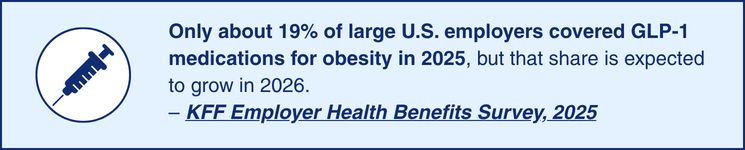
- List price without insurance. Zepbound runs roughly $1,000 to $1,500 per month and Wegovy roughly $1,300 to $1,600. Both manufacturers now offer self-pay programs that can bring costs down to $199 to $499 per month.
- With commercial insurance. Both Eli Lilly and Novo Nordisk offer savings cards that can reduce monthly costs to as little as $25 for eligible patients. These programs are not available to people on Medicare, Medicaid, or Tricare.
- The CVS Caremark coverage shift. In July 2025, CVS Caremark moved Wegovy to preferred formulary status and restricted Zepbound coverage for many of its members. If your insurance runs through CVS Caremark, this may determine which drug is accessible to you regardless of what the clinical data shows.
- Oral Wegovy pricing. The tablet version carries a lower price through some self-pay programs, which could change the math for uninsured patients.
Wegovy vs. Zepbound: Which Drug Is Right for You?
The SURMOUNT-5 data gives Zepbound the clearer edge for raw weight loss. For most patients whose main goal is maximum weight reduction, the current clinical evidence points in that direction.
But the right choice depends on more than one number. Wegovy may be your best bet if:
- You have established cardiovascular disease. Wegovy’s SELECT trial data gives it a documented, FDA-recognized advantage in this population that Zepbound cannot currently match.
- Injections are a dealbreaker. Oral Wegovy, approved in late 2025, is now available.
Zepbound may be the best choice if you have obstructive sleep apnea. Zepbound carries a specific FDA approval for treating OSA in adults with obesity.
If insurance coverage is the deciding factor, check your formulary before assuming either drug is accessible at a reasonable cost. The coverage landscape is still shifting.
Your prescriber can factor in your full health history, any other conditions you’re managing, and what your insurance will actually cover. That conversation is worth having before assuming the highest-performing drug in the trials is necessarily your best option.

Wegovy vs. Zepbound: There Is No Best Answer
The science has delivered a reasonably direct answer on weight loss: Zepbound currently outperforms Wegovy in the only head-to-head clinical trial we have, producing an average of about 50 pounds lost versus 33 pounds at 72 weeks. The dual-hormone mechanism appears to make a real difference.
That said, Wegovy’s cardiovascular outcome data, oral option, and wider insurance coverage under some plans make it the right choice for a meaningful portion of patients. One drug is not universally better. The right answer depends on your health history, any other conditions you’re managing, and what your insurance will actually cover.
If you’re weighing your options for a prescription weight loss program, eDrugstore connects you with licensed providers who can evaluate both Wegovy and Zepbound based on your individual profile.
Schedule a weight loss consultation with eDrugstore.
Important Safety Information: Wegovy and Zepbound are prescription medications for chronic weight management in adults with obesity (BMI ≥30) or overweight (BMI ≥27) with at least one weight-related condition. Both carry a boxed warning for risk of thyroid C-cell tumors. Neither is approved for people with a personal or family history of medullary thyroid carcinoma or Multiple Endocrine Neoplasia syndrome type 2. Possible side effects include nausea, diarrhea, vomiting, constipation, and abdominal pain. Consult a licensed healthcare provider before starting any prescription medication.
References
Aronne, L.J., Horn, D.B., le Roux, C.W., et al. (2025, May 11). Tirzepatide as compared with semaglutide for the treatment of obesity. The New England Journal of Medicine, 393(1), 26–36. https://www.nejm.org/doi/full/10.1056/NEJMoa2416394
Eli Lilly and Company. (2025, May 11). Zepbound (tirzepatide) showed superior weight loss over Wegovy (semaglutide) in complete SURMOUNT-5 results published in The New England Journal of Medicine. https://investor.lilly.com/news-releases/news-release-details/zepbound-tirzepatide-showed-superior-weight-loss-over-wegovy
Jastreboff, A.M., Aronne, L.J., Ahmad, N.N., et al. (2022, July 21). Tirzepatide once weekly for the treatment of obesity. The New England Journal of Medicine, 387(3), 205–216. https://www.nejm.org/doi/full/10.1056/NEJMoa2206038
KFF. (2025). 2025 Employer Health Benefits Survey. https://www.kff.org/health-costs/2025-employer-health-benefits-survey/
Lincoff, A.M., Brown-Frandsen, K., Colhoun, H.M., et al. (2023, Dec. 14). Semaglutide and cardiovascular outcomes in obesity without diabetes. The New England Journal of Medicine, 389(24), 2221–2232. https://www.nejm.org/doi/full/10.1056/NEJMoa2307563
Novo Nordisk. (2023, Nov. 11). Primary results of SELECT cardiovascular outcomes trial presented at AHA. https://www.novonordisk-us.com/media/news-archive/news-details.html?id=166344
Novo Nordisk. (2024, March 8). FDA approves Wegovy label expansion for cardiovascular risk reduction. https://www.novonordisk.com/news-and-media/news-and-ir-materials/news-details.html?id=167030
Wilding, J.P.H., Batterham, R.L., Calanna, S., et al. (2021, March 18). Once-weekly semaglutide in adults with overweight or obesity. The New England Journal of Medicine, 384(11), 989–1002. https://www.nejm.org/doi/full/10.1056/NEJMoa2032183
Disclaimer: This article provides general information about health and related topics but is not intended as a substitute for professional medical advice, diagnosis, or treatment. Always seek the advice of your physician or other qualified health provider with any questions you may have regarding a medical condition.
