

Reach Your Goal Weight. Prescribed. Proven. Private.
Doctor-prescribed GLP-1 weight loss treatments delivered discreetly to your door.
Physicians
Private
Delivery
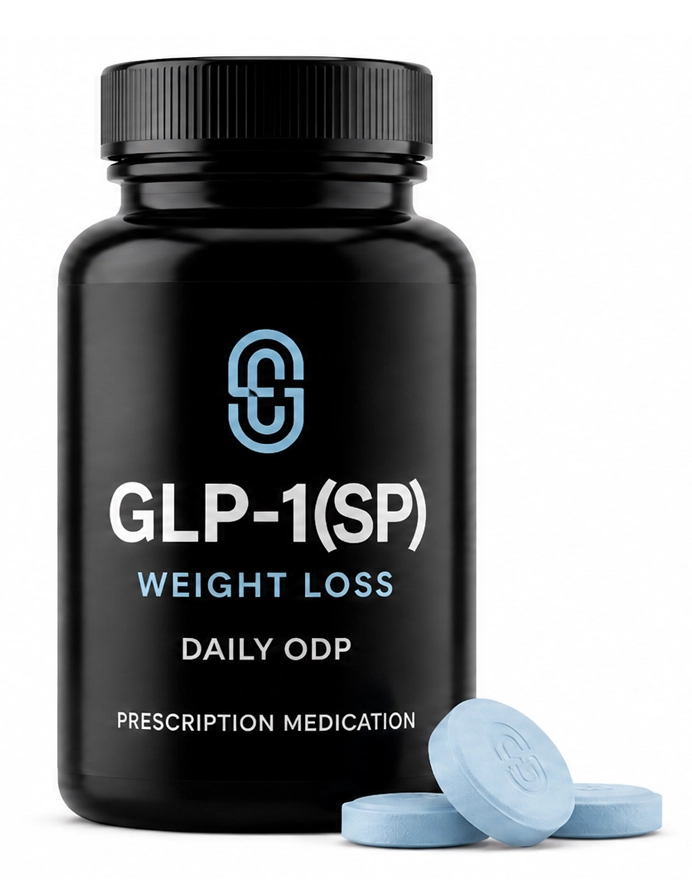
GLP SP 2mg
Daily dissolvable GLP-1 to curb appetite and drop weight.
- Curbs Appetite
- Daily Dissolvable Tablet
- Steady, Lasting Results

GLP T 3mg
Dual-action GLP-1 for stronger appetite control.
- Dual-Action Formula
- Daily Dissolvable Tablet
- Maximum Appetite Control

Berberine with Ceylon Cinnamon
Natural metabolic support for blood sugar and weight.
- Supports Healthy Metabolism
- Balances Blood Sugar
- Once-Daily Tablet
If you’ve sat across from your doctor wondering whether Wegovy vs Zepbound is the better choice, you’re not alone. Both are FDA-approved injectable weight loss medications, both work on gut hormones that control appetite, and both have produced weight loss numbers that would have sounded like science fiction ten years ago.
But they’re not the same drug. They don’t work on exactly the same receptors, the side effect profiles differ in small but real ways, and the out-of-pocket cost can swing by hundreds of dollars depending on your insurance and pharmacy.
What follows is the honest breakdown, the kind of conversation you’d have at the counter with someone who’s filled hundreds of these prescriptions.
How Wegovy and Zepbound Actually Work
Wegovy (semaglutide) is a GLP-1 receptor agonist. It mimics glucagon-like peptide-1, a hormone your gut releases after eating that tells your brain you’re full and slows the rate food leaves your stomach. It’s made by Novo Nordisk and was FDA-approved for chronic weight management in 2021.
Zepbound (tirzepatide) is the newer drug, approved by the FDA in late 2023. It’s made by Eli Lilly and does something different mechanically. It activates two receptors at once, GLP-1 and GIP (glucose-dependent insulinotropic polypeptide). That dual action is why most clinicians, when comparing Wegovy vs Zepbound, expect Zepbound to produce more weight loss on average.
If you want a plain-English primer on the mechanism, our overview of how GLP-1 medications work walks through it without the jargon.
Weight Loss Results: What the Trials Actually Showed
This is usually the first question patients ask, and the honest answer is that Zepbound has the edge in the head-to-head data we have so far.
In the SURMOUNT-1 trial, adults on the highest tirzepatide dose lost an average of about 21% of body weight over 72 weeks. In the STEP-1 trial of semaglutide, the average was around 15% over 68 weeks. A 2024 NEJM study directly comparing the two found tirzepatide produced significantly more weight loss than semaglutide at every time point measured.
That said, averages hide a lot. Some patients on Wegovy lose 25% of their body weight. Some patients on Zepbound plateau at 10%. The honest answer is: it depends on the person, the dose tolerated, diet, activity, and whether you stay on the drug long term.
For a deeper dive into the head-to-head numbers, our breakdown of Wegovy vs Zepbound weight loss results goes further into the trial data.
Side Effects: More Similar Than Different
Both drugs hit the gut hard, especially in the first few weeks and after each dose increase. The most common complaints with both:
- Nausea (the big one, roughly 40 to 45% of patients in trials)
- Diarrhea or constipation, sometimes alternating
- Vomiting, particularly after fatty meals
- Burping, reflux, that "food just sitting there" feeling
- Fatigue in the first month
- Injection site reactions
In the Wegovy vs Zepbound side effect comparison, the rates are roughly similar, though some patients tell me Zepbound feels a little gentler on the stomach. Trial data backs that up modestly. Constipation seems a bit more common with Zepbound; nausea slightly more common with Wegovy.
Serious side effects to know about
Both medications carry a boxed warning about thyroid C-cell tumors based on rodent studies. They’re contraindicated in patients with a personal or family history of medullary thyroid carcinoma or MEN 2 syndrome. Other risks the NIH highlights include pancreatitis, gallbladder disease, kidney injury from dehydration, and rare cases of bowel obstruction.
Call your doctor right away if you have:
- Severe, persistent abdominal pain (think pancreatitis)
- Vomiting that won’t stop
- A lump or swelling in the neck, trouble swallowing, hoarseness
- Signs of dehydration or sharp drop in urine output
Cost: Where the Real Sticker Shock Lives
List price for both drugs hovers around $1,000 to $1,350 a month before insurance or coupons. That’s the number that makes most patients gasp.
What you actually pay varies wildly:
- With commercial insurance that covers obesity treatment: copays often land between $25 and $250 a month, sometimes lower with manufacturer savings cards.
- With Medicare: historically neither was covered for weight loss alone, though CMS coverage rules have been shifting for patients who also have cardiovascular indications.
- Cash pay through manufacturer direct programs: Lilly’s self-pay vials for Zepbound have run around $349 to $499 for lower doses. Novo Nordisk has its own direct program for Wegovy with similar pricing in some cases.
- Without any assistance: expect $1,000 plus.
If cost is your main barrier, it’s worth comparing Wegovy and Zepbound pricing through edrugstore.com and asking a pharmacist what savings programs you might qualify for before you settle on one or the other.
For patients curious about pill-form options that are starting to emerge, our piece comparing Wegovy oral pills vs injections covers what’s currently available.
How to Choose Between Wegovy and Zepbound
The decision usually comes down to four practical questions:
- What does your insurance cover? This is often the deciding factor, full stop.
- What’s your tolerance for GI side effects? Both can be rough early on. Neither is dramatically gentler.
- What’s your weight loss target? Larger goals favor Zepbound based on current data.
- Do you have other conditions? Wegovy has an FDA-approved cardiovascular risk reduction indication for adults with obesity and existing heart disease. Zepbound has approval for obstructive sleep apnea in adults with obesity.
There’s no universally "better" drug here. There’s the one that fits your body, your wallet, and your medical history.
The Bottom Line
In the Wegovy vs Zepbound comparison, Zepbound tends to produce more weight loss on average, while Wegovy has stronger cardiovascular outcome data. Side effects are similar, and cost depends heavily on coverage. The right choice is the one you can afford, tolerate, and stay on long enough to see real results, because both drugs work only as long as you take them.
Talk to your prescriber about which mechanism fits your situation, and ask a pharmacist about cost-saving programs before you fill the first prescription.
This article is for informational purposes only and is not medical advice. Always consult a licensed pharmacist or physician before starting, stopping, or changing any medication.
References
- FDA approval of Wegovy, original FDA approval announcement for semaglutide in weight management.
- FDA approval of Zepbound, official FDA announcement for tirzepatide.
- NEJM head-to-head trial, comparative weight loss outcomes for tirzepatide vs semaglutide.
- MedlinePlus on semaglutide, NIH-curated patient information on side effects and warnings.
- FDA cardiovascular indication for Wegovy, expanded indication for cardiovascular risk reduction.

Dr Steven Schlosser
Dr. Schlosser graduated from Lafayette College Phi Beta Kappa and attended Georgetown Medical School. He had 4 years of medical residency training at Tufts University in Boston in both Gynecology and Internal Medicine. He has had a spotless medical career for the past 40+ years and is Board Certified. Learn More