

Restore Your Testosterone. Energy. Strength. Vitality.
Doctor-prescribed testosterone support delivered discreetly to your door.
Physicians
Private
Delivery

Sermorelin Acetate
Peptide therapy to support natural hormone production.
- Supports Natural HGH
- Boosts Energy & Recovery
- Physician-Prescribed

Enclomiphene Flex-Dose
Raises natural testosterone without shutting down production.
- Boosts Natural Testosterone
- Preserves Fertility
- Flexible Daily Dosing

DHEA Testosterone Support
Foundational hormone support for energy and drive.
- Supports Healthy Hormones
- Improves Energy & Mood
- Once-Daily Capsule
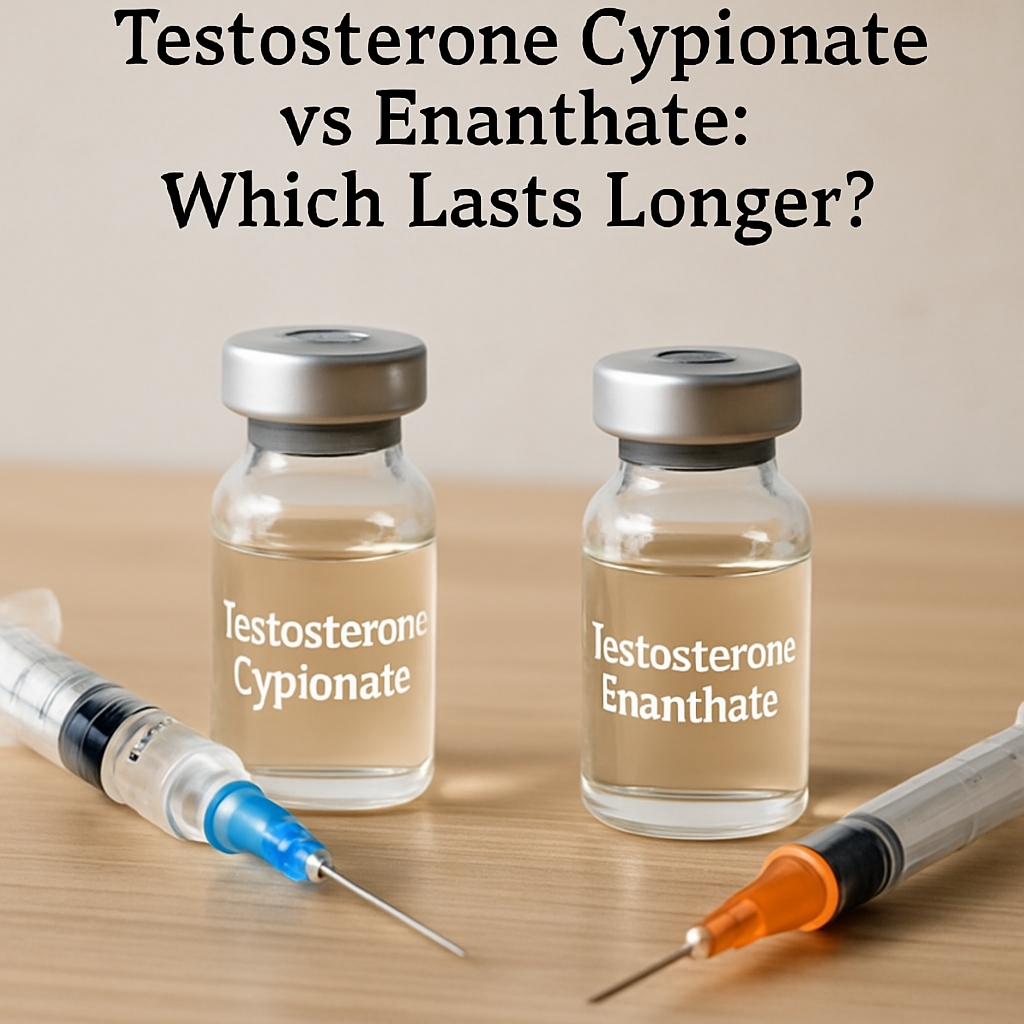
If your prescriber has handed you a choice between two injectable options, the question of testosterone cypionate vs enanthate is probably the first one you searched. They look almost identical on paper. Same hormone, same delivery route, similar dosing schedule, similar price. So why does your clinic stock one and not the other? And does it actually matter which one ends up in your syringe?
The short answer: for most patients on testosterone replacement therapy (TRT), the difference is small but not zero. The longer answer involves ester chemistry, half-life math, and a few practical things that only show up after a few months of injecting yourself in the thigh.
Here’s what actually matters when you’re weighing testosterone cypionate vs enanthate, according to the FDA-approved prescribing information and what clinicians see in real practice.
The Ester Is the Only Real Difference
Both drugs are testosterone. The molecule that does the work in your body is identical. What differs is the ester chain attached to it, which controls how slowly the testosterone is released from the injection site into your bloodstream.
Cypionate has an 8-carbon ester. Enanthate has a 7-carbon ester. That one-carbon difference is the entire story.
A longer ester chain means the molecule is slightly more lipid-soluble, so it sits in the oil depot at your injection site a bit longer before being cleaved off and released as free testosterone. In practical terms:
- Testosterone cypionate half-life: roughly 8 days
- Testosterone enanthate half-life: roughly 4.5 to 7 days
So yes, in the testosterone cypionate vs enanthate matchup, cypionate technically lasts longer. But "longer" here means a day or two. Not a week. Not enough that most patients on a standard once-weekly or twice-weekly protocol would notice.
Dosing Schedules in Real Practice
The textbook answer is that both can be dosed every 1 to 2 weeks. The honest answer is that almost no one in modern TRT practice is still doing every-2-week injections, because that schedule produces a brutal roller coaster: a peak around day 2 to 3, then a steady slide into low-testosterone symptoms by day 10 or 11.
What I see most often now:
- Weekly injections (most common starting point)
- Twice-weekly split dosing (smoother levels, fewer mood swings)
- Every-3-day micro-dosing for patients sensitive to hormonal shifts
For both esters, your prescriber will determine the right dose and frequency based on your trough testosterone level, symptoms, hematocrit, and estradiol. Typical weekly doses for TRT fall somewhere between 50 and 200 mg, but that range is wide for a reason. Two patients with identical lab numbers can need very different doses.
If you’re newer to injectable TRT in general, the broader comparison in our testosterone gel vs injections breakdown covers why injectables tend to produce more stable levels than transdermal options for many patients.
Side Effects: Mostly the Same, With One Caveat
Because the active hormone is identical, the side-effect profiles of testosterone cypionate vs enanthate are essentially the same. According to the NIH MedlinePlus monograph on testosterone injection, both can cause:
- Acne and oily skin
- Increased red blood cell count (elevated hematocrit)
- Fluid retention
- Mood changes, irritability, or libido fluctuations
- Suppression of natural testosterone production and fertility
- Possible worsening of sleep apnea or benign prostatic hyperplasia
The one practical caveat patients report: the carrier oil. Cypionate in the US is typically suspended in cottonseed oil. Enanthate is more often in sesame oil. If you have a sesame allergy, that’s not trivia, that’s a real reason to choose cypionate. If you’ve ever had post-injection pain that lingers more than 48 hours with one ester, ask your pharmacist whether switching the oil base helps. It often does.
Bloodwork, Monitoring, and What to Watch For
Whichever ester you end up on, monitoring matters more than the choice itself. The Endocrine Society clinical practice guideline recommends checking total testosterone, hematocrit, and PSA at baseline, at 3 to 6 months, and annually after that.
A few things worth flagging to your prescriber:
- Hematocrit above 54% (raises clot risk)
- New or worsening urinary symptoms
- Significant mood swings around your trough day
- Persistent injection-site pain or nodules
TRT can also interact with other medications and conditions you may be managing. For example, men with BPH starting TRT often have questions about how it fits with their existing prostate regimen, which we cover in our silodosin vs tamsulosin comparison for BPH. And if erectile function is part of why you’re starting therapy, it’s worth knowing that TRT alone often doesn’t fully resolve ED, which is why some patients also use a PDE5 inhibitor like the ones discussed in our vardenafil vs tadalafil heart safety guide.
Cost and Availability
In the US, both esters are generic, both are inexpensive relative to brand-name testosterone products, and both are widely stocked. Cypionate tends to be slightly more available at retail pharmacies. Enanthate has historically been more common in compounding pharmacies and at some specialty TRT clinics.
Pricing varies more by pharmacy and insurance than by ester. A typical 10 mL vial of either runs roughly $40 to $90 cash, though that can shift with shortages. Compare prices on testosterone cypionate and enanthate at edrugstore.com if your local pharmacy quote feels high.
So Which One Should You Pick?
If you’re forced to choose blindly, cypionate is the more common US default and has a marginally longer half-life. But "which lasts longer" is almost the wrong question. What actually determines how stable your levels feel is your injection frequency, not which ester you picked.
In the testosterone cypionate vs enanthate debate, most patients do equally well on either, provided they’re injecting at least weekly and getting proper bloodwork. If you have a sesame allergy, choose cypionate. If your clinic only stocks one, take that one. If you’ve tried one and it isn’t working, talk to your prescriber about switching, because individual response does vary.
Ask your prescriber or pharmacist whether your current injection frequency is producing stable trough levels, that conversation matters more than the ester on the label.
This article is for informational purposes only and is not medical advice. Always consult a licensed pharmacist or physician before starting, stopping, or changing any medication.
References
- FDA prescribing information for testosterone cypionate injection, official US labeling, including pharmacokinetics and approved indications.
- MedlinePlus: Testosterone Injection, NIH patient-facing summary of side effects and monitoring.
- Endocrine Society Clinical Practice Guideline on Testosterone Therapy in Men with Hypogonadism, peer-reviewed monitoring and dosing recommendations.

Dr Steven Schlosser
Dr. Schlosser graduated from Lafayette College Phi Beta Kappa and attended Georgetown Medical School. He had 4 years of medical residency training at Tufts University in Boston in both Gynecology and Internal Medicine. He has had a spotless medical career for the past 40+ years and is Board Certified. Learn More