
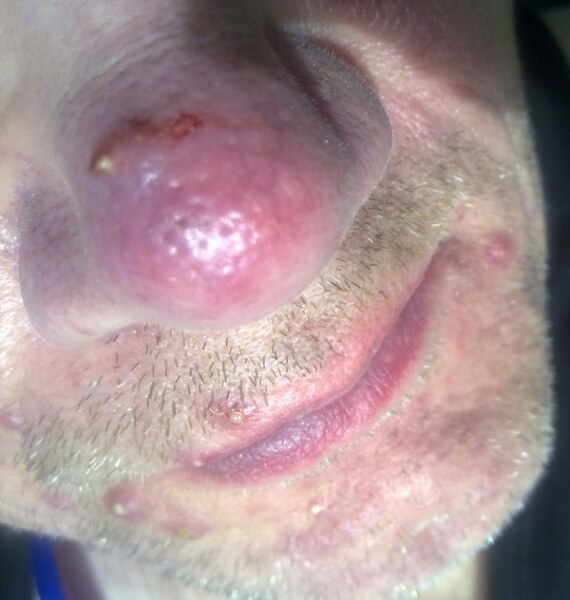

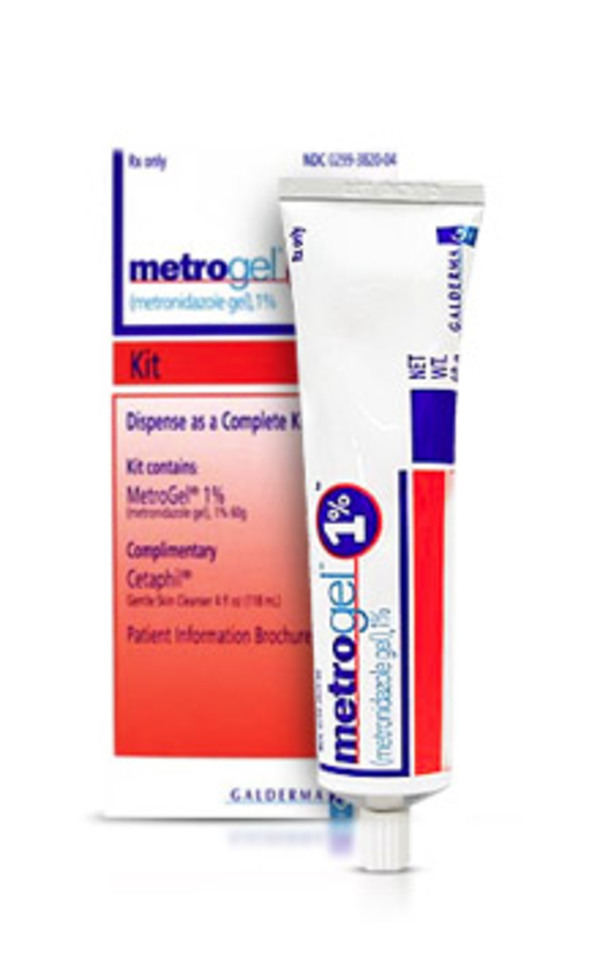
 Metrogel, a topical formulation of the antibacterial medication metronidazole, is a prescription drug that is used in the treatment of a skin disorder known as rosacea.
A relatively common form of adult acne, rosacea affects more than 16 million Americans, according to the National Rosacea Society. There are four main forms: Erythematotelangiectatic rosacea, characterized by facial redness; papulopustular rosacea, marked by bumps and pimples; phymatous rosacea, an enlargement of the nose; and ocular rosacea, marked by watery and/or bloodshot eyes. While a single form of rosacea may occur, many patients experience two or more forms at the same time.
Rosacea Has No Cure
There is no cure for rosacea. The best that can be hoped for with this skin disorder is control of its embarrassing symptoms, and Metrogel is one of the first lines of defense in controlling rosacea. Its antibiotic properties help to reduce the disorder’s inflammatory symptoms, which include redness, swelling, and pustules.
Patients should apply Metrogel to the skin only, taking great care to avoid any contact with the eyes. Both before and after applying the topical medication, wash and dry your hands. First, wash and dry the area of skin to which Metrogel is to be applied. Wait for 15 minutes, and then apply a thin layer of the gel to the affected area. Do this once or twice daily. Women should wait five minutes before applying makeup.
Avoid Contact with Eyes
As previously noted, Metrogel can irritate the eyes, so avoid applying it too close to prevent such irritation. If a bit of medication should somehow come into contact with the eye, flush the area with large amounts of cool water.
To maximize the benefits of Metrogel in the treatment of rosacea’s blemishes and bumps, apply the medication at roughly the same time(s) daily. It usually takes about three weeks before any improvement is seen and up to nine weeks for full benefit. If, however, you’ve seen no improvement at all after three weeks, consult your doctor.

Side effects of Metrogel may include burning, dryness, headache, metallic taste, nausea, redness, and skin irritation. Many patients experience no side effects at all. But most such side effects will ease or disappear altogether with continued use. If they persist, consult your doctor.
Although extremely rare, serious allergic reactions can occur. They might include difficulty breathing, severe dizziness, rash, and itching/swelling, particularly of the face, tongue, or throat. Should you experience such a reaction, seek medical help immediately.
Advise Doctor of Allergies
If your doctor tells you that he plans to prescribe Metrogel, let him know immediately of any allergies you may have, particularly allergies to metronidazole or other nitroimidazole antibiotics such as tinidazole. Also tell him if you have suffered in the past from any blood disorders, also known as blood dyscrasias.
WebMD.com recommends that pregnant women use Metrogel only when clearly needed. And before using it, they should discuss the benefits and possible risks with their doctor. Likewise, women who are breastfeeding should use Metrogel only after they have first discussed the pros and cons of its use with their doctor. The active ingredient in Metrogel passes into breast milk.
Little Known about Rosacea
Despite its widespread nature, the public knows relatively little about rosacea. According to NRS, roughly 95 percent of those afflicted with the skin disorder admit they really knew little or nothing about its signs or symptoms prior to their diagnosis. The incidence of rosacea tends to be highest among fair-skinned individuals who tend to blush or flush easily. However, it can strike any segment of the population. While it is diagnosed most often in women, rosacea’s symptoms in men usually are more severe.
Sadly, medical science has yet to pinpoint the cause or causes of rosacea, but there have been a number of theories floated as to what triggers the skin disorder. One theory that has gained a wide array of supporters holds that rosacea develops because of some form of dysfunctioning in the innate immune system, your body’s first line of defense against infection. More specifically, this theory suggests that cathelicidins, antimicrobialmolecules that the immune system uses to defend the body from infection, may be the culprits. Research financed by NRS found that cathelicidins in some cases may also cause vascular effects such as flushing, as well as inflammatory bumps and pimples, all of which are associated with rosacea. That same research study found that cathelicidins are more abundant in patients with the skin disorder.
_600x.jpg)
Link to Neurovascular System?
Yet another popular theory as to the cause of rosacea suggests that the disorder is linked to the body’s neurovascular system. Studies have indicated that common rosacea triggers such as alcoholic beverages, changes in temperature, skin irritants, spicy food, and strong emotions may be linked to stimulation of the sensory nervous system. As additional evidence of possible neurovascular involvement, researchers point to a nervous system disorder called neurogenic inflammation, which duplicates many of the symptoms seen in rosacea.
Other possible causes of rosacea include vascular changes, genetics, and Demodex mites and microbes. These mites and microbes are “a natural part of the human microbiome — the ecological community of microorganisms that live within and on the body,” according to NRS. Two Demodex species commonly found on the human body are Demodex folliculorum, which lives in hair follicles, largely those on the face, and Demodex brevis, which thrives in the sebaceous glands of the skin. The theoretical link between these Demodex species and rosacea are built in part on findings that these microscopic creatures are found in greater numbers on individuals diagnosed with rosacea.
Ordering Metrogel Online
If your doctor has given you a prescription for Metrogel or you are interested in treating your rosacea symptoms with this topical medication, consider ordering it online from eDrugstore.md, a reliable online supplier of this and a wide array of other prescription medications.
If you have your own prescription, you can fax or scan and email it along with your order to eDrugstore. If you don’t have a prescription but have previously been diagnosed with rosacea, eDrugstore can arrange a complimentary online consultation with one of its licensed physicians. You’ll be asked to fill out a health questionnaire covering your medical history and listing any medications you are now taking. One of eDrugstore’s team doctors will review your questionnaire and prescribe the topical drug if he or she deems it appropriate.
eDrugstore belongs to the Secure Medical family of online drugstores and is based in Tempe, Arizona. It dispenses only FDA-approved drugs, all of which are sourced from licensed U.S. pharmacies.
If you’d like to read additional articles of interest to health consumers, check out our blog.

We specialize in providing our over 1,000,000 customers with relevant product and condition information created by our professional editorial staff which includes our team of medical writers, medical practitioners, and health educators. eDrugStore.com Staff on Facebook