

Take Back Control. Last Longer. Feel Confident.
Doctor-prescribed premature ejaculation treatments delivered discreetly to your door.
Physicians
Private
Delivery

Tadalafil PE 2.5mg
Low daily dose to improve control and confidence.
- Builds Lasting Control
- One Tablet Daily
- Boosts Confidence

Male Stamina Trainer
Drug-free device to build stamina and endurance.
- Drug-Free Training
- Build Endurance
- Reusable at Home

Vibroring
Vibrating ring that helps delay and enhance performance.
- Helps Delay Climax
- Enhances Sensation
- Easy & Reusable
If you’ve been quietly researching lidocaine spray vs dapoxetine for premature ejaculation (PE), you’re in good company. PE is the most common sexual complaint among men under 40, and most never bring it up at a doctor’s visit. So they end up comparing options alone, at midnight, on their phone.
Both treatments work. Both are backed by clinical trials. But they work in completely different ways, and the "better" one really depends on what you value more: speed and simplicity, or systemic control.
Here’s the honest breakdown, including the parts that don’t make it into the marketing.
How Each One Actually Works
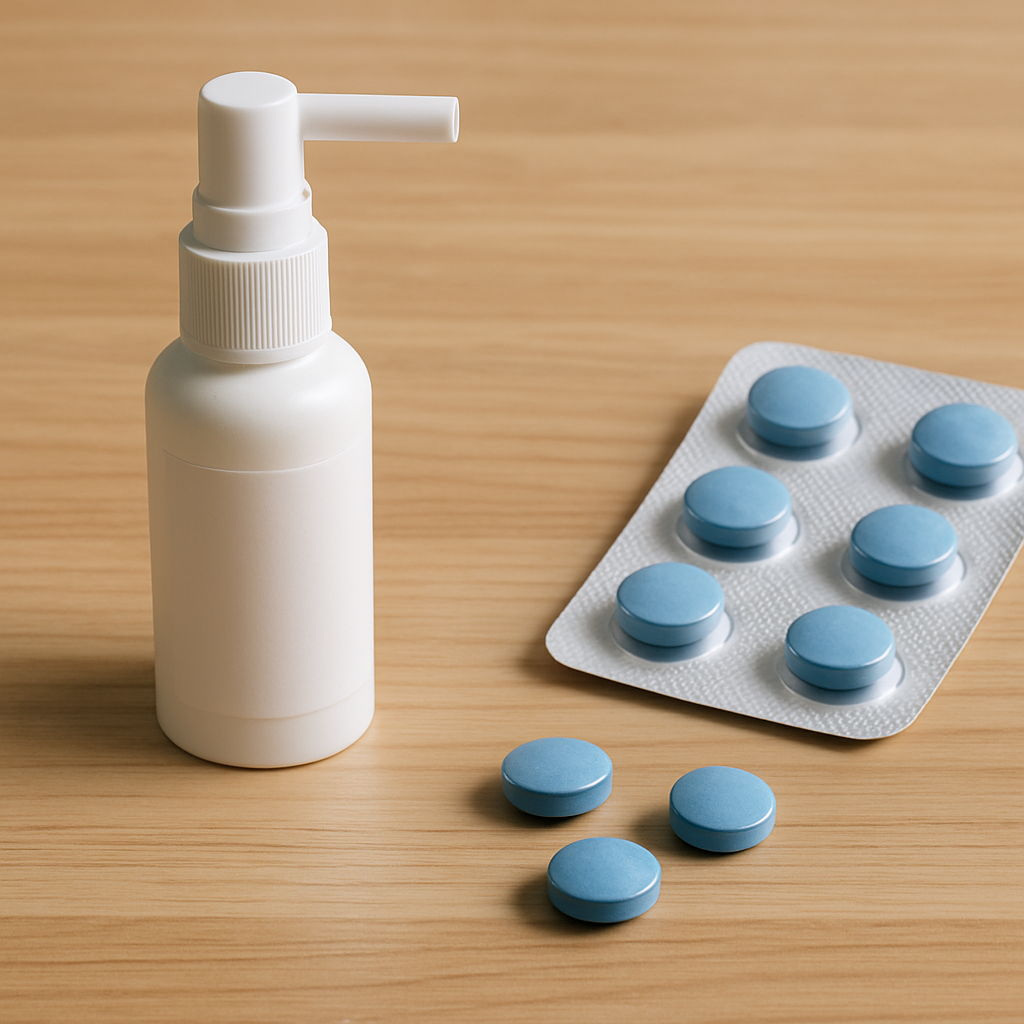
Lidocaine spray is a topical anesthetic. You spray it onto the glans roughly 10 to 15 minutes before sex, wipe off the excess, and the skin becomes slightly less sensitive. Less sensation, longer time to climax. That’s the entire mechanism.
Dapoxetine is a short-acting selective serotonin reuptake inhibitor (SSRI). You swallow it 1 to 3 hours before sex. It raises serotonin levels in the brain, which delays the ejaculatory reflex. The National Institutes of Health has published research showing dapoxetine roughly triples intravaginal ejaculatory latency time (IELT) in men with PE. Lidocaine sprays do something similar in randomized trials, typically extending IELT by three to six times baseline.
So on paper, the efficacy gap between lidocaine spray vs dapoxetine isn’t huge. The real difference is what each one does to the rest of your body, and to the experience itself.
Lidocaine Spray: The Practical Pros and Cons
What patients like about lidocaine spray is how local it stays. It numbs a small area of skin. It doesn’t touch your brain chemistry, your blood pressure, or your mood. For men who already take other medications, that’s a meaningful advantage.
The downsides are also local and predictable:
- Numbness that’s too strong, sometimes reducing pleasure for both partners
- Transfer to your partner if you don’t wipe properly, leaving them numb too
- Mild burning or irritation in a small percentage of users
- The 10-minute wait, which some couples find awkward
It’s also worth knowing that the FDA-approved lidocaine/prilocaine spray (Fortacin) and similar formulations have specifically been studied for PE. Over-the-counter "delay sprays" vary wildly in concentration and quality, so the brand matters. If you want the deeper dive on this, our breakdown of whether lidocaine spray actually works for premature ejaculation walks through the trial data in more detail.
Dapoxetine: What the Pill Does Differently
Dapoxetine is the first SSRI designed specifically for on-demand PE treatment. Unlike daily SSRIs (sertraline, paroxetine, fluoxetine), which take weeks to build up, dapoxetine is absorbed and cleared quickly. You take it only when you need it.
That’s the appeal. No daily pill. No numbing. No transfer to your partner. Your sensation stays intact, your reflex just slows down.
The tradeoff is that you’re affecting the whole body, so side effects can show up anywhere:
- Nausea (the most common, reported in roughly 11% of users in pooled trials)
- Dizziness, especially if you stand up quickly
- Headache
- Diarrhea
- Rare cases of fainting (syncope), which is why dapoxetine is contraindicated in men with certain heart conditions
Dapoxetine also interacts with a long list of other drugs, including MAOIs, thioridazine, lithium, tramadol, and other serotonergic agents. If you’re already on an antidepressant, dapoxetine usually isn’t the right choice. For a closer look at the SSRI side of this conversation, our comparison of dapoxetine vs sertraline for premature ejaculation covers when each makes more sense.
Lidocaine Spray vs Dapoxetine: Head-to-Head
A few small trials have compared them directly. A 2017 study in the International Journal of Impotence Research found both improved IELT and sexual satisfaction scores meaningfully, but lidocaine spray scored slightly better on partner sexual satisfaction, likely because there were fewer systemic side effects in the mix.
So when patients ask which works better, the honest answer is: they work about equally well at delaying ejaculation. Where they diverge is tolerability and convenience.
Quick comparison for lidocaine spray vs dapoxetine:
- Onset: Spray, 10 to 15 minutes. Dapoxetine, 1 to 3 hours.
- Mechanism: Spray numbs locally. Dapoxetine works on serotonin centrally.
- Side effects: Spray, mostly skin and partner numbness. Dapoxetine, mostly GI and lightheadedness.
- Drug interactions: Minimal for spray. Significant for dapoxetine.
- Cost: Spray is typically cheaper per use. Dapoxetine pricing varies.
You can compare current prices on dapoxetine and lidocaine spray at edrugstore.com if you want a sense of what each costs out of pocket before talking to your prescriber.
Which One Should You Try First?
What I tell patients depends on three things: other medications, partner preference, and how predictable your sexual timing tends to be.
If you’re already on an SSRI, an MAOI, or a serotonergic painkiller, lean toward the spray. If you have a heart condition or a history of fainting, the spray is also safer. If you want zero partner-side effects and you don’t mind a pill, dapoxetine is reasonable.
Many men actually use both. Spray during spontaneous encounters, dapoxetine when they know in advance. That’s a perfectly legitimate approach, and not one most clinicians will volunteer unless asked. For broader context on the condition itself, our complete guide to premature ejaculation covers behavioral techniques that pair well with either medication.
It’s also worth noting that dapoxetine is not FDA-approved in the United States, though it’s licensed in much of Europe and Asia. According to Mayo Clinic, US clinicians most often prescribe off-label daily SSRIs like sertraline or paroxetine instead. That’s a meaningful practical difference if you’re shopping in the US market.
The Bottom Line
For most men weighing lidocaine spray vs dapoxetine, the spray is the simpler starting point: cheaper, faster, fewer interactions, and the side effects stay where you can see them. Dapoxetine is the better fit when topical numbing isn’t acceptable or when you want a pill-based routine, and you’re not on conflicting medications.
Talk to your pharmacist or prescriber about your other medications and any heart history before choosing. PE is treatable. You don’t have to keep guessing.
This article is for informational purposes only and is not medical advice. Always consult a licensed pharmacist or physician before starting, stopping, or changing any medication.
References
- National Institutes of Health, Dapoxetine for premature ejaculation, pooled trial data on IELT improvement and safety profile.
- FDA Drug Approval Database, regulatory status of lidocaine-based topical PE treatments.
- Mayo Clinic, Premature Ejaculation Diagnosis and Treatment, overview of current US treatment options including off-label SSRIs.

Dr Steven Schlosser
Dr. Schlosser graduated from Lafayette College Phi Beta Kappa and attended Georgetown Medical School. He had 4 years of medical residency training at Tufts University in Boston in both Gynecology and Internal Medicine. He has had a spotless medical career for the past 40+ years and is Board Certified. Learn More