


Highlights
- Hair plays an important role in people’s feelings of self-worth.
- Concerns about hair loss can affect the ability to successfully interact socially and cause negative emotional and health effects.
- Pursuing treatment for hair loss provides real social and psychological benefits.
- Topical treatments and oral medications have both been proven to regrow hair.
What Role Does Hair Play in Self-Image?
Across the world, hair is understood as an important symbol of youth, health and vitality. Our gaze is automatically centered on a person’s head when we meet them, and their hair is one of the first things we notice. Hair is both how we express our own identity and how other people view us.
Hair, for both men and women, is a key element of image and self-image. The quality, quantity and appearance of hair can affect individuals’ perceptions of their own attractiveness and their ability to function in social situations.
A study of men in Europe, for example, found that over 70% of men found hair to be an important feature of their image, and that for men, losing hair meant losing their physical attractiveness.
For women, research shows that hair loss causes high levels of anxiety and depression. While women are often forgotten in the treatment of hair loss, 40% of women have visible hair loss by the time that they are 40, creating devastating damage to their self esteem.
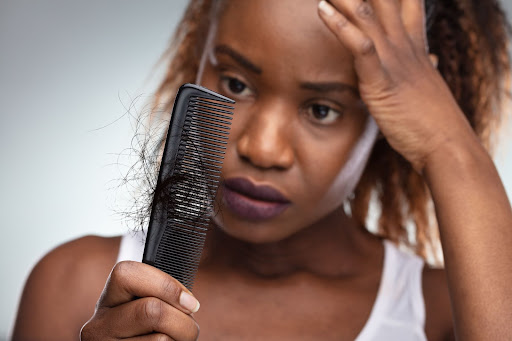
How Hair Loss Affects Quality of Life
Because hair is such an important element of identity and self, it should not be surprising that hair loss affects people’s quality of life in dramatic ways. Recent research shows that these life factors were significantly affected by hair loss.
Sexual experiences
For both men and women, hair is seen as a sexual symbol. Hair communicates virility, seduction, sexuality, and fertility. It is, for some, a symbol and element of sexual attraction. When hair is lost, the person with thinning hair is seen as less sexually attractive. Potential partners also see them as less sexually available and attractive.
Anxiety and stress
When asked, men and women of a variety of ages suffered anxiety related to hair loss. The effects of hair loss on all patients included emotional turmoil, a worse ability to function daily, and an increased sense of stigmatization, or social disapproval.
Negative Changes in Self Image
Hair loss can dramatically affect a person’s self-image, though the effect is slightly different for men and women.
- For men, these changes include a feeling of “of aging and declining vigor and charm” and can reach the level of body dysmorphic disorder.
- For women, these changes can include “sense of decreased physical attractiveness, sexual loss, masculinization, and being perceived as ugly by the opposite sex.”
How People Cope With Hair Loss
There are three main ways that people seek to cope with their hair loss: avoidance, acceptance, and compensation.
- Avoidance. Individuals opt out of, or avoid doing things that might cause more anxiety. For example, a person with hair loss who is afraid of seeming less physically attractive may avoid situations where they will be seen by potential sexual or romantic partners. They may avoid parties, outings, or other social situations.
- Compensation. People often overachieve in one area to make up for a perceived failing in another area. An example of this might be a person feeling like they need to wear very expensive clothing or exercise to excess to make up for their hair loss.
- Acceptance. A person recognizes the reality of the situation (both the hair loss and the negative effects it is having on them), which allows them to take positive action to remedy the problem.
What You Can Do About Hair Loss
Today, there are medical treatments that can help both men and women regrow their hair. This can help you regain your confidence and reduce the anxiety created by your hair loss.
While there are topical solutions available, many people don’t care for the need to apply a foam or solution to their scalp twice a day, a process that can be messy. For these people, the oral medication Propecia (also known by its generic name, finasteride) is a better solution.
A one-milligram per day dose of finasteride has been scientifically proven to regrow hair. For many people, this is an easy way to address hair loss.
For people with hair loss who have reached the state of “acceptance,” the good news is that there are steps that they can take to grow hair back and feel better about themselves.
Are You Ready to Regrow Your Hair?
Worried about the need for a doctor’s prescription for Propecia? Don’t be! We have operators standing by seven days a week who can set you up with a free consultation and prescription.
Our U.S. licensed physicians will visit with you about your needs and provide you with the best advice, including a prescription for Propecia/finasteride if that’s what’s best for you. Then, you’ll be free to take advantage of our free home delivery of your new medication.
Hair loss can cause significant damage to your quality of life, and you don’t have to live with that. Check out our hair restoration page, then call us at 1-800-467-5146 today to find out how we can help you regain your self-esteem and look and feel better. Virtual health visits and shipping are always free.

Elizabeth Nichols is an experienced and flexible author with extensive experience in both popular media and academic publishing. She specializes in health, medical and travel writing.