
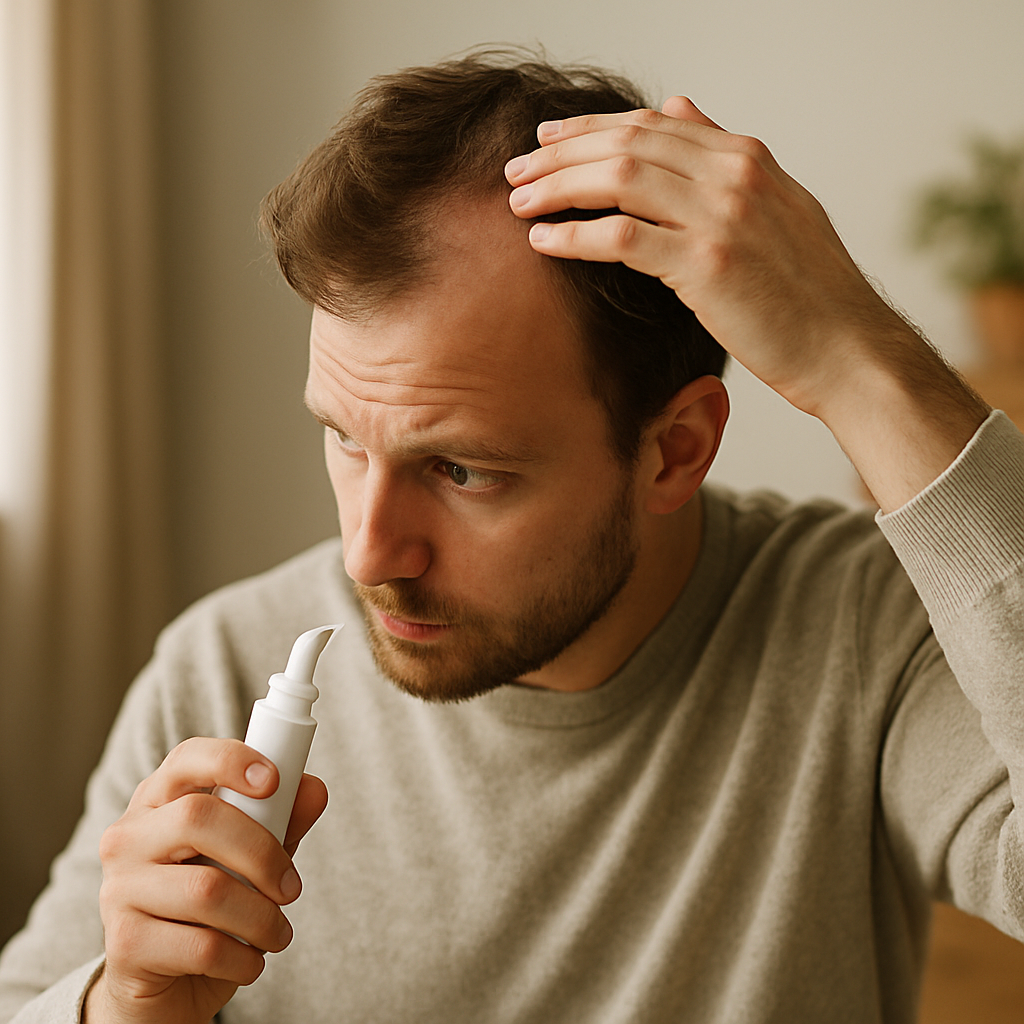

Real Hair Regrowth. Proven. Prescribed. Private.
Doctor-prescribed hair loss treatments delivered discreetly to your door.
Physicians
Private
Delivery

Finasteride
Blocks DHT to stop hair loss at the source.
- Clinically Proven
- One Tablet Daily
- Slows Loss, Spurs Regrowth

Minoxidil Tablets
Boosts follicle blood flow for thicker growth.
- Stimulates Dormant Follicles
- Convenient Oral Dose
- Thicker, Fuller Hair

Men's Hair TriGro
Compounded triple-action formula for max regrowth.
- 3 Actives in One Dose
- Targets Loss Multiple Ways
- Physician-Formulated
If you’ve been researching hair loss treatments, topical finasteride has probably shown up in your feed as the "safer" alternative to the pill. The pitch is compelling: same drug, same mechanism, applied to your scalp instead of swallowed, with fewer of the sexual side effects that scare people off oral finasteride.
But is that actually true? The honest answer is more nuanced than the marketing suggests.
Both forms work by blocking the enzyme that converts testosterone into DHT, the hormone that shrinks hair follicles in androgenetic alopecia. What differs is how much drug ends up in your bloodstream, how much reaches the scalp, and how your body reacts to each. That difference matters a lot when you’re deciding what to put on (or in) your body every day for the next several years.
How Oral and Topical Finasteride Actually Work
Oral finasteride is FDA-approved for male pattern hair loss at 1 mg daily under the brand name Propecia. It lowers scalp DHT by around 60 to 70 percent, but it also lowers serum DHT by a similar amount, which is where most of the side effect concern comes from.
Topical finasteride is not FDA-approved as a standalone product in the United States. It’s typically prescribed through compounding pharmacies as a solution or gel, often mixed with minoxidil. The idea is simple: put the drug where you need it (the scalp) and keep systemic exposure low.
A 2022 study published in JAMA Dermatology compared topical finasteride 0.25% spray to oral 1 mg tablets over 24 weeks. Both improved hair count meaningfully. Topical reduced scalp DHT similarly to oral, but serum DHT dropped only about a third as much with the topical form.
That’s the pitch, in one sentence: comparable scalp effect, less systemic exposure.
Efficacy: Does Topical Finasteride Actually Regrow Hair?
Short answer, yes. Not quite as much data behind it as the oral form, but the studies we have are encouraging.
In the JAMA Dermatology trial, men on topical finasteride gained about 20 more hairs per square centimeter over placebo. Oral users gained slightly more, though the difference was not statistically dramatic. Real-world dermatology practice tends to see topical work best in men with early-to-moderate thinning at the crown or hairline.
What topical finasteride will not do:
- Regrow hair on completely bald patches with no follicles left
- Work if you stop using it (any gains reverse within 6 to 12 months)
- Deliver overnight results. Give it 4 to 6 months minimum before judging
For a deeper look at how finasteride stacks up against the other big name in hair loss, our comparison of finasteride vs minoxidil breaks down which men respond best to each.
Side Effects: Where the Two Forms Really Split
This is where most patients get stuck. The Post-Finasteride Syndrome discussion has made a lot of men understandably cautious about oral treatment.
Oral finasteride side effects
In clinical trials, about 2 to 4 percent of men report:
- Decreased libido
- Erectile difficulties
- Reduced ejaculate volume
- Occasional breast tenderness or gynecomastia
- Mood changes in a smaller subset
Most side effects resolve when the drug is stopped. A minority of men report persistent symptoms, and the mechanism there is still debated in the literature.
Topical finasteride side effects
Systemic side effects appear less frequent with topical, but they’re not zero. The drug does absorb through the scalp, especially if you apply too much or use it right after microneedling. Reported issues include:
- Scalp irritation, redness, or itching at the application site
- Mild sexual side effects in a smaller percentage of users
- Contact transfer risk to partners, particularly pregnant women (this one matters, because finasteride can cause birth defects)
The absorption question is the honest catch. Topical finasteride is not a magic loophole. If you use enough of it, or apply it to broken skin, your serum DHT will drop and you can get the same side effects as the pill. Just usually at a lower rate.
Cost, Access, and Practical Considerations
Oral finasteride is dirt cheap as a generic. A 90-day supply often runs $15 to $30 without insurance. You can compare prices on generic finasteride at edrugstore.com if you want to see what’s realistic for your situation.
Topical finasteride is pricier because it comes from compounding pharmacies. Expect $40 to $80 a month, sometimes more if it’s combined with minoxidil. Insurance rarely covers it since it’s not an FDA-approved formulation.
Convenience cuts both ways. A pill takes two seconds. A topical takes a minute or two of application, has to dry, and can leave your scalp feeling tacky. Some men prefer one, some the other.
If you’re the type who’s already juggling other daily medications, adding one more topical to your morning routine might be the deciding factor. On the flip side, if you’re weighing systemic drug exposure carefully (the same calculus that comes up with something like choosing between vaginal estrogen and oral HRT for menopause), topical finasteride follows the same logic: local delivery, lower systemic load.
Who Should Choose Which?
There’s no universal winner. What I’d suggest thinking about:
Oral finasteride tends to fit men who want maximum efficacy, have no history of sexual dysfunction or mood issues, prefer simplicity, and want the cheapest option with the strongest evidence base.
Topical finasteride tends to fit men who tried oral and got side effects, men worried about systemic hormonal impact, men trying to conceive (though data here is limited and you should talk to your doctor), or men who simply prefer avoiding daily oral medication.
Some dermatologists start patients on topical first, then only move to oral if the topical isn’t cutting it. Others reverse that. Both approaches are reasonable.
The Bottom Line on Topical Finasteride vs Oral
Both forms work. Oral has more evidence, lower cost, and slightly better efficacy on average. Topical finasteride offers a meaningful reduction in systemic side effects for most men, at higher cost and with less long-term safety data. Neither is risk-free, and neither works forever once you stop.
Talk to a dermatologist or your prescriber about which fits your hair loss pattern, medical history, and tolerance for side effects. If cost is a concern, ask specifically about generic oral finasteride first. If side effects are the concern, ask about a compounded topical finasteride formulation and start at the lowest effective concentration.
This article is for informational purposes only and is not medical advice. Always consult a licensed pharmacist or physician before starting, stopping, or changing any medication.
References
- FDA Propecia (finasteride) prescribing information, Official labeling for oral finasteride including approved indications and safety data.
- JAMA Dermatology 2022 topical vs oral finasteride trial, Head-to-head comparison of efficacy and systemic DHT effects.
- NIH review on Post-Finasteride Syndrome, Discussion of persistent side effects reported after finasteride use.

Dr Steven Schlosser
Dr. Schlosser graduated from Lafayette College Phi Beta Kappa and attended Georgetown Medical School. He had 4 years of medical residency training at Tufts University in Boston in both Gynecology and Internal Medicine. He has had a spotless medical career for the past 40+ years and is Board Certified. Learn More