


Effective ED Treatment. Private. Convenient. Trusted.
Doctor-prescribed ED medication delivered discreetly to your door.
Physicians
Private
Delivery

ED3 Max Dissolvable ED Pills
Long-lasting results up to 36 hours.
- Up to 36 Hour Window
- Improved Confidence
- Works When You Need It

Sildenafil 25mg
Proven effective treatment.
- Starts Working in 30–60 Min
- Effective, As Needed
- Trusted & Reliable
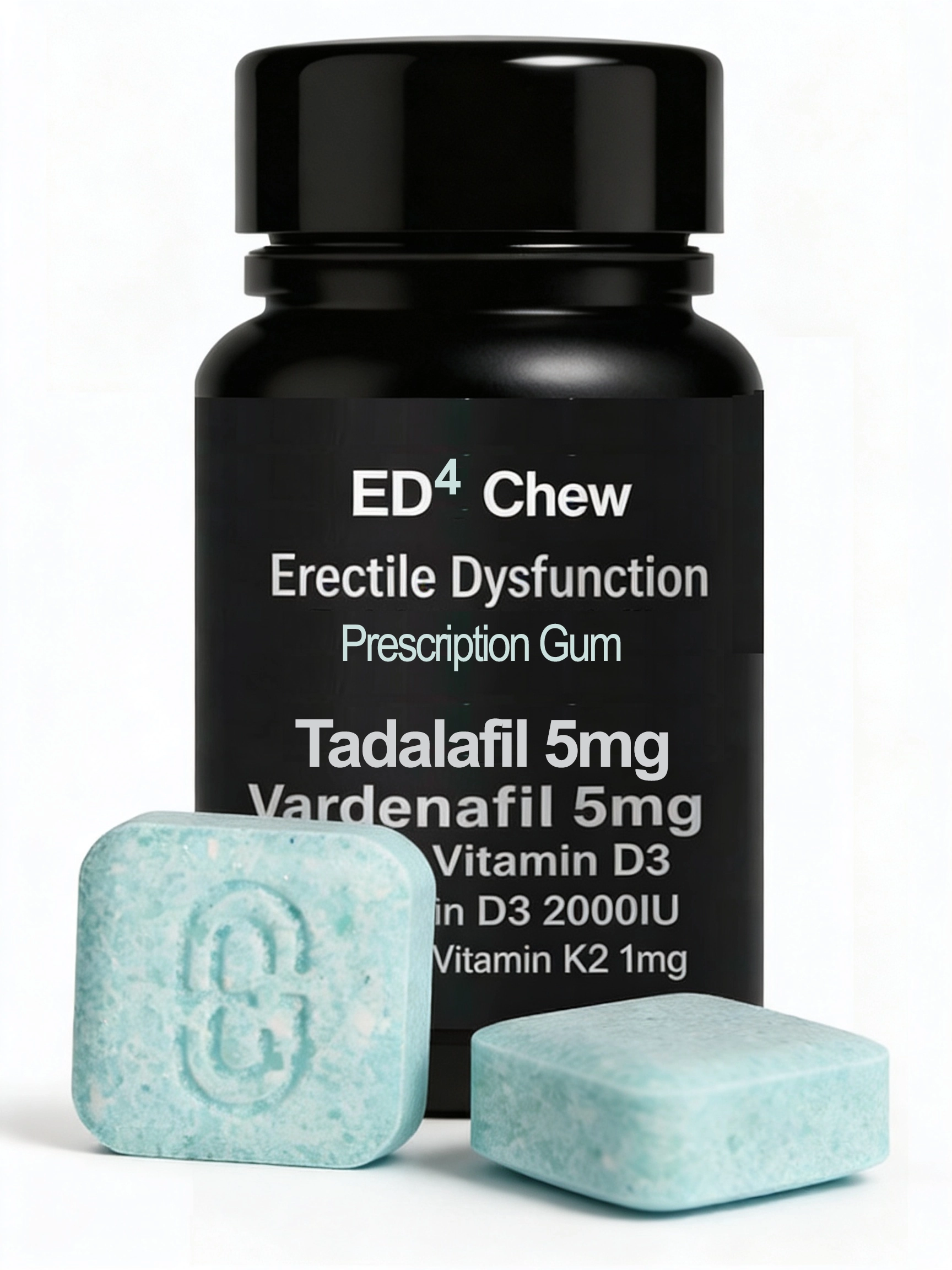
ED4 Chew Gum
Low daily dose for continuous readiness.
- Taken Once Daily
- Continuous Readiness
- Improves Confidence
Uprima is an erectile dysfunction (ED) drug available in Europe. It works by altering brain levels of dopamine.
Seemingly poised to compete with Viagra as an alternative treatment for erectile dysfunction on the U.S. market, Uprima was abruptly withdrawn from FDA consideration by its manufacturer in July 2000. According to a contemporaneous account at WebMD.com, clinical testing of the drug revealed both promising potential benefits and problematic side effects. It was the latter that prompted the drug’s manufacturer to suspend its attempts to win FDA approval for the marketing of the drug in America.
Unlike Viagra and the other PDE5 inhibitors that have followed the little blue pill to market, Uprima works on brain chemistry rather than blood flow to support erectile function. Apomorphine hydrochloride, the active ingredient in Uprima, stimulates the brain’s hypothalamus to produce more dopamine, a neurotransmitter that helps to regulate sexual desire and sensation. Because of its effects on brain chemistry, the drug has also been suggested as a possible treatment for female sexual dysfunction.
Clinical Trials Reveal Pros and Cons
As recounted by the article at WebMD.com, two men in particular exemplify the differing results experienced by men participating in the clinical trials. One, identified only as John Doe, had already been prescribed Viagra for his erection problems, but Pfizer’s groundbreaking drug simply didn’t work for him. His doctor recommended he join a clinical trial for Uprima. The results were extremely positive for John Doe, who said goodbye to erection problems after he started taking the new drug.
Another participant in the Uprima clinical trials had an altogether different experience. Although Robert Carelli, a 69-year-old retired teacher from California, found the sexual effects of the medication satisfactory, at least at first, it was not long before he began suffering from unpleasant side effects. He said Uprima made him feel mildly nauseous at least 10 percent of the time but extremely nauseated on at least a couple of occasions, a condition that he noted was hardly conducive to love-making. He discontinued Uprima and switched to Viagra.
Some Men Faint After Taking Drug
And Carelli’s experience was hardly the worst of those participating in the clinical trials for Uprima. According to the WebMD account, one out of every 30 men in the trials experienced either dangerously low blood pressure or actually fainted after taking the manufacturer’s recommended starting dose of the drug.
Ironically, just before Uprima’s manufacturer withdrew its new drug application from FDA consideration, an advisory panel for the regulatory agency recommended the drug’s approval by a vote of 9 to 3. At the time, Uprima’s manufacturer vowed to iron out the problems and resubmit the application in short order. That never happened.
Higher Dose Linked to Most Side Effects
At the time that Uprima was first proposed for sale in the United States, it had been tested in clinical trials at doses of 2 and 4 milligrams. Men taking the lower dose reported few, if any, serious side effects. Extreme nausea, hypotension, and occasional fainting were reported among some of the men taking the higher dose. However, the lower dose of the drug was not that effective for the majority of men in clinical trials.
Uprima has been approved in some European markets and is available for sale in certain countries of the European Union and the United Kingdom. It is sold in those countries in tablets of 2 and 3 milligrams each. According to a September 2017 report in WebMD.com, clinical trials are being conducted on a nasal spray form of the drug that is said to cause fewer cases of nausea.
If you’ve found this article interesting and would like to see more information of this kind, follow our blog.

We specialize in providing our over 1,000,000 customers with relevant product and condition information created by our professional editorial staff which includes our team of medical writers, medical practitioners, and health educators. eDrugStore.com Staff on Facebook