

Effective ED Treatment. Private. Convenient. Trusted.
Doctor-prescribed ED medication delivered discreetly to your door.
Physicians
Private
Delivery

ED3 Max Dissolvable ED Pills
Long-lasting results up to 36 hours.
- Up to 36 Hour Window
- Improved Confidence
- Works When You Need It

Sildenafil 25mg
Proven effective treatment.
- Starts Working in 30–60 Min
- Effective, As Needed
- Trusted & Reliable
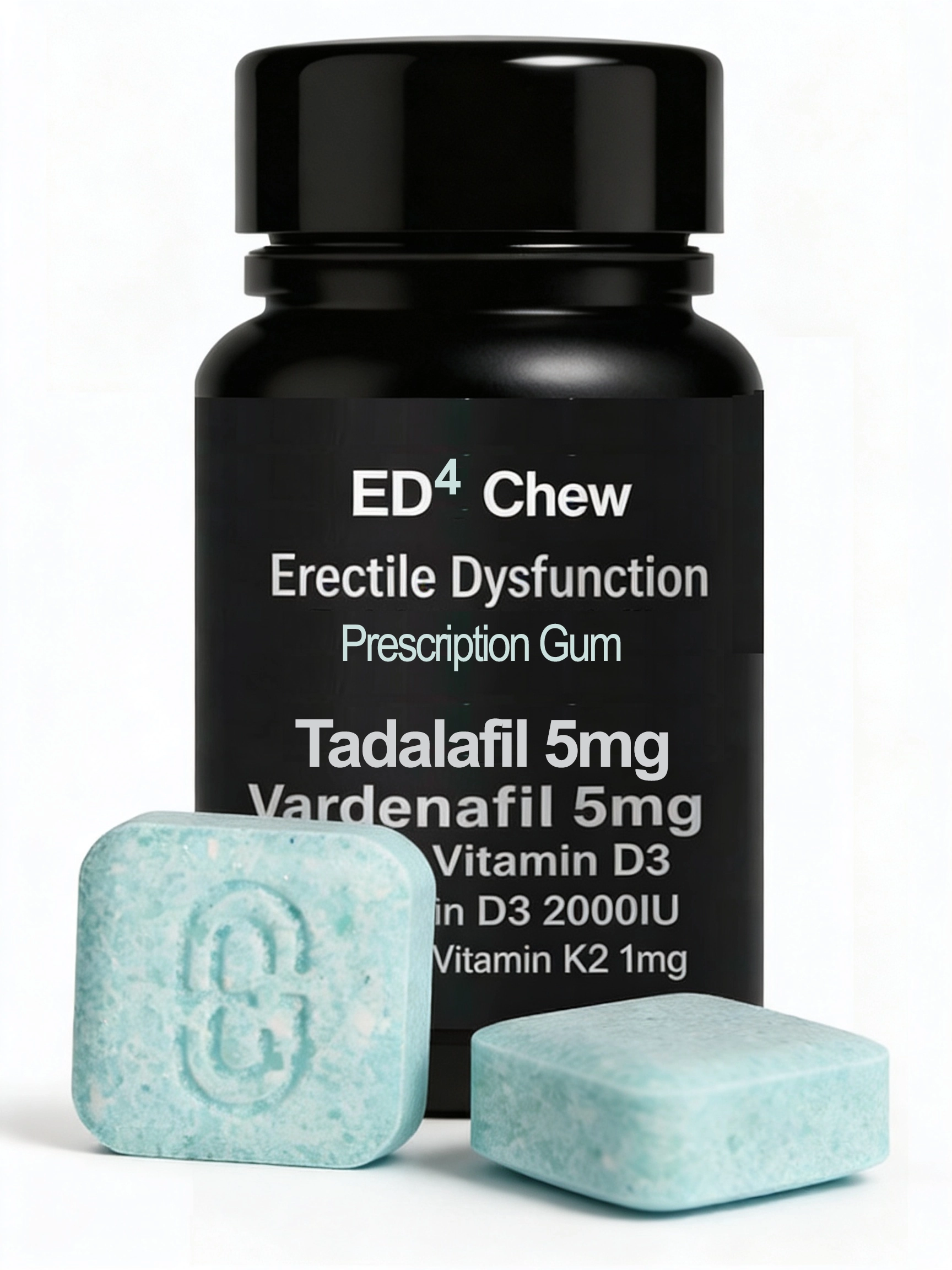
ED4 Chew Gum
Low daily dose for continuous readiness.
- Taken Once Daily
- Continuous Readiness
- Improves Confidence

TV commercials for Viagra, the little blue pill from Pfizer that transformed the treatment of erectile dysfunction worldwide, will no longer be a mainstay of NFL TV broadcasts when the new football season officially kicks off on September 7, 2017. In fact, Pfizer began cutting back sharply on its TV advertising budget in May 2017.
Pfizer’s decision to cut back on TV advertising will hit the NFL pretty hard, in light of the fact that Viagra commercials raked in nearly $31 million for the league during the 2016-2017 season. Further reducing the NFL’s TV budget is a sharp cutback in advertising spots booked for Cialis, Eli Lilly and Company’s popular entry in the ED drug market.
Generic Competition Coming Soon
In a recent article posted at AdAge.com, the website of Advertising Age magazine, writer Anthony Crupi suggests that Pfizer’s virtual shutdown of its Viagra ad campaign is tied to the imminent arrival of generic competition. Under a licensing agreement Pfizer struck with generics giant Teva Pharmaceuticals, the latter will begin to sell its generic version of Viagra in the United States on December 11, 2017.
Although Pfizer will retain its U.S. patent on Viagra until April 2020, its revenues from U.S. sales of the little blue pill are sure to plummet when generic competition begins. And those revenues will be further eroded as additional generic drugmakers begin to market sildenafil citrate, the active ingredient in Viagra.
Cialis Patent Expiration Debated
Cialis also faces the possibility of generic competition fairly soon, depending on the outcome of ongoing court battles with generic drugmakers that contend Lilly’s U.S. patent on Cialis expires in late 2017. Lilly argues just as vehemently that it should continue to have market exclusivity until 2020 when four other U.S. patents on the drug expire.
A similar legal maneuver worked for Pfizer, which got a court to recognize in late 2013 a later-expiring patent as the one governing the drugmaker’s market exclusivity for Viagra. However, it compromised by negotiating the licensing agreement with Teva that will allow the latter to begin selling its generic version of the drug in December 2017. However, because Pfizer’s patent on the drug is valid until April 2020, Teva will be obligated to pay Pfizer a royalty for the right to begin marketing its generic version early.

Approved by the U.S. Food and Drug Administration in March 1998, Viagra has produced almost two decades of hefty revenues for Pfizer.
Cialis didn’t make its debut until 2003, but in the years since it has been neck and neck with Viagra in contention for the title of best-selling ED drug.
Cialis Developed in the ‘90s
Cialis was initially developed during the 1990s under a collaborative agreement between Glaxo Wellcome (now GlaxoSmithKline) and Icos Corporation. The drug’s active ingredient, tadalafil, was at first researched for its potential in the treatment of ailments other than ED. However, Icos researchers later focused on the drug’s possible use as a treatment for ED. Not long after Glaxo withdrew from its partnership with Icos in 1996, Lilly formed a joint venture with Icos that was called Lilly Icos LLC. In 2007, a few years after Cialis’s debut, Lilly bought Icos Corporation, giving it full rights to the popular ED drug.
The original version of Cialis introduced in 2003 differed from Viagra and Levitra, which was approved only months earlier, in that Cialis’s effects were much longer lasting. While the duration of action for Viagra and Levitra ranged from four to six hours, Cialis remained effective for up to 36 hours, earning it the nickname of “the weekend drug.”
Generics Will Affect All Branded ED Drugs
Now with a generic version of Viagra due to hit the market late in 2017 and the future of Cialis’s market exclusivity up in the air, the two pharmaceutical giants behind these very successful ED drugs are cutting back their marketing campaigns. It can be argued, of course, that their numerous TV commercials in recent years have imprinted the brand names — and effects — of these drugs on the brains of most adult Americans.
Even if Lilly prevails in its court fights to extend its Cialis market exclusivity until 2020, the arrival of generic Viagra will erode Cialis’s sales as well, as more thrifty-minded men opt for the most reasonable ED drug available.
Tellingly, neither Pfizer nor Lilly participated in the upfront bazaar for commercial TV spots during the upcoming NFL season. While NFL executives are far from pushing the panic button, their absence, coupled with lower demand for TV time from auto manufacturers and motion picture studios, cast a bit of a pall over the outlook for the league’s coming fall season.
Advertisers Biding Their Time
It’s entirely possible that potential advertisers, troubled by some of the uncertainties facing the nation’s economy, are biding their time before committing to TV marketing budgets for their products. In any case, canny marketing managers will eventually snap up whatever commercial time slots remain for the very popular broadcast of NFL games.
The winding down of the marketing campaigns for Viagra and Cialis will undoubtedly send NFL executives looking for other sponsors to take their place. However, the resulting drop in ED medication advertising during daytime programming hours will be welcomed by parents, who may feel uncomfortable trying to answer some of the questions children might raise after seeing those ads.
Pediatricians Will Be Happy
Among those cheering the decline in ED drug commercials will be members of the American Academy of Pediatricians, which way back in September 2010 strongly recommended that such ads be shown on TV only after 10 p.m. In that same statement, the AAP also urged a reduction in the use of alcohol and tobacco in both motion pictures and TV shows.
Interviewed by NBCNews.com at the time of the AAP statement, Vic Strasburger, M.D., a professor of pediatrics at the University of New Mexico School of Medicine, said the underlying message in the ED ads is confusing to children. “It seems like everybody is having sex and there’s no risk to it and that you should enhance it and be ready for it whenever possible,” he told NBCNews.com. “But then what do you do? There’s no talk about birth control.”
Little Pitchers Have Big Ears
NBCNews.com also talked to Michael Rich, M.D., a professor of pediatrics at Harvard Medical School and also director of the Center on Media and Children’s Health at the Children’s Hospital Boston. He said it is clear that children are hearing and absorbing the ED message even though their understanding of it may be questionable.
In his role at Children’s Hospital Boston, Dr. Rich has written extensively about the conundrum posed by these ads and has often been called upon to answer parents’ questions about the impact the commercials are having on their kids. One troubled mom asked his advice about how she could deal with her 9-year-old “singing the Viagra jingle on the playground as if it was the fight song for Yale.” The doctor said he had similar reservations about all the beer ads aired during football games, pointing out that “this is telling the kids that the norm is beer with football.”
Could Cost NFL $50 Million or More

AdAge.com estimates that Cialis commercials brought in roughly $22 million for the NFL during last season, which means that the loss of these two sponsors will cost the league a bit more than $50 million. Hopefully, other sponsors will emerge to fill the gap in NFL revenues.
Meanwhile, men with symptoms of erectile dysfunction will soon have new options as generic substitutes for these branded ED drugs are introduced. For those who need help now, armed with a doctor’s prescription, these drugs are available from the corner pharmacy or they can be ordered from a trustworthy online supplier, such as eDrugstore.com.
Based in Tempe, Arizona, eDrugstore is a member of the Secure Medical family of online drugstores and sells only FDA-approved drugs, all of which are sourced from licensed U.S. pharmacies. If you already have a doctor’s prescription, you can fax it or scan and email it to eDrugstore along with your order. If you don’t yet have a prescription, eDrugstore can arrange a complimentary online consultation with one of its team of licensed U.S. physicians who can authorize a prescription if your symptoms and medical history deem it appropriate. To learn more about the medications available and perhaps place an order, click here to access eDrugstore’s Male Impotence page.

We specialize in providing our over 1,000,000 customers with relevant product and condition information created by our professional editorial staff which includes our team of medical writers, medical practitioners, and health educators. eDrugStore.com Staff on Facebook