

Effective ED Treatment. Private. Convenient. Trusted.
Doctor-prescribed ED medication delivered discreetly to your door.
Physicians
Private
Delivery

ED3 Max Dissolvable ED Pills
Long-lasting results up to 36 hours.
- Up to 36 Hour Window
- Improved Confidence
- Works When You Need It

Sildenafil 25mg
Proven effective treatment.
- Starts Working in 30–60 Min
- Effective, As Needed
- Trusted & Reliable
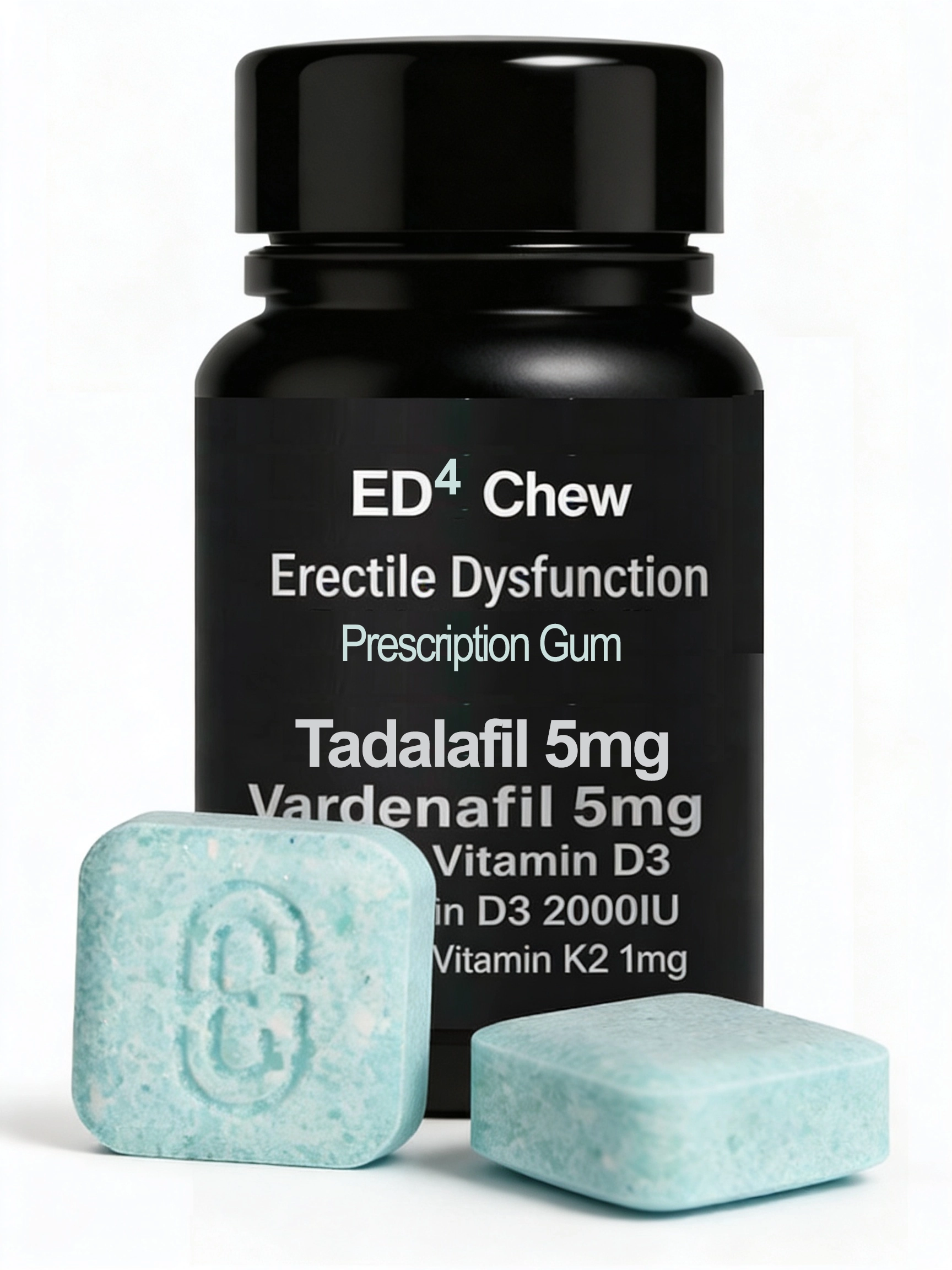
ED4 Chew Gum
Low daily dose for continuous readiness.
- Taken Once Daily
- Continuous Readiness
- Improves Confidence

In recent years there has been a great deal of talk about ¨female Viagra,¨ sometimes referred to as ¨pink Viagra¨ or the ¨little pink pill.¨ So far no such drug is available to women, and it remains uncertain whether that will change anytime soon.
The most recent hope for change comes in the form of an experimental drug called flibanserin. Developed in the early 2000s by the German pharmaceutical giant Boehringer Ingelheim, the drug is designed to help relieve the symptoms of hypoactive sexual desire disorder, or HSDD, the most common manifestation of female sexual dysfunction.
Shortly after the U.S. Food and Drug Administration denied the German drugmaker’s petition for approval of flibanserin in the spring of 2010, Boehringer Ingelheim decided to abandon the drug and sold its patent to North Carolina-based Sprout Pharmaceuticals.
Sprout Files Petition
After conducting further testing of the drug and tweaking its formulation as studies indicated, Sprout in June 2013 filed its own petition seeking FDA approval to market flibanserin as a treatment for HSDD.
Once again the FDA balked, although in issuing its late 2013 ruling on Sprout’s petition the agency included some guidelines that might eventually lead to the drug’s approval if Sprout opts to follow them.
As convinced as ever of flibanserin’s significance as a weapon in the fight against female sexual dysfunction, Sprout is soldiering on, following suggestions from the FDA’s advisory panel, and hopes to resubmit its petition for the drug in early 2015.

In issuing their negative rulings on flibanserin petitions in both 2010 and 2013, the FDA advisory panels generally found that the benefits of the drug were somewhat outweighed by its negative effects. In issuing guidelines for a possible resubmission of the flibanserin petition, the 2013 panel’s decision recommended two additional clinical studies.
The first of the recommended studies would look at whether the drug impaired the ability of healthy subjects to drive after taking it. A second proposed study would explore the drug’s interference — if any — with the body’s other biochemical pathways.
FDA’s Ruling Sexist?
Although Sprout has made clear its intention to continue the quest for FDA approval of flibanserin, Cindy Whitehead, its president and chief operating officer, has implied that sexism played a role in the drug regulatory agency’s previous decisions on the drug.
In an interview with VICE columnist Sophie Saint Thomas, Whitehead pointed out that roughly 10 percent of women suffer from HSDD, ¨and to this day they don’t have a single medical treatment.¨ She went on to argue that sexual dysfunction is more common in women than in men and takes on a variety of different forms. ¨It can be arousal, it can be orgasm, or it can be pain disorders. By far the most common sexual dysfunction in women is low sexual desire. . . . ¨
Also taking issue with FDA’s stand on flibanserin is California-based obstetrician and gynecologist Suzanne Gilberg-Lenz, M.D., who told VICE that in her view the agency’s decision is ¨completely sexist. Women are sexual, and not just sexual objects, but sexual in their own right. It scares many people.”
Puzzled by FDA’s Ruling
Dr. Gilberg-Lenz went on to say that she was at a loss to understand the regulatory agency’s rationale for rejecting flibanserin. ¨There’s like no major side effects that I’m seeing. So what is the issue? I don’t get it.¨
Further complicating Sprout’s quest to win FDA approval for flibanserin was a change made in the fifth edition of the ¨Diagnostic and Statistical Manual of Mental Disorders,¨ known more popularly as DSM-5. HSDD was dropped from the American Psychiatric Association’s 2013 update of the manual that purports to list all psychological disorders.
Although the excision of HSDD from the psychiatric manual would seem to make flibanserin a drug in search of a disease, flibanserin backers have not lost hope. In its place, the editors of DSM-5 put ¨female sexual interest/arousal disorder,¨ which most proponents of flibanserin believe is a condition that the drug at least partially addresses.
Terms Are Misleading
When used to describe flibanserin, the term ¨female Viagra¨ is extremely misleading because of the strong differences between these two drugs and how they work. While Viagra and the rest of the so-called PDE5 inhibitors do their job by maximizing blood flow to the penis, flibanserin is a nonhormonal medication that works by making subtle changes in brain chemistry.
The developers of flibanserin claim that the brain ¨plays a central role in female sexual function and desire.¨ They point to earlier studies that have found that certain neurotransmitters have a positive effect on female sexual desire while others can dampen sexual interest. Flibanserin, they say, helps to increase levels of dopamine and norepinephrine, which are associated with increased sexual desire, while lowering levels of serotonin, which is linked to a loss of libido.
Not All Want Flibanserin
Even as Sprout presses on with work to prepare its latest submission of flibanserin for FDA approval, the notion that female sexual dysfunction can be truly remedied by medication has come under fire from a small but vocal group opposed to the drug industry’s increasing medicalization of sex.
At a two-day, FDA-sponsored hearing on the concerns of women in general but focusing in particular on female sexual dysfunction, one outspoken opponent of flibanserin labeled the campaign for its approval ¨a flagrant marketing tactic disguised as a pro-woman campaign.¨
Addressing the October 2014 FDA hearing, Leonore Tiefer, a New York-based clinical psychologist and sexologist, said, ¨It’s very distressing to hear we are committed to developing a drug, when in fact we can’t even decide what it’s for. This is not the way to do science.¨
Is It the Right Goal?
In an op-ed piece posted at LATimes.com in November 2014, Tiefer partnered with Dutch sexuality professor Ellen Laan to press the case against the pharmaceutical industry’s focus on the goal of an elusive female Viagra that may in fact be unobtainable.
Instead, they write that ¨if the pharmaceutical industry were truly concerned with women’s sexual well-being, companies would market drugs that are effective for women whose sexual problems are caused by physical problems or disease, such as diabetes, multiple sclerosis and spinal cord injuries. Yet efforts to test drugs for narrow markets have been curtailed on several occasions as the industry pursued its blockbuster dreams.¨
The op-ed also elaborates on Tiefer’s earlier criticism of the campaign to get flibanserin approved by the FDA. They claim that the International Society for the Study of Women’s Health is the beneficiary of large donations from the pharmaceutical industry. The society collaborated with Sprout Pharmacueticals to form two pro-flibanserin organizations, Even the Score and Women Deserve.
Don Amerman is a freelance author who writes extensively about a wide array of nutrition and health-related topics.

We specialize in providing our over 1,000,000 customers with relevant product and condition information created by our professional editorial staff which includes our team of medical writers, medical practitioners, and health educators. eDrugStore.com Staff on Facebook