

Effective ED Treatment. Private. Convenient. Trusted.
Doctor-prescribed ED medication delivered discreetly to your door.
Physicians
Private
Delivery

ED3 Max Dissolvable ED Pills
Long-lasting results up to 36 hours.
- Up to 36 Hour Window
- Improved Confidence
- Works When You Need It

Sildenafil 25mg
Proven effective treatment.
- Starts Working in 30–60 Min
- Effective, As Needed
- Trusted & Reliable
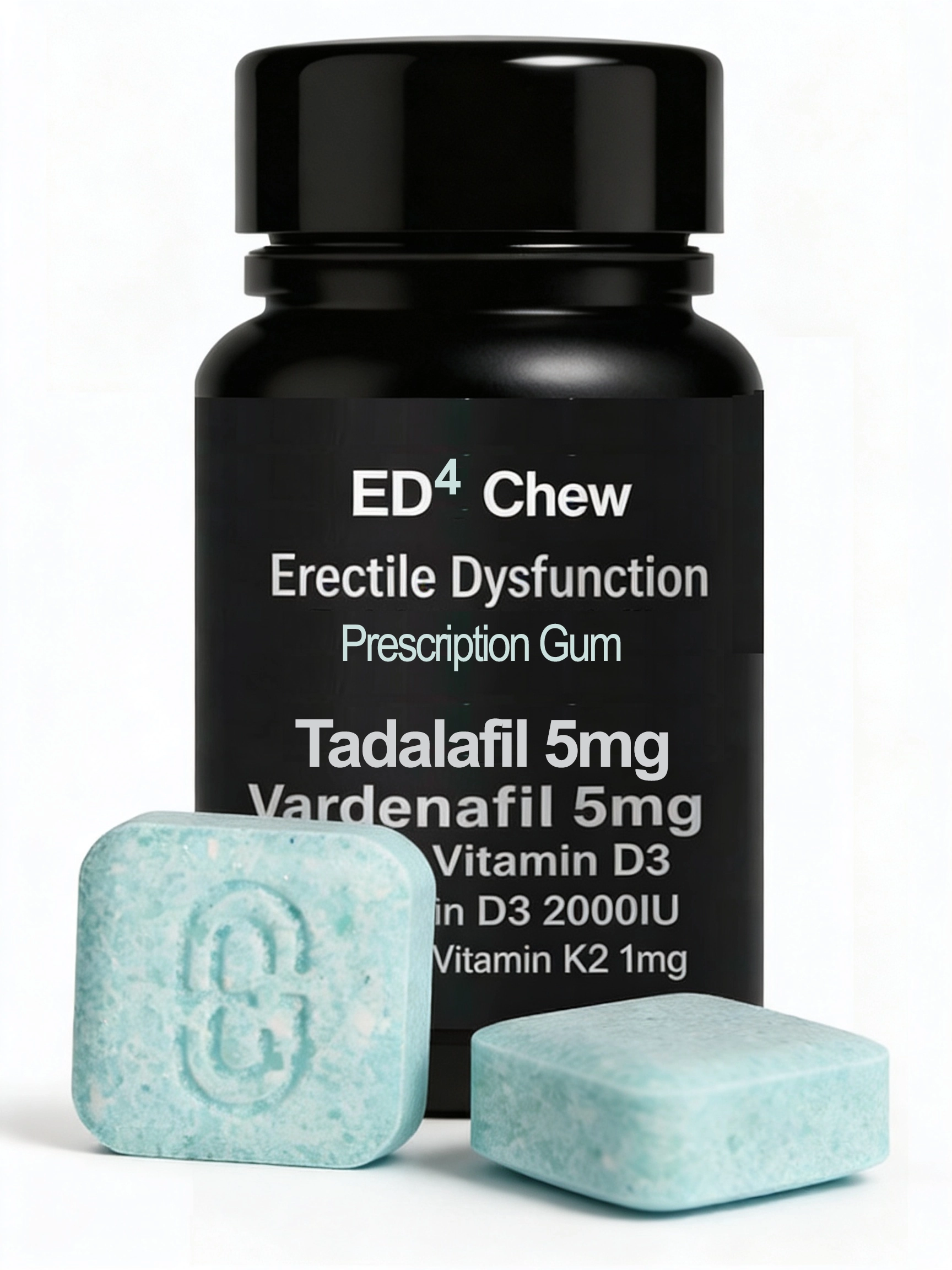
ED4 Chew Gum
Low daily dose for continuous readiness.
- Taken Once Daily
- Continuous Readiness
- Improves Confidence
_600x.jpg)
Ongoing medical research is discovering that sildenafil citrate, Viagra’s active ingredient, could be a powerful weapon in the battle against heart disease. In the most recent revelation of the drug’s versatility, South Korean medical researchers found that stents coated with sildenafil could sharply reduce a recurrence of clogging at the site of the stent’s implantation.
Stents, many of them treated with a medication designed to reduce the possibility of future narrowing at the site, are routinely placed in arteries that have been clogged and subsequently cleared by a procedure known as angioplasty. The stents, made of metal or plastic, are expanded to conform with the inner lining of an artery at the site of a previous blockage. Despite medicine’s best efforts, the artery sometimes narrows or once again becomes clogged by clots at the site of the stent, a form of relapse known as restenosis.
Natural Reaction to Injury
The development of a blood clot within an artery represents an injury to that blood vessel, an injury that is further exacerbated by the medical procedures used to clear the blockage. The body’s natural response to such trauma is to build up tissue at the site of the injury, thus narrowing the artery once again. Drug-eluting stents, such as those already widely used, seem to help prevent this form of narrowing. However, they are less successful in preventing the formation of new clots. As a result, many patients who’ve had stents implanted must take blood-thinning medications such as clopidogrel (Plavix) for extended periods.
Although stents are perhaps best-known for their use in cardiac procedures, they are also implanted at the sites of cleared blockages in other arteries as well. The peripheral arteries that carry oxygen-rich blood to the legs and feet sometimes become clogged and must be cleared through angioplasty by peripheral vascular surgeons, who implant stents to minimize the likelihood of restenosis.
Findings in Rat and Laboratory Studies
The lead author of the South Korean research study is Han-Mo Yang, M.D., an associate professor in the cardiology division of Seoul National University Hospital. The results of the study conducted by his colleagues and him were presented in July at the American Heart Association’s Basic Cardiovascular Sciences 2017 Scientific Sessions, which were held in Portland, Oregon.

Thus far, findings from the study are based on the results of laboratory and animal tests that show sildenafil could significantly improve the long-term outlook for patients in whom stents have been implanted. In laboratory tests, the South Korean research team found that sildenafil reduced the clumping of blood platelets by 30 percent.
Sildenafil Stimulates PKG Activity
In studies with rats, the South Koreans discovered that sildenafil stimulated activity by an enzyme known as protein kinase G, or PKG. One of PKG’s primary roles is to prevent the thickening of artery walls after a traumatic injury, such as those represented by the formation of a clot as well as the procedure that’s undertaken to clear the clot.
Sildenafil’s ability to stimulate activity along the PKG pathway is seen as the key to its restenosis-fighting properties. The very act of implanting a stent represents an injury to the artery, which in turn reduces PKG activity in and around the sign of the injury. As PKG activity declines, the artery walls at the site are more likely to thicken and the chance of a new blood clot increases.
Testing in Humans to Follow
As previously noted, the South Korean studies have been limited thus far to laboratory and animal testing. However, the study’s lead author and his colleagues hope that these promising results can be replicated in humans once clinical testing begins.
In a press release issued at the time of the presentation at the AHA conference, Dr. Yang said successful clinical tests would clear the way for routinely treating stents with sildenafil or following up stent implantation with a course of oral sildenafil therapy.
“Our study is limited by involving only animals. If clinical trials show that sildenafil reduces restenosis after stent placement, it could be used in the clinical setting right away because the drug is already used in the real world for other purposes,” said Dr. Yang.
Heart-Friendly Benefits of Sildenafil
The South Korean study represents yet another way in which sildenafil and other PDE5 inhibitors could be helpful in treating heart disease, which represents one of the most serious health problems worldwide. This finding echoes the results reported from a number of earlier studies.
In a study funded by the United Kingdom’s National Institute of Health Research and the British Heart Foundation, researchers at the University of Manchester tracked the health records of nearly 6,000 men with type 2 diabetes over a period of more than seven years. Patients with type 2 diabetes face a significantly higher risk of heart disease than nondiabetics.
Of the men included in the study, 1,359 were taking PDE5 inhibitors for the treatment of erectile dysfunction. Compared with other men in the study, the PDE5 drug users experienced a 31 percent lower risk of death from any cause.
Cites Earlier Lab Studies
Andrew Trafford, a professor of cardiac pathophysiology at the university, noted that earlier laboratory studies had shown that heart cells taken from a failing heart survive longer in vitro when treated with sildenafil. Trafford and his colleagues are also attempting to determine whether PDE5 inhibitors might help to prevent abnormal heart rhythms, which are responsible for killing nearly half of all heart failure patients.
Elsewhere, researchers at Sweden’s Karolinska Institutet undertook a large-scale study to determine if ED drugs such as Viagra had a life-prolonging effect on patients who’d already suffered a heart attack. Included in the study were more than 43,000 men under the age of 80 who had suffered a first heart attack between 2007 and 2013. More than 7 percent of those included in the study had taken ED drugs during a mean follow-up period of three years post heart attack.
Swedish Study’s Findings
The Swedish research team discovered that heart attack patients who had taken ED drugs were 33 percent less likely to die from any cause than those who had not taken ED drugs. Not only was the mortality rate sharply lower among those taking ED drugs, but they were also 40 percent less likely to be admitted to the hospital for heart failure than patients not taking ED drugs.
In the wake of the Swedish study, researcher Martin Holzmann, M.D., said the most important takeaway from its findings is that “it’s harmless to prescribe these drugs to men following a heart attack and that it may possibly even prolong their lives and protect against heart failure.”
Kicked off with the 1998 debut of Viagra, the introduction of oral ED drugs — also known as PDE5 inhibitors — has transformed the treatment of erectile dysfunction. Over the past couple of decades, these medications have also been found to provide additional health benefits. Ongoing studies are likely to discover still other medicinal properties afforded by this family of medications.
If this article has piqued your interest and you would like to stay abreast of the latest developments on the consumer health front, check out our blog.

We specialize in providing our over 1,000,000 customers with relevant product and condition information created by our professional editorial staff which includes our team of medical writers, medical practitioners, and health educators. eDrugStore.com Staff on Facebook