


Effective ED Treatment. Private. Convenient. Trusted.
Doctor-prescribed ED medication delivered discreetly to your door.
Physicians
Private
Delivery

ED3 Max Dissolvable ED Pills
Long-lasting results up to 36 hours.
- Up to 36 Hour Window
- Improved Confidence
- Works When You Need It

Sildenafil 25mg
Proven effective treatment.
- Starts Working in 30–60 Min
- Effective, As Needed
- Trusted & Reliable
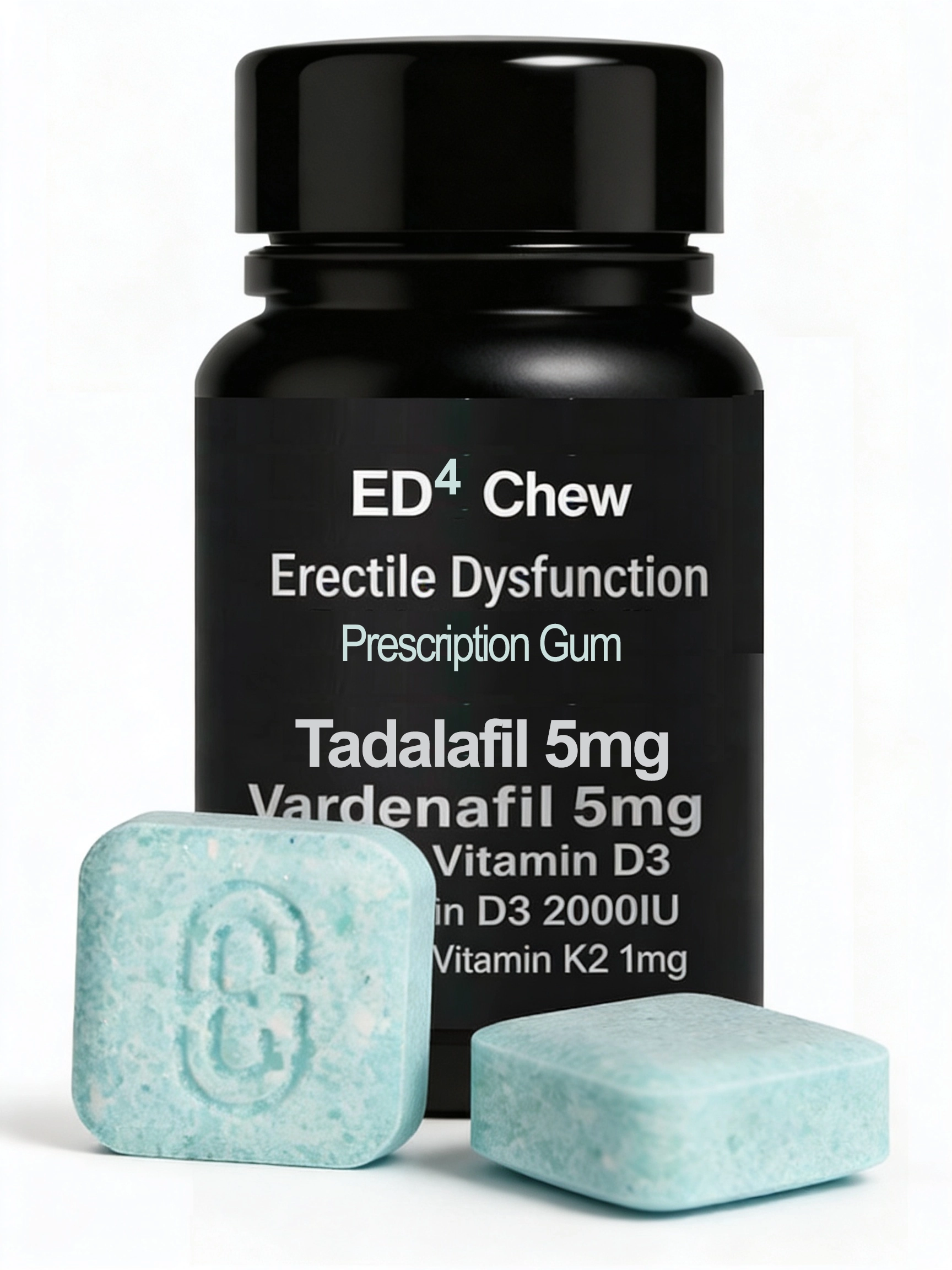
ED4 Chew Gum
Low daily dose for continuous readiness.
- Taken Once Daily
- Continuous Readiness
- Improves Confidence
A research study points to a link between a deficiency of vitamin D and an increased risk of erectile dysfunction. If your ED is caused by inadequate blood levels of the sunshine vitamin, treatment could be as simple as a daily vitamin supplement.
A recent study from John Hopkins University School of Medicine suggests that low levels of vitamin D may contribute to erectile dysfunction. These findings support the importance of proper levels of vitamin D in the body, which over the last decade has been a common vitamin deficiency found in many people who are screened because of a variety of health issues.
In fact, according to the International Journal of Health Sciences, vitamin D deficiency is a “global health problem,” with over a billion people worldwide being vitamin D deficient or screened to be at insufficient levels.
Possible Link Suggested
Vitamin D, is often called the “sunshine vitamin” because you can absorb it through exposure to natural sunshine. It is a natural steroid, with hormone-like activity that regulates the functions of more than 200 genes within us and is essential for normal growth, development, and proper functioning of the body.
So, it is not too surprising that targeted research was conducted, and it was found that there could be a link between this nutritional deficiency and erectile dysfunction. Essentially, researchers analyzed data from more than 3,400 American men, age 20 and older, none of whom had any history of heart disease.
30% of Men Deficient in Vitamin D
The found that 30 percent of the men were vitamin D deficient, which means their levels of the “sunshine vitamin” were below 20 nanograms per milliliter of blood. A total of 16 percent of the men also had erectile dysfunction.
So, the final statistics from the study showed that vitamin D deficiency was present in 35 percent of the men with erectile dysfunction, compared with 29 percent of those without erectile dysfunction.
Researchers leading the study concluded that males with a vitamin D deficiency are roughly 32 percent more likely to suffer from erectile dysfunction than men who have sufficient vitamin D levels. This conclusion even took into account other factors associated with erectile dysfunction, such as alcohol consumption, smoking, high blood pressure, diabetes, blood flow and inflammation issues, and taking certain medications.
More Research Needed
The study also said that more research is needed to confirm that there is a direct and indisputable correlation between low vitamin D levels and erectile dysfunction. But the data developed thus far definitely points toward new or at least supplemental treatment approaches for those suffering with erectile dysfunction.
Erectile dysfunction is defined as the persistent inability to get or keep an erection suitable for intercourse. The Massachusetts Male Aging Study surveyed 1,709 men who were 40 to 70 years of age between 1987 and 1989 and found there was a total prevalence of erectile dysfunction of 52 percent.
It was estimated that in 1995, more than 152 million men worldwide experienced erectile dysfunction, and that by the year 2025, the number of men with ED is predicted to be approximately 322 million worldwide. The problem is increasing as are cases of vitamin D deficiency.
Even though vitamin D deficiency is very common, health organizations have not officially declared a health emergency to warn the public about the urgent need of achieving sufficient vitamin D blood levels. But according to the American Journal of Clinical Nutrition, vitamin D deficiency is now recognized by doctors and nutritionists as a pandemic.
Why are We Deficient in Vitamin D?
The major cause of vitamin D deficiency is the lack of adequate sun exposure, which is the major source of vitamin D for most people. In fact, you really can’t eat your way to proper levels because very few foods naturally contain vitamin D; these include any oily fish like salmon, mackerel, and herring, and oils from these fish, including cod liver oil. Though there are foods that are fortified with vitamin D such as milk, the amounts that they provide are really inadequate to fully satisfy a human body’s true vitamin D requirement.
It has already been proven that this particular vitamin deficiency may affect the body in numerous ways, and it is linked to many health problems. Vitamin D deficiency causes rickets in children and will lead to and exacerbate osteopenia, osteoporosis, and bone fractures in many adults. Vitamin D deficiency also has been associated with an increased risk of common cancers, autoimmune diseases, hypertension, and infectious diseases, multiple sclerosis, and even rheumatoid arthritis.
How Much Do You Need?
Scientists believe that more is needed than previously believed. A circulating level of 30 nanograms per milliliter of blood is required to maximize vitamin D’s beneficial effects for health. In the absence of adequate sun exposure, taking a supplement of at least 800 to 1,000 international units is necessary to achieve these levels.
Fortunately, a solution to this issue is relatively simple. “Vitamin D deficiency is easy to screen for and simple to correct with lifestyle changes that include exercise, dietary changes, vitamin supplementation, and modest sunlight exposure,” according to the study’s lead investigator, Erin Michos, M.D., an associate professor of medicine at Johns Hopkins University School of Medicine.
According to the Centers for Disease Control and Prevention, vitamin D deficiency affects up to 40 percent of adult Americans, and erectile dysfunction affects approximately 40 percent of men over 40 years old and 70 percent of those older than 70 years old.
What Can You Do?
Male impotence affects at least one-third of men at some point during their lifetime, making it a very common problem. A treatment for erectile dysfunction will depend mostly on what is causing it to occur. So you should see your doctor to rule out other medical problems and to find out whether some of your current medicines might be the cause.
Therefore, you should ask your doctor to screen you for vitamin D deficiency. If your levels are found to be deficient, taking a vitamin D supplement may be recommended. Your doctor can advise you about the amount of vitamin D you should be taking.
Meanwhile, your doctor may have you try a medication to help cope with the symptoms of erectile dysfunction. Among the most widely prescribed medications for ED are Viagra, Cialis, and Levitra. Also available now are generic formulations of both Viagra and Cialis.
Viagra is known scientifically as a PDE5 inhibitor, a medication that relaxes the smooth muscle tissue lining artery walls, thus expanding artery walls. This results in improved blood flow, facilitating an erection once you become sexually aroused. Not everyone can use these types of medications. Your doctor will help you decide what treatment is right for you.
Viagra is proven to work well for most men, regardless of age or the length of time you have experienced male impotence, even if it has been for several years. Clinical trials have documented that Viagra is effective for up to 80 percent of men, and its safety and effectiveness were well documented even before it was first approved by the Food and Drug Administration in 1998.
While Viagra could benefit you and your quality of life in the treatment of male impotence, recent research indicates that you should also have your doctor look at your vitamin D levels to rule out a deficiency or detect the presence of a deficiency that could then be treated with a dietary supplement. Low levels of this much-needed vitamin could possibly be contributing to your ED and potentially other health conditions.
If you have found this article informative and would like to see more content of this kind, follow our blog on a regular basis.

We specialize in providing our over 1,000,000 customers with relevant product and condition information created by our professional editorial staff which includes our team of medical writers, medical practitioners, and health educators. eDrugStore.com Staff on Facebook